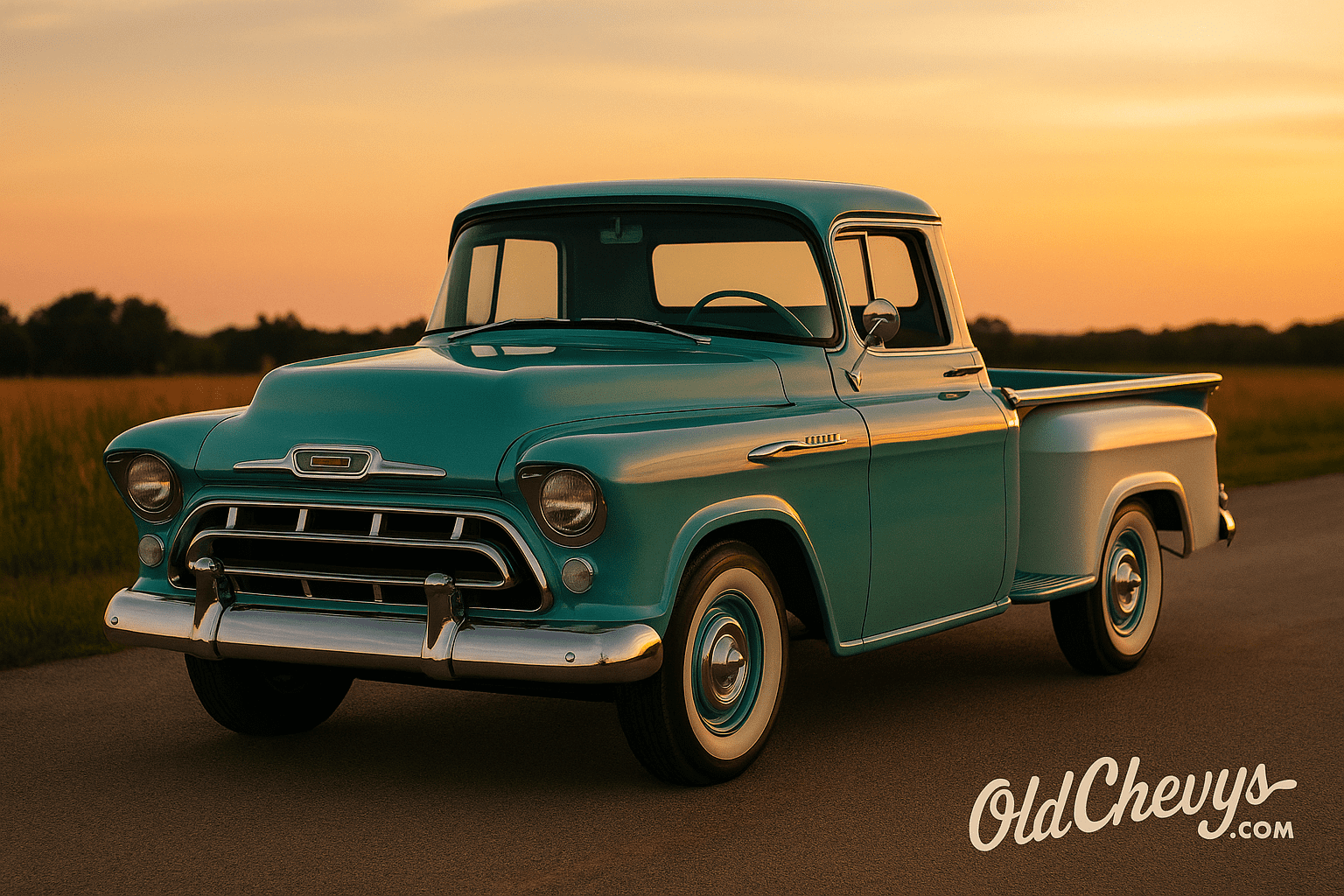
The Birth of the Task Force Chevy Truck
By Gary Thompson
Last Edited 12/9/25
When Chevrolet launched the Task Force Chevy truck line in 1955, it ushered in a new era of American pickup design. Replacing the aging Advance Design models, these trucks were sleek, powerful, and modern, embodying the optimism of 1950s America.
For the first time, Chevy pickups were as stylish as they were capable. The wraparound windshield, 12-volt electrical system, and optional 265-cubic-inch V8 engine transformed what had been a workhorse into a genuine showpiece. Chevy wanted a truck that looked good hauling lumber and cruising down Main Street — and the Task Force delivered.
A Year-by-Year Look at the Chevy Task Force Line
1955: A New Beginning
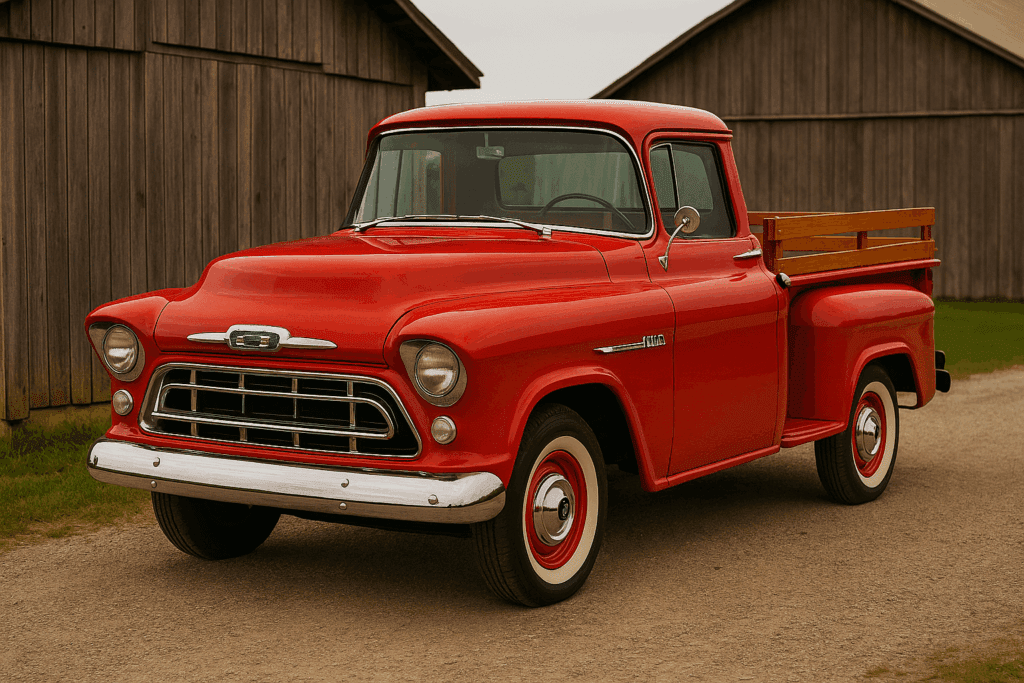
The 1955 Chevy Task Force debuted mid-year, featuring a bold chrome grille, modern body lines, and a dramatically improved cab. The new small-block 265 V8 offered smooth, reliable power — a first for Chevy trucks. It’s also the year that introduced the 12-volt system, setting a new industry standard.
1956: Refinement and Reliability
The 1956 Task Force Chevy truck refined the design with a new grille pattern, fender emblems, and updated interior trim. Under the hood, both the 235 inline-six and the 265 V8 were tuned for improved performance. This was also the year Chevrolet emphasized dependability — marketing their trucks as “tougher, safer, stronger.”
Collectors love the ’56 for its balance between Advance Design nostalgia and the cleaner, more modern Task Force style.
On my 1956 Task Force I restored, the 12-volt electrical upgrade made a big difference in reliability compared with the 6-volt systems on earlier Advance Design trucks.
1957: Chrome, Confidence, and Collectability
Ask any Chevy fan, and they’ll tell you the 1957 Task Force Chevy truck is one of the most iconic classic trucks ever built. Chrome dominated the design — from the bold front grille to the polished side trim. This model introduced the 283 small-block V8, available with fuel injection borrowed from the Corvette.
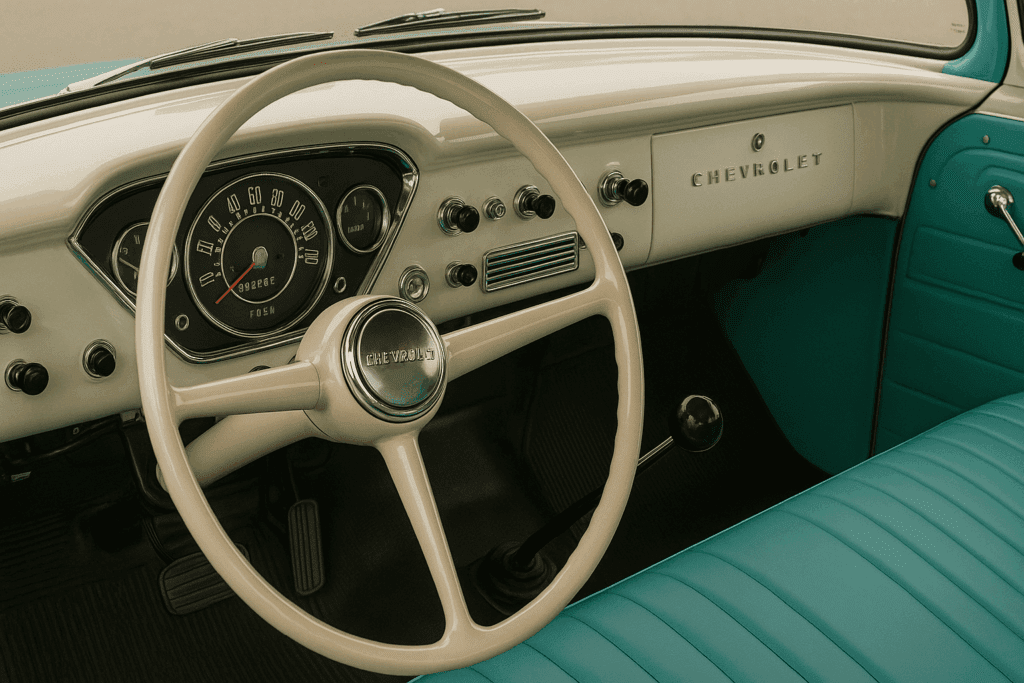
Today, the 1957 Chevy Apache remains a star at car shows, thanks to its perfect blend of power and personality.
During sheet-metal alignment on a 1957 Apache, I’ve found that the wrap-around rear window (on Deluxe cab models) complicates cab-rear-bed joins — something rebuilders often underestimate.
1958: The Chevy Apache Arrives
In 1958, Chevrolet made one of its most notable shifts — renaming the line the Chevy Apache, and giving the truck a bold new front end with dual headlights and a wider stance. This was also the year the Fleetside bed was introduced, featuring smooth, streamlined sides instead of the traditional Stepside fenders.
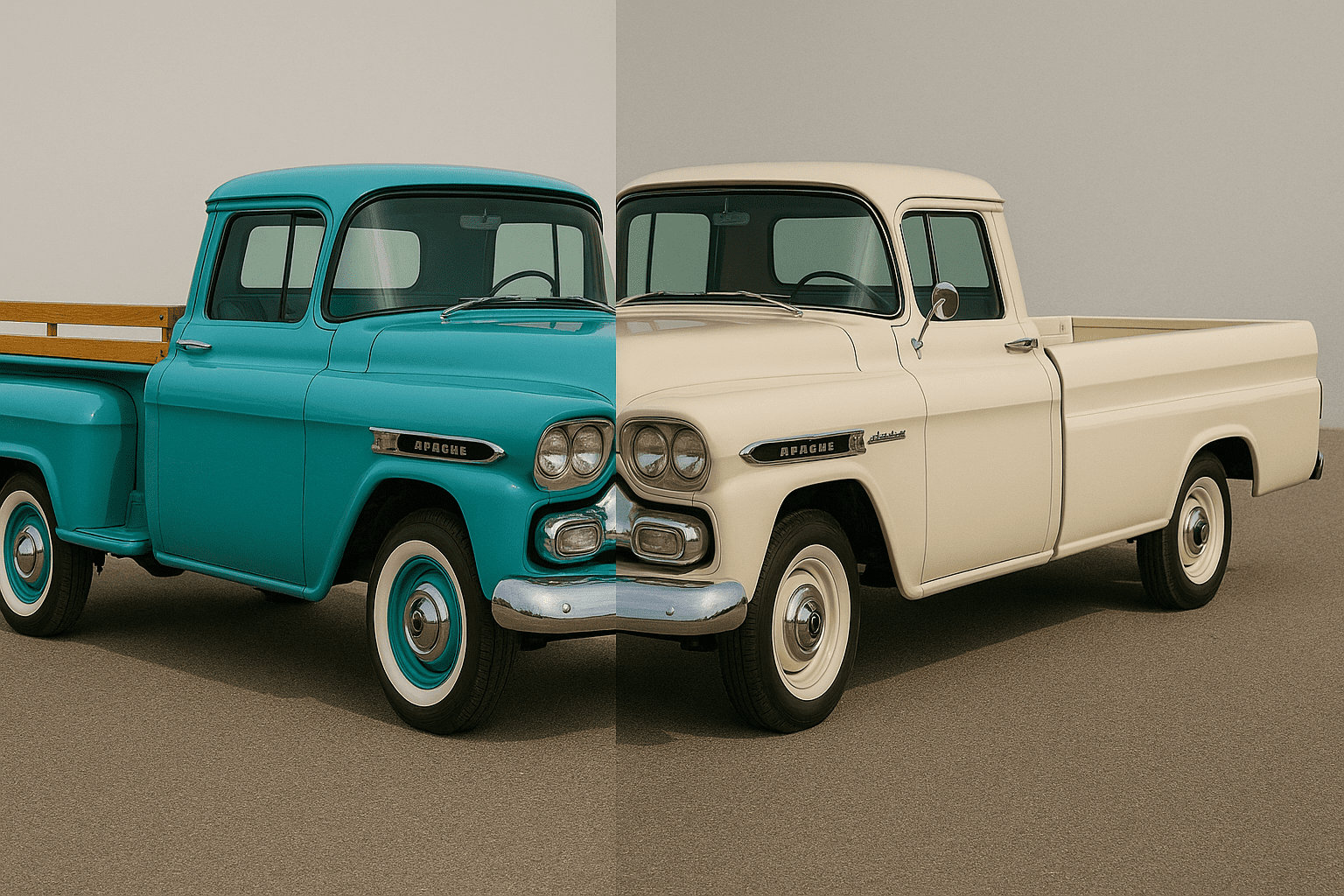
The ’58 Apache represents the height of 1950s truck design — unmistakable, modern, and full of attitude. Read our Stepside vs Fleetside Guide.
1959: The Last of the Task Force Trucks
The 1959 Chevy Apache marked the end of the Task Force era — closing a remarkable chapter in truck design history. For a deeper dive into original factory specs and photos, visit the Chevrolet Heritage Center’s Task Force archive.
This makes the 1959 model particularly sought after among vintage Chevy pickup restoration enthusiasts who want to own the final chapter of this iconic generation.
I’ve sourced both original and reproduction ‘Fleetside’/‘styleside’ beds for 1958 – 59 trucks; while reproduction panels are easier to get, matching patina and proper fitment still takes careful measuring and finishing work.
Design Features That Defined an Era
The Task Force Chevy truck series was famous for its combination of car-like styling and heavy-duty capability. Key design highlights included:
- Wraparound Windshield: The first in the industry, offering panoramic visibility.
- Two-Tone Paint & Chrome Accents: Gave the trucks a stylish mid-century look.
- Stepside vs. Fleetside Beds: Stepside kept the fender flares; Fleetside delivered smooth, modern lines.
- Improved Interiors: More comfort, better visibility, and a dash design inspired by Chevy’s passenger cars.
- Engine Choices: The dependable 235 six or powerful 265/283 V8 engines defined mid-century Chevrolet performance.
Why Chevy Lovers Still Adore Task Force Trucks
For enthusiasts and restorers, Task Force Chevy trucks represent the sweet spot between rugged work trucks and timeless design. They’re easier to restore than earlier models, parts are widely available, and they capture everything people love about 1950s Americana — chrome, curves, and craftsmanship.
Whether you prefer a 1957 Stepside, a 1958 Fleetside Apache, or the final-year 1959 Chevy truck, each model offers its own blend of nostalgia and character. These pickups are rolling reminders of an age when design and durability went hand-in-hand.
Restoration Tips for Task Force Chevy Truck Enthusiasts
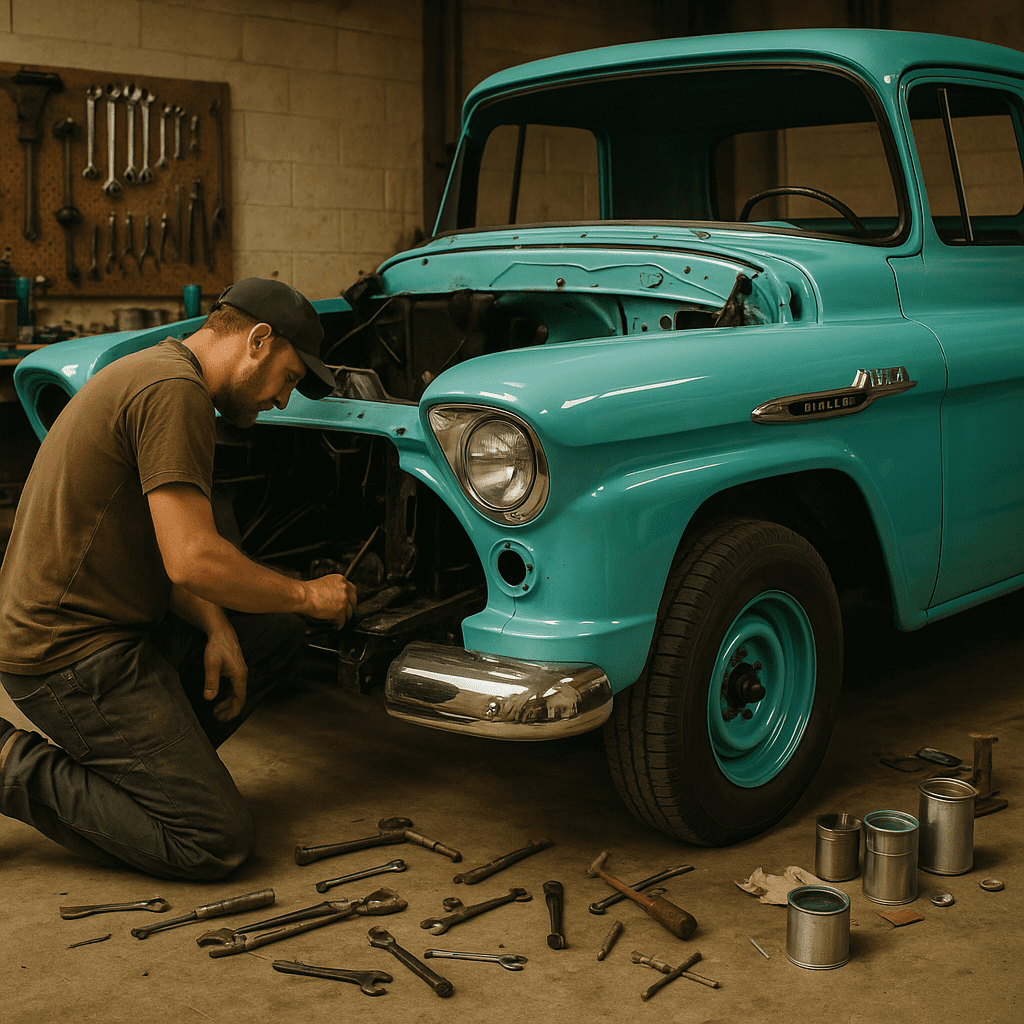
If you’re planning a Task Force Chevy truck restoration, here’s how to make your build shine:
- Start with the Frame: Check for rust in cab corners, floor pans, and lower doors.
- Use OEM or Quality Reproductions: Reliable suppliers like Classic Industries, Brothers Trucks, and LMC Truck are your best bet.
- Preserve Original Trim: Authentic chrome and emblems enhance both aesthetic and resale value.
- Modernize Thoughtfully: Add disc brakes, radial tires, or power steering for better drivability while keeping that vintage look.
- Document Everything: Keep photos and receipts — a well-documented build increases collector value.
For authentic parts, trim, and verified listings, check the Hemmings Classic Truck Marketplace — a trusted source among restorers and collectors.
Tip: Visit our Classic Chevy Parts Resources page.
At a Glance: Quick Specs (1955–1959 Task Force Series)
| Model Year | Engine Options | Notable Features | Bed Styles |
|---|---|---|---|
| 1955 | 235 I6 / 265 V8 | First year of Task Force design | Stepside |
| 1956 | 235 I6 / 265 V8 | Refined grille, stronger frame | Stepside |
| 1957 | 235 I6 / 283 V8 | Fuel injection option | Stepside |
| 1958 | 235 I6 / 283 V8 | Dual headlights, Apache name | Stepside & Fleetside |
| 1959 | 235 I6 / 283 V8 | Final year before C/K | Stepside & Fleetside |
They Weren’t Just Pickups
The 1955–1959 Task Force Chevy trucks captured the perfect blend of innovation, beauty, and strength. They weren’t just pickups — they were statements of craftsmanship and pride.
If you’re lucky enough to own or restore one, you’re preserving a piece of American automotive history. Whether parked at a show or cruising down the highway, a Chevy Task Force truck still turns heads nearly 70 years later.
Want more? Check out our Stepside vs. Fleetside Comparison Guide and 1955 Chevy Bel Air Restoration Guide for related reading on classic Chevrolet legends.
Frequently Asked Questions
What years did the Chevrolet Task Force line run?
The Task Force series was produced from 1955 through 1959. Wikipedia+1
What were the layout and engine/drive options?
Task Force trucks used GM’s A-platform with front-engine, rear-wheel-drive (or 4WD on some models). Engines ranged from inline-6 to several early small- and big-block V8s, with manual transmissions standard and automatic/manual options available. Wikipedia
What was new with Task Force compared to the earlier “Advance Design”?
Compared to the outgoing Advance Design trucks, Task Force introduced a wrap-around windshield (and optional wrap-around rear window on deluxe cabs), integrated headlight/fender styling, optional power steering/brakes, 12-volt electrical system, and the availability of Chevy small-block V8 engines — marking a major step forward in comfort and performance. Wikipedia+2OnAllCylinders+2
About the Author
Gary Thompson has over 20 years of hands-on experience restoring classic Chevrolet and GMC trucks, including several complete restorations of Task Force, Cameo, and early C/K-series pickups. He has disassembled, rebuilt, and documented restoration work on sheet metal, drivetrain components, VIN-matching, and OEM specification compliance. In addition to personal projects, he has consulted for other restorers, sourced rare OEM and reproduction parts, and reviewed period GM documentation (brochures, build sheets, GM factory spec charts). His work aims to combine historical accuracy with practical restoration and usability for real-world drivers, collectors, and hot-rodders alike.
Disclaimer:
The content in this article reflects historical research, expert restoration knowledge, and available public documentation on the Chevrolet Task Force trucks (1955–1959). While every effort is made to provide accurate and up-to-date information, variations in individual vehicles (modifications, restorations, condition, provenance) may affect applicability. Always verify technical details (specifications, compatibility, original equipment) with reliable sources or qualified professionals before acting on this information. The author and site assume no liability for outcomes arising from reliance on this content.
Why You Can Trust This Guide
- First-hand restoration experience: The information is grounded in real restorations of Task Force-era trucks, with direct exposure to sheet-metal fitment, drivetrain choices, and vintage-truck quirks.
- Research-based: Specs, model-year changes, trim variations and nomenclature (3100, 3200, Apache, Viking, Spartan, Cameo, etc.) are referenced from original production data and widely accepted historical resources. Wikipedia+2SlashGear+2
- Market awareness: Advice reflects both historical accuracy and awareness of today’s collector and restoration markets — parts availability, desirability, common pitfalls, and value trade-offs.
- Balanced perspective: The guide covers strengths and limitations of Task Force trucks (styling, mechanical upgrades, rarity, ease/hardness of restoration), giving readers a realistic, nuanced view rather than overselling.