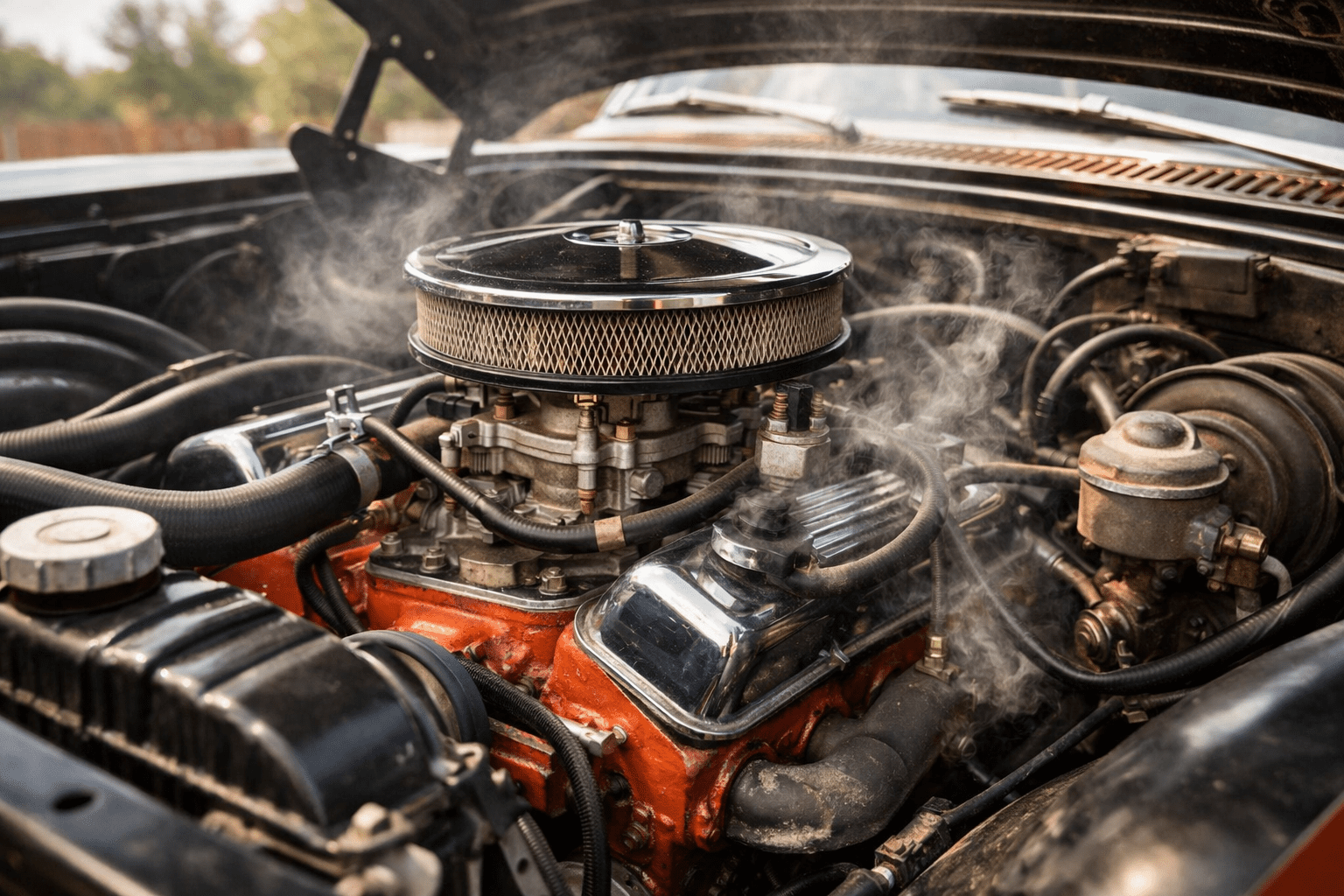
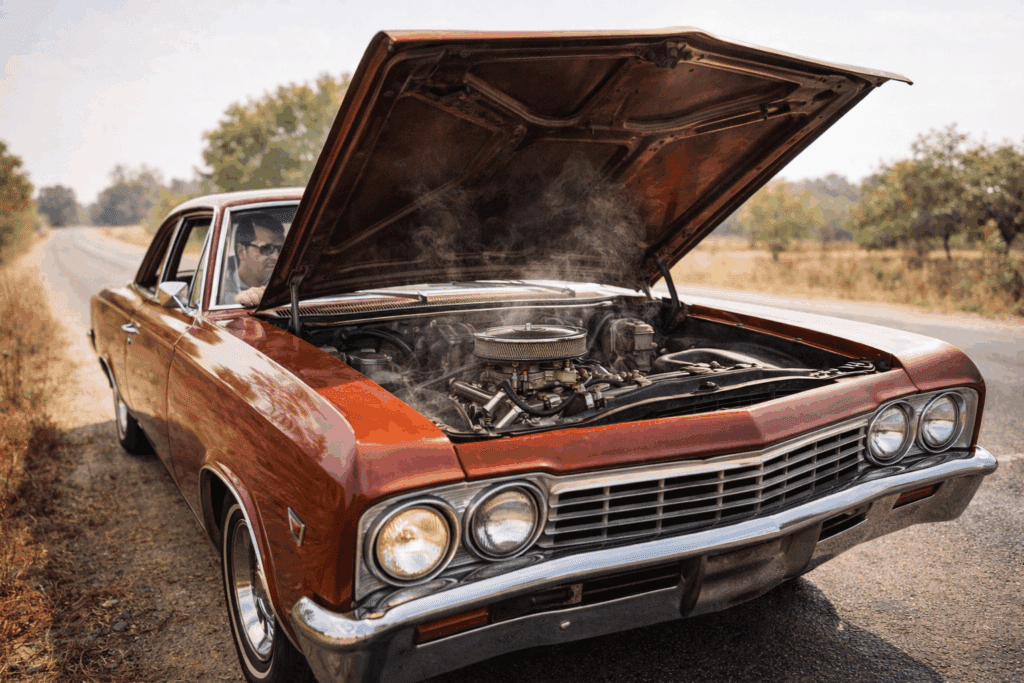
Vapor lock in classic Chevy vehicles happens when gasoline overheats and turns to vapor before it reaches the carburetor, preventing steady fuel delivery. It’s most common in warm weather, after heat soak, or during low-speed driving, and it affects carbureted engines far more than modern fuel-injected systems.
What Vapor Lock Feels Like While Driving
Vapor lock doesn’t usually announce itself with a loud bang or sudden failure. Instead, it feels like the car is slowly giving up under heat stress.
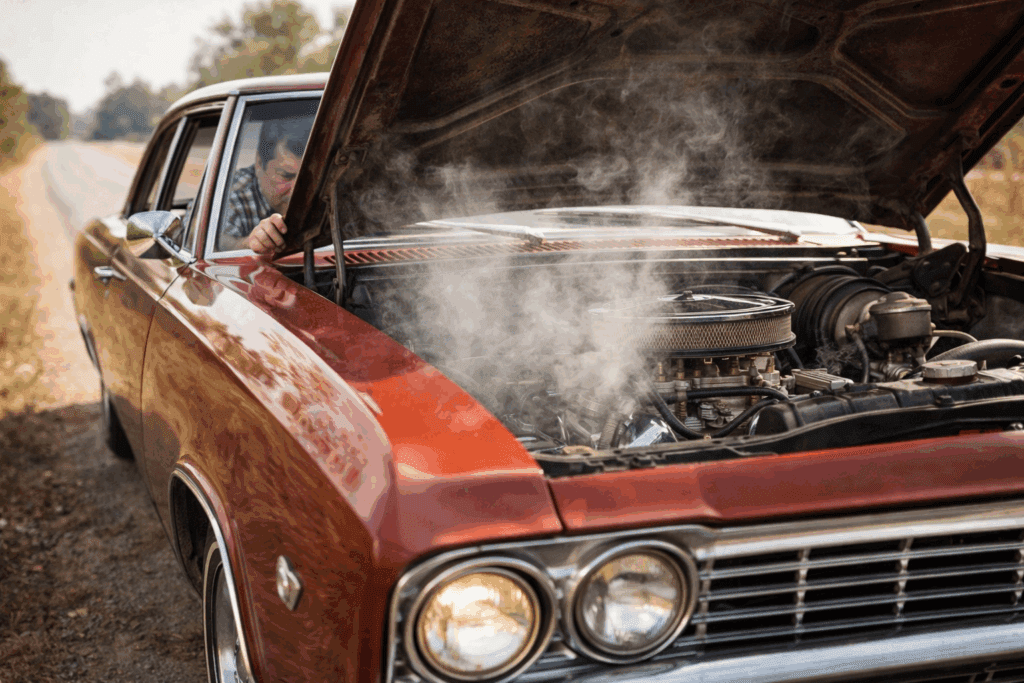
Common symptoms include:
- Engine stumbling or surging after a hot restart
- Loss of power during low-speed driving or climbing hills
- The engine dies at stoplights after cruising
- Extended cranking with no start when hot
- The engine restarts normally once it cools down
When it happens most often:
- After shutting the engine off for 10–30 minutes on a hot day
- In traffic or parade-speed driving
- Immediately after highway driving, followed by a stop
How vapor lock differs from ignition problems:
- Ignition issues usually show up cold and hot
- Vapor lock is temperature-dependent and intermittent
- Cooling the fuel system (not the ignition) temporarily fixes it
A key clue: if opening the hood and waiting 15 minutes solves the problem, fuel vaporization—not spark—is the likely culprit.
Why Classic Chevys Are Prone to Vapor Lock
Classic Chevrolets from the 1950s–1970s were designed around fuel characteristics and underhood conditions that no longer exist.
Modern Fuel Formulations
Today’s pump gas is blended to reduce emissions, not vapor lock. Ethanol-blended fuels boil at lower temperatures than the gasoline your Chevy was engineered for, making vapor formation easier in hot engine bays.
High Underhood Temperatures
Classic Chevys often have:
- Tight engine compartments
- Cast-iron intake manifolds
- Minimal airflow at idle
All of this traps heat near fuel lines and carburetors.
Mechanical Fuel Pumps
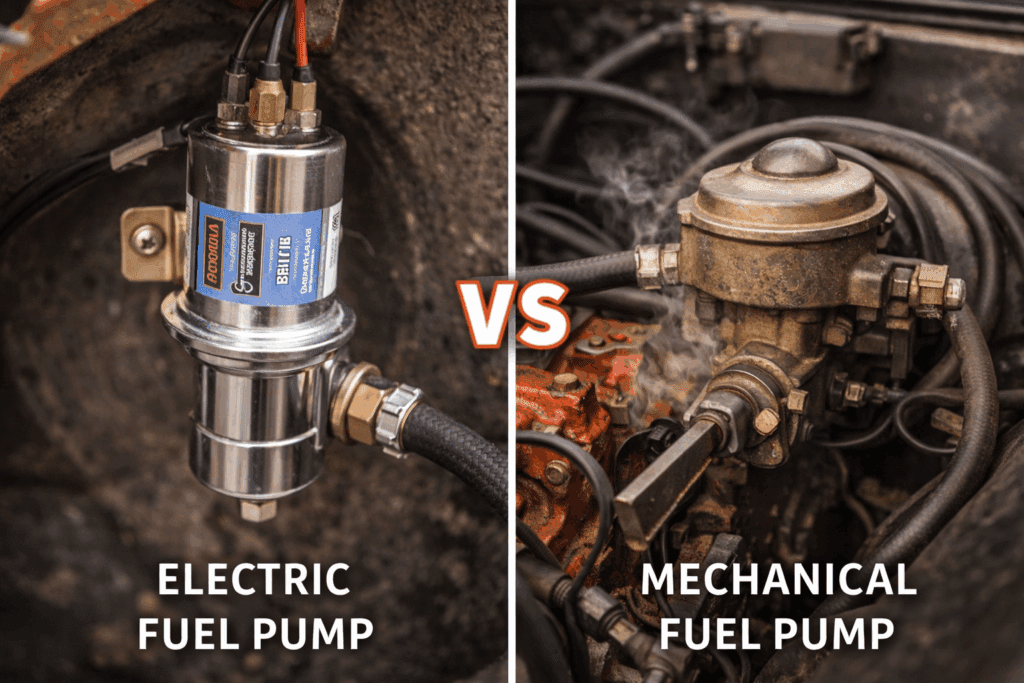
Mechanical pumps pull fuel from the tank under vacuum. Vapor bubbles form more easily under low pressure, and once vapor reaches the pump, it can’t move liquid fuel effectively.
Common Causes of Vapor Lock
Fuel Line Routing
Fuel lines routed too close to headers, exhaust manifolds, or intake crossover passages absorb heat quickly. Even factory routing can become problematic after engine swaps or header installations.
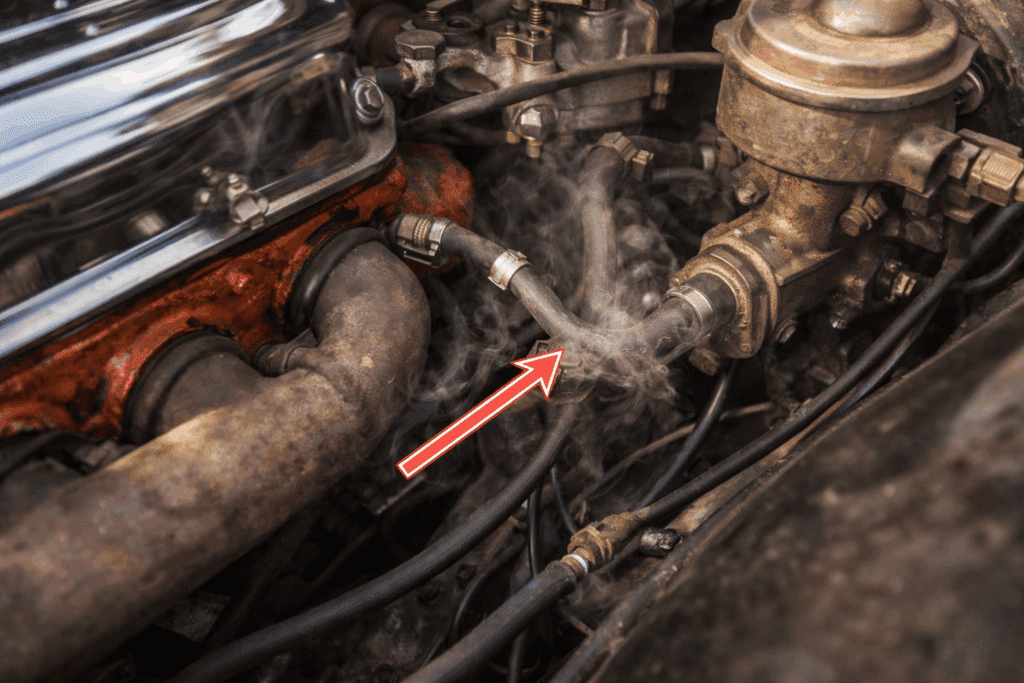
Steel lines conduct heat efficiently, and short sections of rubber hose near hot components can worsen the problem.
Heat Soak
Heat soak occurs when the engine is shut off and airflow stops, allowing temperatures to spike. Fuel sitting in lines, the pump, and the carburetor bowl absorbs this heat and vaporizes.
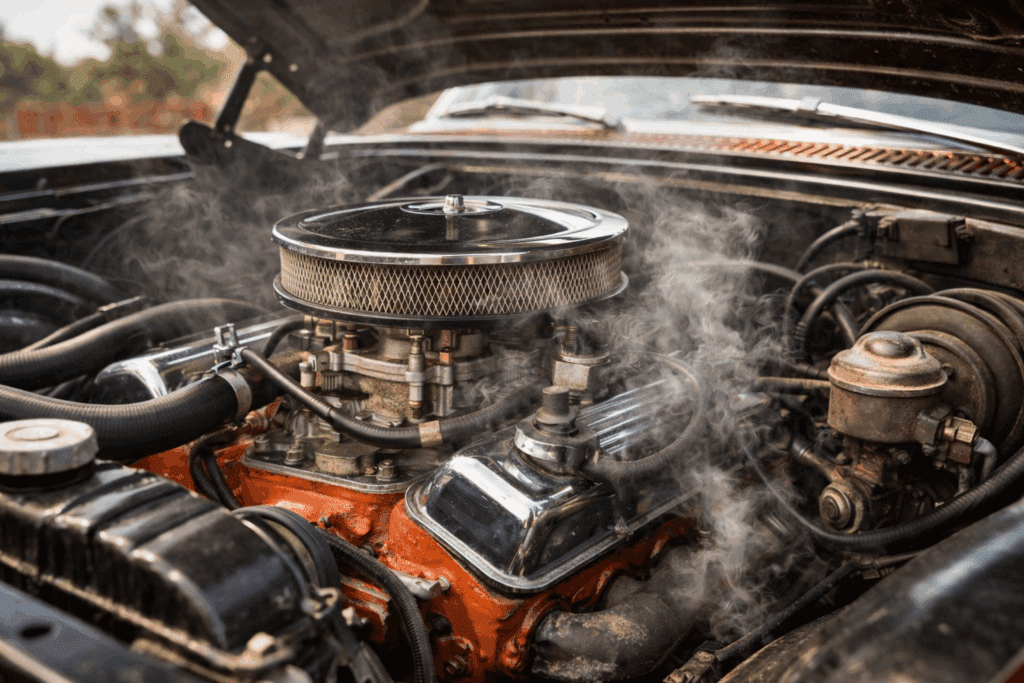
This is why vapor lock often appears after the engine is turned off—not while cruising.
Low Fuel Pressure
Carbureted Chevys typically operate at 4–6 PSI. If pressure drops due to a weak pump, restrictive filter, or vapor formation, fuel boils more easily, and delivery becomes erratic.
Low pressure doesn’t cause vapor lock by itself, but it makes the system far more sensitive to heat.
Carb Bowl Issues
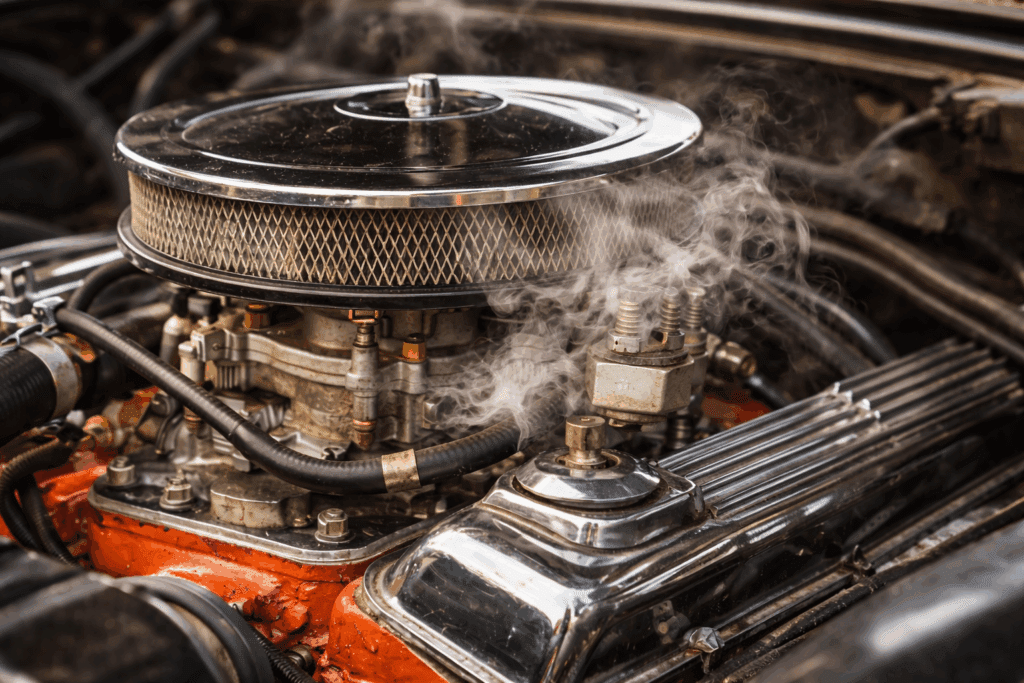
When fuel in the carburetor bowl boils:
- Mixture goes lean
- Hot restart becomes difficult
- Throttle pumping worsens the issue
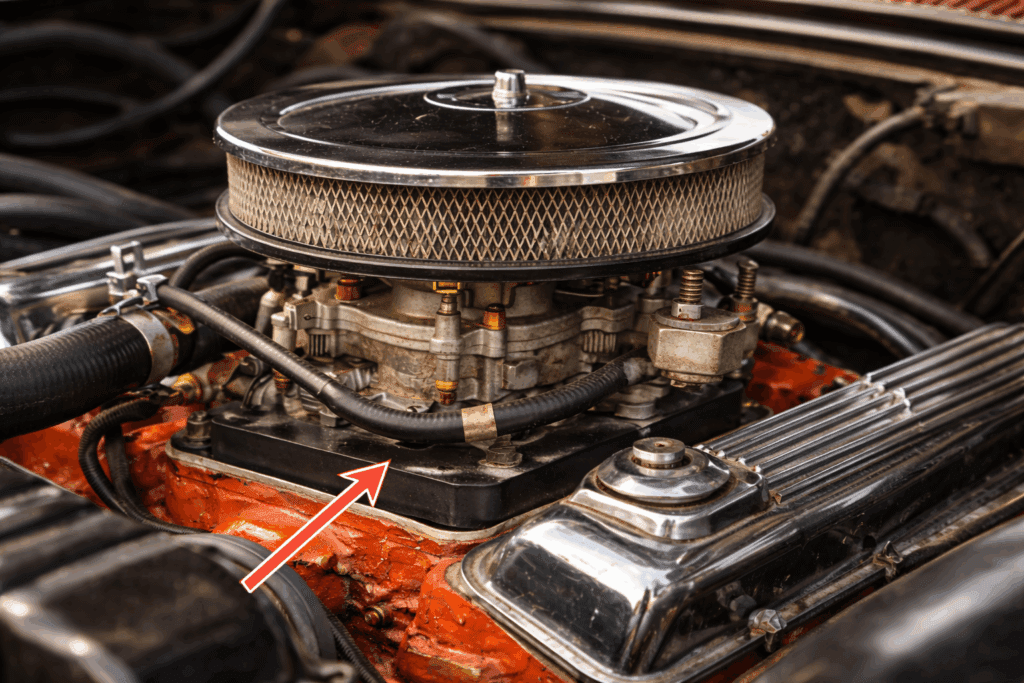
Carb spacers, gasket thickness, and bowl venting all play a role here.
How to Fix Vapor Lock
Start with the simplest, lowest-cost changes before moving to permanent modifications.
Low-Cost Fixes (Often Enough)
- Reroute fuel lines away from heat sources
- Install a phenolic carb spacer (½”–1″)
- Replace collapsed rubber hoses with ethanol-rated line
- Ensure proper fuel pressure (verify with a gauge)
These fixes address heat transfer and pressure stability without changing the system design.
Permanent Solutions
- Electric fuel pump near the tank (pushes fuel instead of pulling)
- Return-style fuel system to keep fuel moving
- Heat shields between the exhaust and fuel components
- Insulated fuel lines only where needed
Electric pumps are the most reliable long-term fix for persistent vapor lock, especially in hot climates or heavy traffic use.
What Does NOT Work
- Wrapping the entire fuel system in insulation
- Adding random fuel additives
- Increasing fuel pressure beyond carb specs
- Chasing carb jetting changes
These often mask symptoms or introduce new problems without addressing the root cause.
Prevention Tips for Hot Weather Driving
Parking Habits
- Park nose-out to catch airflow on restart
- Avoid shutting down immediately after hard driving
- Open the hood briefly during heat-soak stops
Fuel Choice
- Use non-ethanol fuel when available
- Avoid old or winter-blend gasoline in summer
- Keep fuel fresh during low-use periods
Engine Bay Airflow
- Ensure the fan shroud is intact
- Verify proper ignition timing (retarded timing increases heat)
- Maintain cooling system efficiency
If your Chevy already struggles with heat, see Classic Chevy Overheating at Idle.
Mistakes Owners Commonly Make
Over-Insulating
Fully wrapping fuel lines can trap heat instead of shedding it, especially near the carburetor.
Band-Aid Fixes
Pouring cold water on the fuel pump works—but only as a roadside trick, not a solution.
Misdiagnosis
Many owners replace carbs or ignition parts unnecessarily when the real issue is fuel boiling.
If you’re also dealing with fuel odors, see Gas Smell in Classic Chevy.
When Vapor Lock Isn’t the Problem
Not every hot restart issue is vapor lock.
Carb Tuning Issues
- Incorrect float level
- Improper hot idle mixture
- Bowl vent obstruction
For carb selection and setup guidance, see Best Carburetors for Small Block Chevy.
Ignition Timing
Retarded timing raises exhaust and underhood temperatures, mimicking vapor lock symptoms.
Fuel Delivery Problems
- Clogged pickup sock
- Restrictive fuel filters
- Venting issues in the fuel tank
Always confirm basics before assuming vapor lock.
FAQs
Does vapor lock only happen in hot weather?
It’s most common above 85°F, but it can occur anytime underhood temperatures get high enough.
Can modern gas really cause vapor lock?
Yes. Ethanol-blended fuel vaporizes more easily than older formulations.
Is an electric fuel pump required?
Not always—but it’s the most reliable fix for repeated vapor lock in traffic-driven cars.
Will a carb spacer hurt performance?
In most street applications, it improves consistency and reduces heat-related issues without hurting drivability.
Fix the Root Cause
Vapor lock isn’t a flaw in your classic Chevy—it’s a mismatch between vintage design and modern conditions. Addressing heat, pressure, and fuel routing restores reliability without compromising originality. Fix the root cause, not just the symptom, and your Chevy will drive confidently even on the hottest days.