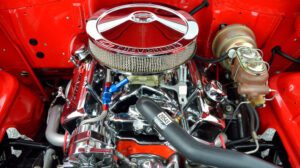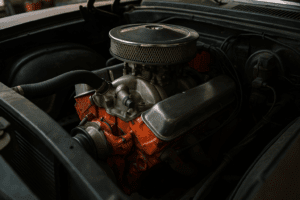

Trying to identify a mystery engine? This small block Chevy casting numbers lookup tool helps you quickly narrow down what SBC block you’re working with—before you order parts, pay for machine work, or buy into someone else’s claims.
Small block Chevy casting numbers are one of the fastest ways to determine:
- The general year range of a block
- The engine family (305, 327, 350, etc.)
- Whether you’re dealing with an early or late SBC design
Use the lookup tool below to search your casting number, then follow the steps underneath to confirm it correctly.
⬇️ Start by entering your casting number below ⬇️
🔧 Small Block Chevy Casting Numbers Lookup Tool
Search Small Block Chevy Casting Numbers
Enter a casting number (example 3970010) or filter by CID, year, and era.
| Casting # | CID | Years | Notes |
|---|
How to Find Small Block Chevy Casting Numbers

Finding the casting number is easy once you know where to look.
Where the SBC block casting number is located
On most Gen I small block Chevy engines, the block casting number is located:
- At the rear of the engine block
- On a raised ledge near the bellhousing flange
- Usually on the driver’s side
If the engine is still installed, this area may be partially hidden by the firewall or transmission.
Tips for reading hard-to-see casting numbers
From real garage experience, this works best:
- Spray brake cleaner or degreaser
- Scrub lightly with a nylon brush
- Shine a flashlight across the surface, not straight at it
- Take a phone photo and zoom in
Raised casting numbers often become readable only when viewed at an angle.
What Small Block Chevy Casting Numbers Tell You (and What They Don’t)
Casting numbers are a starting point, not a final answer.
They can help you identify:
- Approximate production era
- Small block Chevy family
- Early vs late SBC design features
They cannot confirm:
- Exact displacement
- Horsepower rating
- Original vehicle
- 2-bolt vs 4-bolt mains
Chevrolet reused block castings across multiple years and engine sizes, which is why experienced builders always verify more than one identifier.
Original GM factory documentation helps confirm how Chevrolet designated engines during specific production years.
Don’t Stop at the Casting Number (Important)

To accurately identify a small block Chevy, you should also check:
- Casting date code
Usually near the same rear area of the block - Engine suffix code (if present)
Stamped on a machined pad near the front of the engine - Bore and stroke measurements
The only way to confirm the exact displacement
Relying on a casting number alone is one of the most common (and expensive) SBC identification mistakes. A correct casting number confirms compatibility, not originality—this matters when determining whether a classic Chevy is truly numbers matching.
A basic small block Chevy casting and identification overview can help clarify the difference between block castings and stamped suffix codes.

Frequently Asked Questions About Small Block Chevy Casting Numbers
What are small block Chevy casting numbers?
Small block Chevy casting numbers are raised numbers cast into the engine block at the factory. They identify the block design and help narrow down the engine’s era and family.
Where are SBC casting numbers located?
Most Gen I SBC casting numbers are found on a raised ledge at the rear of the block near the bellhousing, typically on the driver’s side.
Can casting numbers tell me if my engine is a 350?
Not by themselves. Many casting numbers were used for multiple displacements. You must verify with casting date codes, suffix codes, and measurements to be certain.
Can casting numbers confirm a numbers-matching engine?
No. Casting numbers alone cannot prove originality. Numbers-matching verification requires correct date codes and VIN stampings (when applicable).
Why do different sources list different info for the same casting number?
Because Chevrolet reused castings, and many charts oversimplify. Reliable sources explain what to verify next, not just what the number might be.
Pro Tip from the Garage
If you’re spending money on parts or machine work, never rely on a casting number alone.
Always cross-check the date code and physically verify bore, stroke, and main caps.
Next Steps (For Deeper Identification)
For more accurate SBC identification, continue here:
- Small Block Chevy Suffix Code Lookup
- Chevy Cylinder Head Casting Numbers Guide
- 2-Bolt vs 4-Bolt SBC Blocks Explained
- Small Block Chevy Date Code Decoder
Casting numbers are clues—not conclusions
Used correctly, SBC casting numbers point you in the right direction fast. Used incorrectly, they’ll cost you time and money.
That’s why this page combines a searchable casting lookup tool with real-world verification steps—the same process experienced Chevy builders actually use.
Next Step: How to Restore a Chevy Small Block V8
About the Author
Gary Thompson
Gary Thompson is a classic Chevrolet enthusiast and researcher behind OldChevys.com, where he focuses on accurate, practical information for identifying, restoring, and maintaining vintage Chevy vehicles.
Gary has hands-on experience researching and inspecting small block Chevy engines, including block casting numbers, date codes, and suffix codes commonly found in Tri-Five Chevys, C10 trucks, Camaros, and long-term project cars. His approach emphasizes verification over assumptions, helping readers avoid costly mistakes when buying engines, ordering parts, or planning rebuilds.
Content on OldChevys.com is written from the perspective of a real enthusiast working through real-world identification problems—not theoretical charts alone.
Editorial Standards & Disclaimer
This guide is provided for educational and informational purposes only.
Small block Chevy casting numbers, date codes, and suffix codes are used to narrow engine identification, but they do not guarantee exact displacement, horsepower, originality, or factory application on their own. Chevrolet reused many block castings across different years and engine configurations.
Before purchasing parts, authorizing machine work, or buying an engine represented as “numbers-matching,” readers should:
- Verify casting date codes
- Decode engine suffix codes (when present)
- Measure bore and stroke
- Visually confirm 2-bolt vs 4-bolt main caps
OldChevys.com does not sell engines or parts and has no financial incentive tied to engine identification outcomes. The goal is accuracy, transparency, and helping enthusiasts make informed decisions.
More Small Block Chevy Tools & Resources
If you’re identifying a small block Chevy engine as part of a larger project or purchase decision, these tools help you take the next logical steps:
- Chevy VIN Decoder (Classic & Vintage Models)
Decode classic Chevy VINs to identify original body style, model year, plant, and factory configuration—especially useful when verifying engine timelines and originality. - Classic Chevy Value Estimator
Estimate the current market value of a classic Chevy based on model, year, condition, and originality. Helpful when evaluating whether an engine or drivetrain configuration adds—or subtracts—real value. - Classic Chevy Buyers Checklist (Printable)
Your step-by-step guide to inspecting and evaluating a vintage Chevy before you buy.
These resources are designed to be used together with casting numbers—not as shortcuts, but as confirmation tools—following the same process experienced Chevy restorers use.
Last updated: 12/15/25
This page is reviewed periodically and updated when new verified casting data, service-replacement block information, or clarification is required.
Have a casting number, correction, or verified example to share? Contact Gary and it will be reviewed against trusted sources.