A gas smell in a classic Chevy usually means fuel is leaking, evaporating, or running too rich somewhere in the system. Common causes include deteriorated rubber hoses, carburetor seepage, tank venting issues, or fuel boiling after shutdown. Ignoring it is a fire risk—and often a sign of deeper fuel-system problems.
Why This Problem Happens / Why This Matters
Classic Chevys were designed in an era of vented fuel systems, mechanical fuel pumps, and carburetors, not sealed, pressurized EFI systems. That makes fuel odors more common—but not normal.
Several factors make the issue worse today:
- Modern ethanol-blended fuel attacks old rubber and gaskets
- Higher under-hood temperatures from traffic and heat soak
- Aging components that were never meant to last 50–70 years
Secondary keywords naturally tied to this issue include classic Chevy fuel smell, old Chevy gas odor, and carburetor fuel leak smell.
This matters because gasoline fumes don’t just smell bad—they ignite easily, accumulate in enclosed garages, and often point to fuel loss, poor drivability, or engine damage.
Common Causes of a Gas Smell in a Classic Chevy
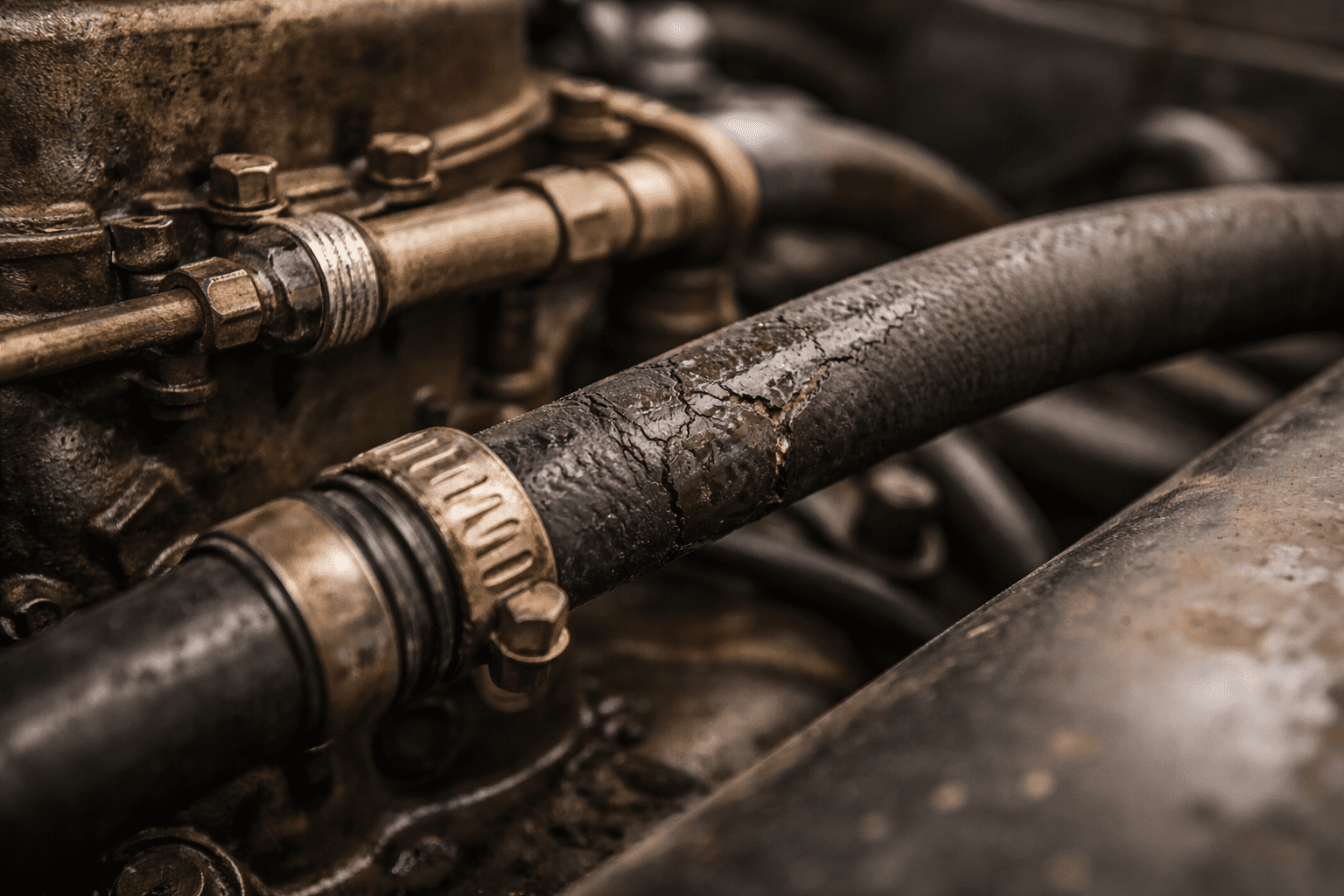
Leaking Rubber Fuel Hoses
Symptoms:
- Strong fuel smell near the engine or under the car
- Damp or cracked hose surfaces
- Drips after shutdown
Why it happens:
Original-style rubber hoses harden, crack, and sweat fuel, especially when exposed to ethanol. Many cars still run hoses installed decades ago.
Risk if ignored:
High fire risk. A pinhole leak spraying onto a hot exhaust is one spark away from disaster.
Gasoline vapors are highly flammable and toxic, and even small leaks or trapped fumes can create a serious fire hazard if they accumulate in an enclosed space or contact hot engine parts—making prompt diagnosis critical. Gasoline is a toxic and highly flammable liquid.
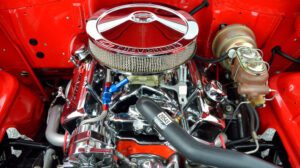
An improperly sized or worn carburetor can cause a classic Chevy to run rich, leading to strong fuel odors at idle or after shutdown. Choosing the right carburetor for a small block Chevy—and setting it up correctly—often eliminates these issues entirely.
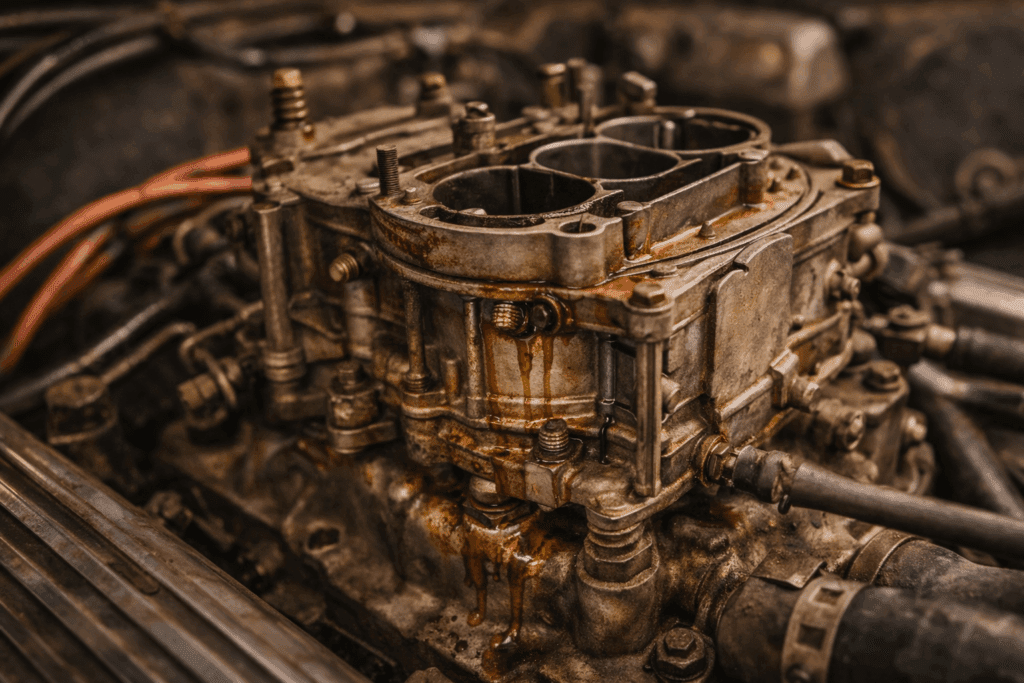
Carburetor Seepage or Flooding
Symptoms:
- Gas smell after parking
- Hard hot restarts
- Fuel stains around the carb base or air horn
Why it happens:
Worn needle-and-seat assemblies, heavy brass floats, or excessive fuel pressure allow fuel to leak into the intake or spill externally. This is common on Rochester, Holley, and Carter carbs.
Risk if ignored:
Engine fires, diluted oil, washed cylinder walls, and poor fuel economy. Fuel smells that appear after shutdown or on hot days can be related to fuel boiling rather than leaks, which is often a sign of vapor lock in classic Chevy fuel systems.
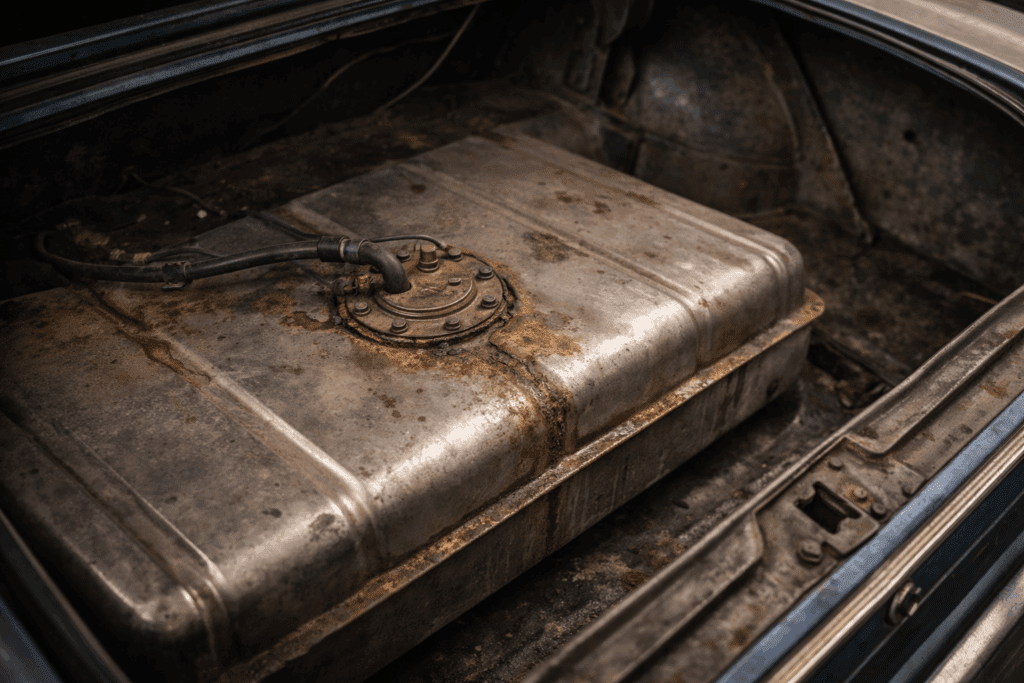
Fuel Tank Venting Problems
Symptoms:
- Gas smells strongest in the trunk or rear seat area
- Pressure release “whoosh” when opening the cap
- Odor is worse on hot days
Why it happens:
Pre-1970 Chevys used vented caps or vent lines. Blocked vents, incorrect caps, or rusted vent tubes cause fumes to build and escape into the cabin.
Risk if ignored:
Tank pressurization, fuel leaks, or vapor entering the interior—especially dangerous in enclosed spaces.
Mechanical Fuel Pump Leaks
Symptoms:
- Fuel smell near the front of the engine
- Oil level mysteriously rising
- Fuel dripping from the pump vent hole
Why it happens:
The internal diaphragm cracks, allowing fuel to leak externally or into the crankcase. Many replacement pumps today are lower quality than the originals.
Risk if ignored:
Engine oil dilution, bearing damage, and potential engine failure.
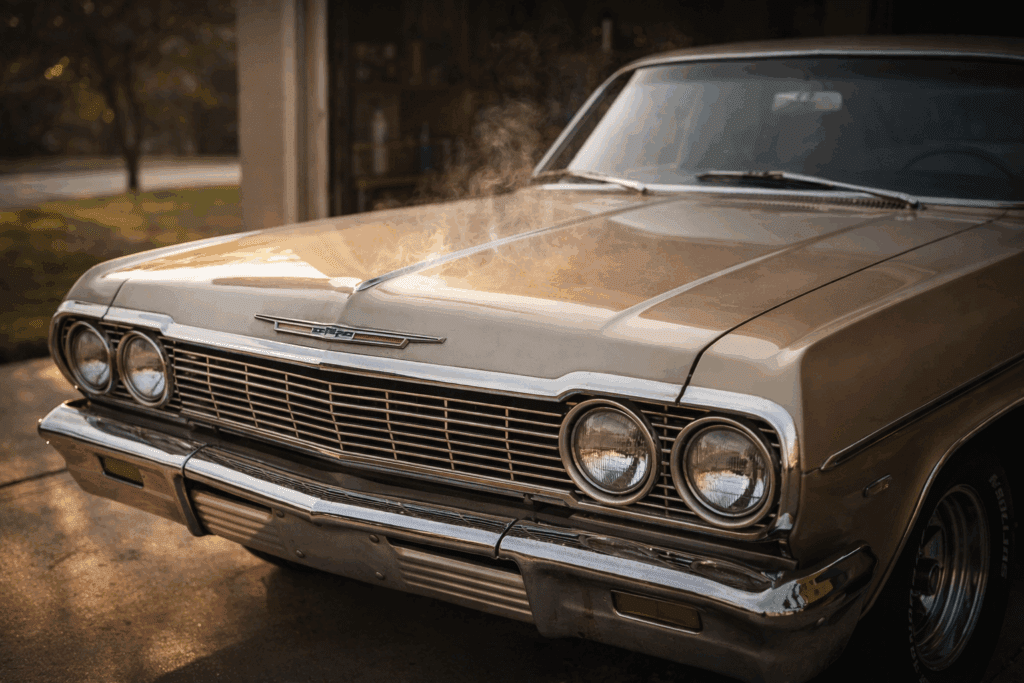
Evaporated Fuel After Hot Shutdown (Heat Soak)
Symptoms:
- Strong gas smell 5–30 minutes after parking
- No visible leaks
- Hard hot starts
Why it happens:
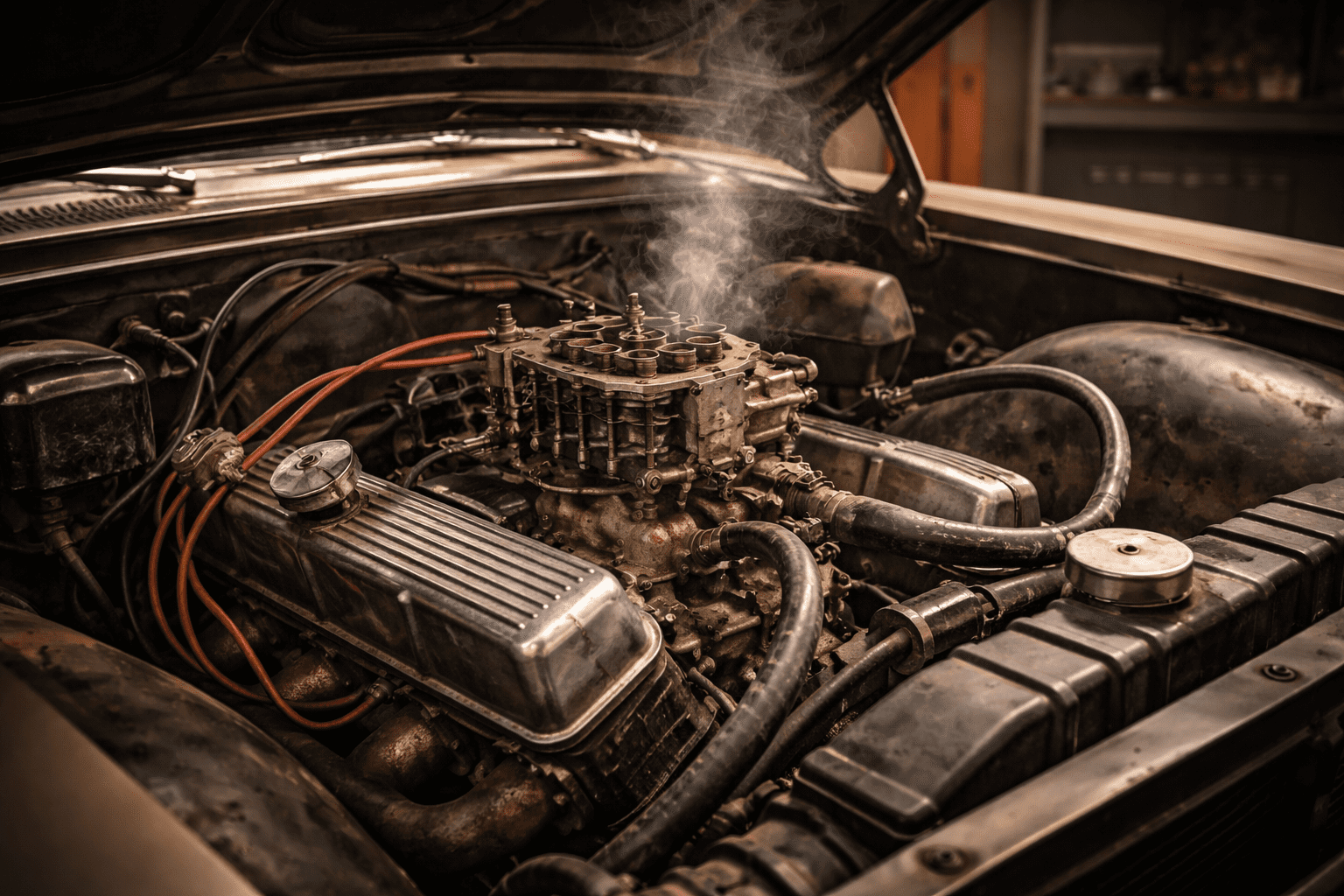
Fuel boils in carb bowls or lines due to heat soak, especially on small block cars with headers or tight engine bays. This overlaps with vapor lock issues.
See also: [Internal Link: Vapor Lock in Classic Chevys]
Risk if ignored:
Usually low fire risk, but chronic drivability issues and fuel percolation.
Rusted or Seeping Fuel Tank
Symptoms:
- Gas smell in the garage even when the car hasn’t run
- Damp tank seams
- Odor is strongest at the rear of the car
Why it happens:
Condensation inside steel tanks causes rust pinholes, especially in cars that sit unused for long periods.
Risk if ignored:
Fuel loss, garage fume buildup, and eventual tank failure.
How to Fix or Evaluate Each Cause
Inspect and Replace Rubber Fuel Lines
Steps:
- Visually inspect all rubber sections from the tank to the carb
- Flex hoses gently—cracking means replacement
- Replace with ethanol-rated fuel hose
Warnings:
Never reuse old clamps. Avoid cheap bulk hose.
Cost:
$25–$75
Difficulty:
Easy DIY
Diagnose Carburetor Fuel Leaks
Steps:
- Check fuel pressure (ideal: 4.5–6 psi for most carbs)
- Inspect float level and needle condition
- Look for seepage at gaskets and throttle shafts
Warnings:
Excess pressure from electric pumps causes many “mystery” smells.
Cost:
$50–$200 (rebuild parts)
Difficulty:
Moderate DIY
Correct Fuel Tank Venting
Steps:
- Verify correct vented or non-vented cap for your year
- Inspect vent lines for blockage or rust
- Replace collapsed hoses
Warnings:
Incorrect caps cause pressure buildup.
Cost:
$15–$60
Difficulty:
Easy
Test the Mechanical Fuel Pump
Steps:
- Smell engine oil for gasoline
- Check the pump vent hole for dampness
- Replace if any signs of leakage
Warnings:
If fuel is in the oil, do not run the engine.
Cost:
$40–$120
Difficulty:
Easy–Moderate
Reduce Heat Soak Fuel Odors
Steps:
- Add carb spacer (phenolic preferred)
- Reroute fuel lines away from heat
- Install heat shields where needed
Warnings:
Band-aid fixes won’t solve underlying carb issues.
Cost:
$30–$150
Difficulty:
Moderate
Address a Leaking Fuel Tank
Steps:
- Inspect seams and sending unit gasket
- Replace the tank if rusted—not patched
- Replace the filler neck hose at the same time
Warnings:
Tank sealers often fail long-term.
Cost:
$200–$600
Difficulty:
Moderate
Parts, Tools, or Upgrades Worth Considering
| Component | Original Style | Modern Upgrade | Best Use Case |
|---|---|---|---|
| Fuel Hose | Rubber | Ethanol-rated hose | Any driver |
| Carb Spacer | None | Phenolic spacer | Heat soak issues |
| Fuel Pump | Mechanical | High-quality mechanical | Stock engines |
| Fuel Tank | Steel | Coated steel or stainless | Long-term ownership |
Aftermarket brands vary—quality matters more than name. Avoid no-name fuel pumps and bargain carb kits.
Mistakes Classic Chevy Owners Commonly Make
- Assuming “they all smell like gas” (they shouldn’t)
- Replacing parts without checking fuel pressure
- Ignoring trunk-area fumes
- Using incorrect gas caps
- Parking leaking cars in attached garages
Most gas smells are diagnosable with patience, not guesswork.
When to Seek Professional Help
Get expert help if:
- Fuel odor persists with no visible leaks
- Gasoline is found in engine oil
- Smell is strongest inside the cabin
- The car has been heavily modified
Classic-car-experienced shops understand vented systems better than modern-only garages.
Related Buyer or Ownership Advice
If you’re evaluating or owning a classic Chevy long-term:
- Fuel smells often reveal deferred maintenance
- Documented fuel-system upgrades add value
- Cars that sit unused develop more fuel issues
Helpful Chevy ownership resources:
- Classic Chevy Overheating at Idle: Causes, Fixes, and Prevention
- VIN verification and originality checks
- Why My Classic Chevy Won’t Start After Sitting
- How to Restore a Chevy Small Block V8
Fuel odors are one of the fastest ways to spot a poorly sorted car.
FAQs
Is a gas smell normal in old Chevys?
A faint odor can happen briefly after shutdown, but persistent smells mean leaks, venting issues, or carb problems.
Can ethanol fuel make gas smells worse?
Yes. Ethanol degrades old rubber hoses and gaskets faster, increasing seepage and vapor odors.
Is it safe to drive with a gas smell?
Not until the source is identified. Fuel odors indicate a potential fire hazard.
Why does my classic Chevy smell like gas only after parking?
Heat soak causes fuel to evaporate or leak after shutdown—often carb-related.
Do electric fuel pumps cause gas smells?
They can if pressure isn’t regulated correctly or if hoses and fittings aren’t upgraded.
Final Takeaway
A gas smell in a classic Chevy is never something to ignore. While the causes are usually straightforward—aging hoses, carburetor seepage, or venting issues—the consequences can be serious. Sorted properly, a well-maintained classic Chevy should not smell like fuel, even by vintage standards.
About the Author
Gary Thompsom is a lifelong classic Chevrolet owner, researcher, and automotive writer with decades of hands-on experience maintaining and evaluating 1950s–1970s Chevys. His background includes real-world ownership of small block–powered cars and trucks, diagnosing common vintage fuel, cooling, ignition, and drivability issues that only surface through long-term use.
Gary focuses on practical, safety-first guidance for classic Chevy owners—especially topics that affect reliability, resale value, and everyday usability, such as fuel system failures, carburetor behavior, heat soak, vapor lock, and age-related component wear. His writing reflects the realities of owning cars built before modern fuel standards, emissions systems, and materials.
At OldChevys.com, Gary specializes in buyer education, ownership checklists, and diagnostic articles designed to help enthusiasts make informed decisions—whether maintaining a long-term driver, evaluating a potential purchase, or correcting problems introduced by age, storage, or improper past repairs.
Author Experience Highlights
- Hands-on classic Chevy ownership and maintenance experience
- Focus on 1950s–1970s Chevrolet platforms
- Emphasis on real-world diagnostics over theory
- Writes for owners, restorers, and buyers—not spec-sheet readers
Editorial Standards & Accuracy
At OldChevys.com, we follow strict editorial guidelines to ensure accuracy and usefulness:
- Content is based on first-hand ownership and restoration experience
- Year-specific differences are noted where behavior changes (pre- vs post-1970 fuel systems)
- Cost ranges reflect realistic U.S. market pricing
- Safety-related topics prioritize conservative recommendations
- Articles are reviewed for clarity, accuracy, and relevance to classic Chevy owners
We do not accept payment or incentives from parts manufacturers mentioned in editorial content.
Last Updated
Last edited: 12/27/25
This article is reviewed periodically to account for changes in fuel formulations, replacement part quality, and common failure patterns seen in classic Chevrolet vehicles still in regular use.
Intended Use
This guide is intended for educational and diagnostic purposes for classic Chevrolet owners. Fuel system work involves fire risk. If you are uncertain about any inspection or repair step—or if fuel odors persist—consult a qualified classic-car mechanic before driving the vehicle.
OldChevys.com is dedicated to preserving, restoring, and enjoying classic Chevrolet vehicles from the 1950s through the 1970s. Our content library includes buyer guides, technical references, ownership checklists, VIN resources, and long-form troubleshooting guides written for real owners—not spec sheets.