A disc brake conversion classic chevy upgrade is worth it for owners who regularly drive their cars in modern traffic, on highways, or in hilly conditions. It offers more consistent stopping and lower maintenance stress. For strictly original restorations or low-speed show cars, properly rebuilt drum brakes are often sufficient.
How Drum and Disc Brakes Differ in Real Driving
On paper, both drum and disc brakes can stop a car. In real-world driving—especially with a 3,500–4,000 lb classic Chevy—the differences show up quickly.
Stopping Consistency
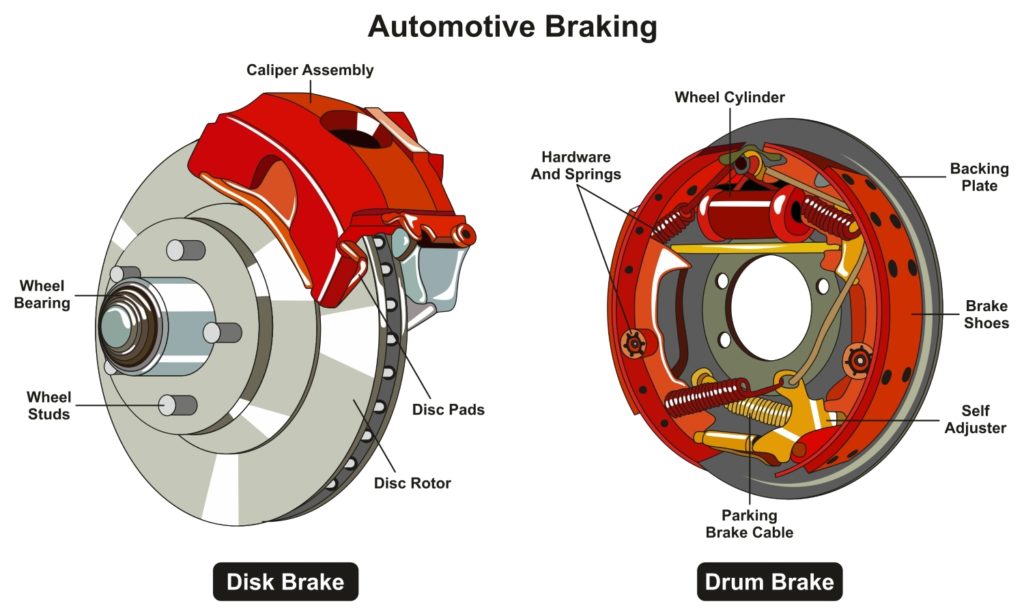
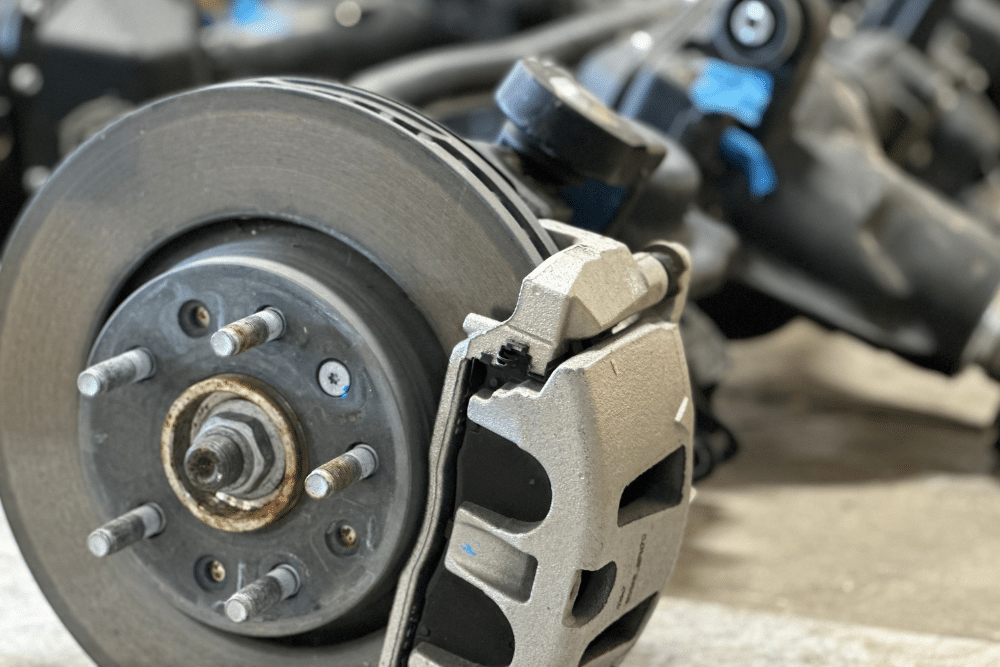
Drum brakes rely on friction shoes expanding inside a drum. As they heat up, their effectiveness drops. After a few hard stops, pedal feel can change noticeably. Disc brakes apply pressure from calipers squeezing a rotor, which stays more consistent across repeated stops.
In traffic, this matters. One panic stop is rarely the problem—it’s the second and third stop where drums fall behind.
Heat Management
Heat is the biggest weakness of drum brakes. They trap it. Once the drum expands from heat, braking efficiency drops (brake fade). Disc brakes shed heat faster because the rotor is exposed to airflow. That’s why modern vehicles abandoned drums up front decades ago.
Maintenance Realities
Drum brakes require periodic adjustment, careful shoe centering, and more labor when servicing. Disc brakes are simpler: pads, rotors, and calipers. They’re easier to inspect and service, especially for owners who maintain their own cars.
This doesn’t mean drums are “bad”—they’re just less forgiving under modern driving conditions.
Types of Disc Brake Conversion Kits
Front-Only Disc Brake Kits
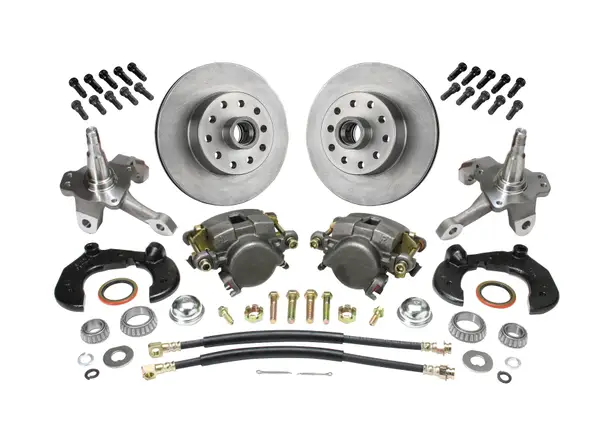
Front-only kits are the most common conversion for classic Chevys from the 1950s through early 1970s. Since roughly 70% of braking force is generated by the front wheels, this upgrade delivers the majority of the benefit.
Best for:
- Street-driven cars
- Mild restomods
- Owners keeping rear drums
Tradeoff: Rear drums still require adjustment and can limit overall brake balance if not set up correctly.
Four-Wheel Disc Brake Kits
Four-wheel kits replace both front and rear drums with discs. This offers maximum consistency and modern brake feel.
Best for:
- Heavier cars
- Highway driving
- Performance-oriented builds
Tradeoff: Cost, complexity, and potential originality concerns. Rear disc setups must be carefully matched to avoid over-braking.
Power vs Manual Disc Setups
Power disc brakes use a vacuum booster to reduce pedal effort. Manual disc brakes rely on pedal leverage alone.
- Power disc brakes feel more modern and are easier in traffic.
- Manual disc brakes offer better pedal feedback but require correct pedal ratio and master cylinder sizing.
Choosing the wrong setup is one of the most common causes of disappointing conversions.
What Comes in a Typical Conversion Kit
While kits vary, most include the following components:
Spindles
Some kits reuse factory spindles with adapter brackets. Others require new spindles designed for disc brakes. Spindle choice affects track width, steering geometry, and wheel clearance.
Calipers
Most kits use single-piston floating calipers, often based on widely available OEM designs. Multi-piston calipers exist but are rarely necessary for street-driven cars.
Master Cylinder
Drum and disc brakes require different master cylinder bore sizes and internal valving. A disc conversion almost always requires a new master cylinder.
Proportioning Valve
This controls front-to-rear brake bias. Without it, rear brakes can lock up prematurely or underperform. Many kits include a combination valve; others require a separate adjustable unit.
Cost Breakdown and Installation Reality
Below is a realistic cost comparison for common setups:
| Conversion Type | Parts Cost | Typical Labor | Total Estimated Cost |
|---|---|---|---|
| Front Disc Only | $900–$1,500 | $600–$1,200 | $1,500–$2,700 |
| Four-Wheel Disc | $1,800–$3,000 | $1,200–$2,000 | $3,000–$5,000 |
| Power Booster Add-On | $300–$600 | $200–$400 | $500–$1,000 |
Hidden Costs to Expect
- New brake lines or fittings
- Wheel clearance issues requiring different wheels
- Vacuum source upgrades for power boosters
- Alignment after spindle changes
A conversion that looks affordable on paper can climb quickly once these realities surface.
Pros and Cons of Disc Brake Conversions
Pros
- More consistent stopping
- Reduced brake fade
- Easier maintenance
- Improved confidence in traffic
- Better compatibility with modern tires
Cons
- Higher upfront cost
- Potential originality loss
- Installation complexity
- Wheel fitment challenges
- Minimal value gain on concours restorations
Disc brakes improve drivability, not necessarily resale value—unless the buyer prioritizes safety upgrades.
Common Conversion Mistakes
Wrong Master Cylinder
Using a drum brake master cylinder with disc brakes leads to poor pedal feel and reduced braking performance. Bore size matters.
Pedal Ratio Issues
Classic Chevys were designed around drum brakes. Disc setups require a different pedal leverage ratio. Ignoring this results in a hard or ineffective pedal.
Rear Brake Bias Problems
Too much rear braking causes lockup; too little wastes stopping potential. Proper proportioning is critical, especially with four-wheel disc conversions.
When a Conversion Makes Sense (And When It Doesn’t)
Makes Sense If:
- You drive regularly in traffic
- You cruise at highway speeds
- You’ve upgraded engine power
- You prioritize predictable braking
Doesn’t Make Sense If:
- The car is a show-only restoration
- You rarely exceed low speeds
- Originality is a top priority
- Existing drum brakes are properly rebuilt and adjusted
For many owners, front disc brakes paired with rear drums strike the best balance.
FAQs
Do disc brakes shorten stopping distance?
Not always. Tires and suspension matter just as much. Disc brakes mainly improve consistency and control.
Can original drum brakes be safe?
Yes, when rebuilt and adjusted correctly—but they require more attention and have lower heat tolerance.
Will disc brakes increase resale value?
Generally no, unless marketed as a drivability upgrade rather than a restoration.
Are power brakes necessary?
No, but they make daily driving easier. Manual discs work well when set up properly.
Do disc conversions affect originality?
Yes. Even bolt-on kits are visible changes that matter to purists.
Final Takeaway
Disc brake conversions for classic Chevys aren’t mandatory—but they’re often practical. If you drive your car like a car, not a museum piece, the upgrade delivers real-world benefits. If originality and period-correct restoration are your priorities, well-maintained drum brakes remain a valid choice.
Further Reading:
Classic Chevy Brake Problems
Classic Chevy Restoration Costs
Classic Chevy Parts Guide