
By OldChevys.com — Your trusted source for Classic Chevy restoration guides, tools, and value estimates.
Why the Tri-Five Chevy Still Reigns Supreme
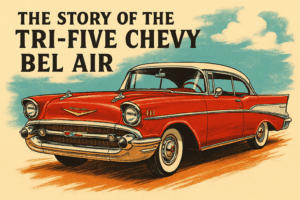
Few cars symbolize the golden era of American motoring like the Tri-Five Chevy. Built from 1955 through 1957, these Chevrolets (the 150, 210, Bel Air, and Nomad) combined groundbreaking V8 power, bold styling, and an enduring cultural legacy. Today, they’re among the most restored and collected classics worldwide.
This guide covers everything:
- What defines a Tri-Five Chevy
- Model-by-model breakdowns
- Factory specs, trims, and options
- Restoration challenges and common parts
- Buying tips and valuation resources
- Links to diagrams, checklists, and tools
Table of Contents
What Is a Tri-Five Chevy?
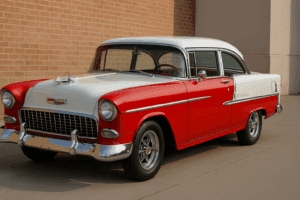
The phrase Tri-Five Chevy refers specifically to the 1955, 1956, and 1957 Chevrolet passenger cars. This includes the:
- Chevrolet 150 (base model)
- Chevrolet 210 (mid-level trim)
- Chevrolet Bel Air (top-of-the-line luxury)
- Chevrolet Nomad (sporty two-door wagon, part of the Bel Air family)
👉 Related post: Tri-Five Chevy Body Panels Buyer’s Guide.
Historical Significance
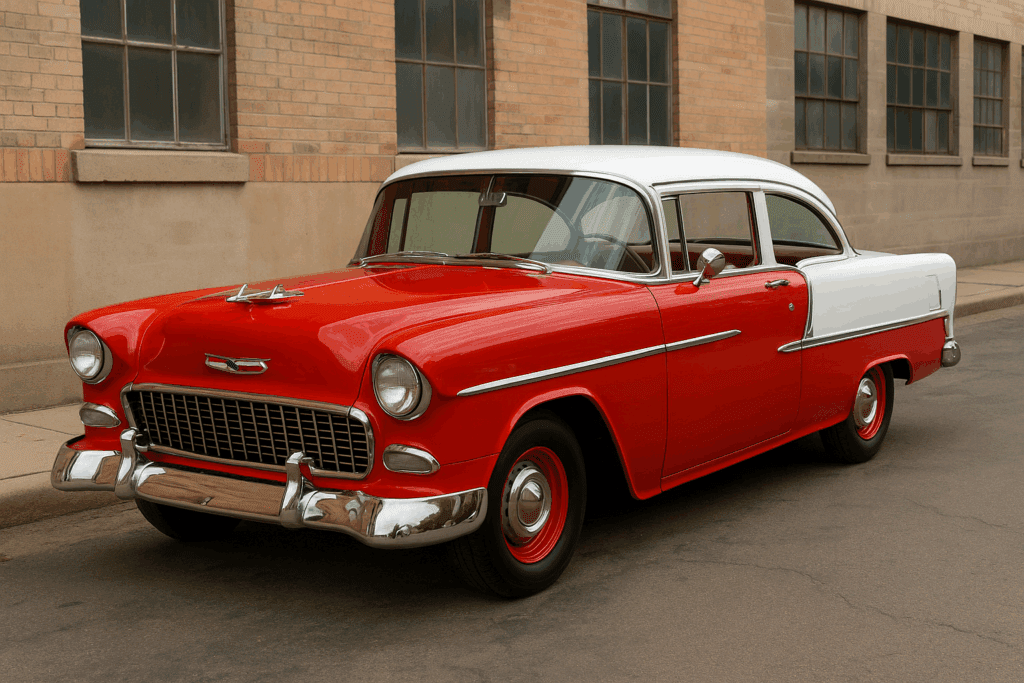
1955: The Breakthrough Year
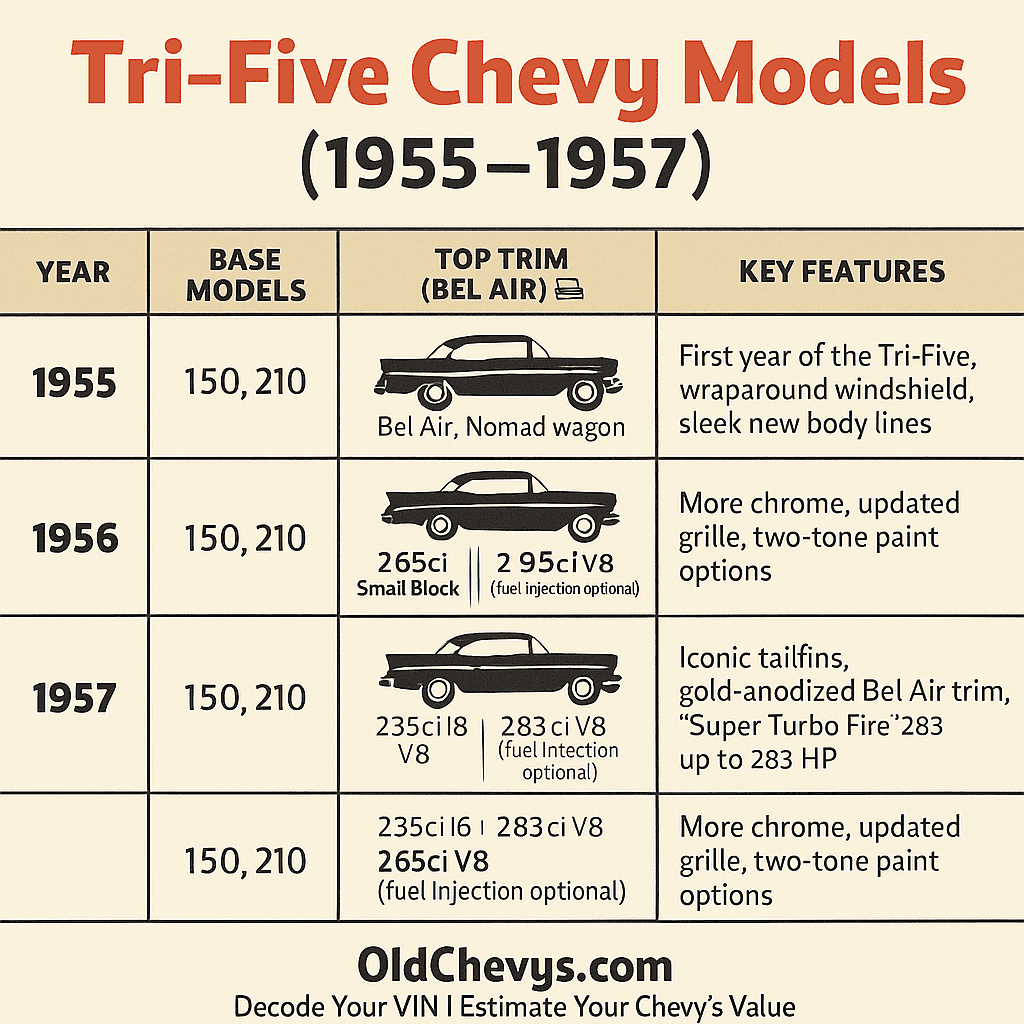
- Introduced the 265 Small Block V8, transforming Chevy into a performance contender.
- Sleek new body styling with egg-crate grille.
- “Motorama” design influence with a low beltline and wraparound windshield.
Chevrolet introduced the 265 Small Block V8, transforming Chevy into a true performance contender. For full original brochures and factory documentation, see the GM Heritage Center vehicle archive.
1956: Refinement & Chrome
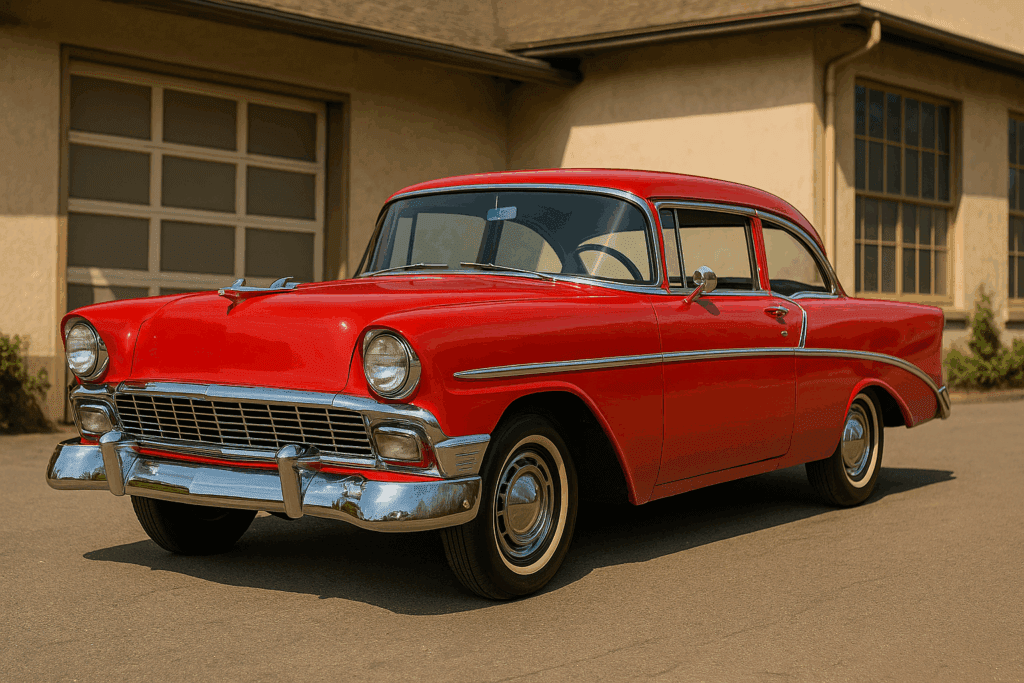
- Updated grille and more chrome trim.
- Expanded color options and two-tone schemes.
- Improved electrical system and stronger driveline.
1957: The Icon
- Bold tailfins and gold-anodized Bel Air trim.
- 283 V8 available with optional fuel injection.
- Widely considered the most iconic of all Tri-Fives.

👉 Related post: 1955 Chevy Bel Air Wiring Diagram.
Tri-Five Chevy Specs & Options
Engines (1955–1957)
- 265 V8 (1955–56)
- 283 V8 (1957, optional fuel injection)
- Blue Flame Six inline engine (base models)
When verifying an original Tri-Five engine, decoding the block’s casting date with the Small Block Chevy Date Code Decoder is a critical first step.
Transmissions
- 3-speed manual
- Overdrive manual
- Powerglide automatic
Body Styles
- 2-door coupe
- 4-door sedan
- Convertible
- Station wagon (including Nomad)
👉 Related post: Chevy Small Block Engine Hub.
Factory options varied across years, and details can be verified through period-correct manuals and archives such as the GM Heritage Center vehicle information kits.
Restoration Challenges
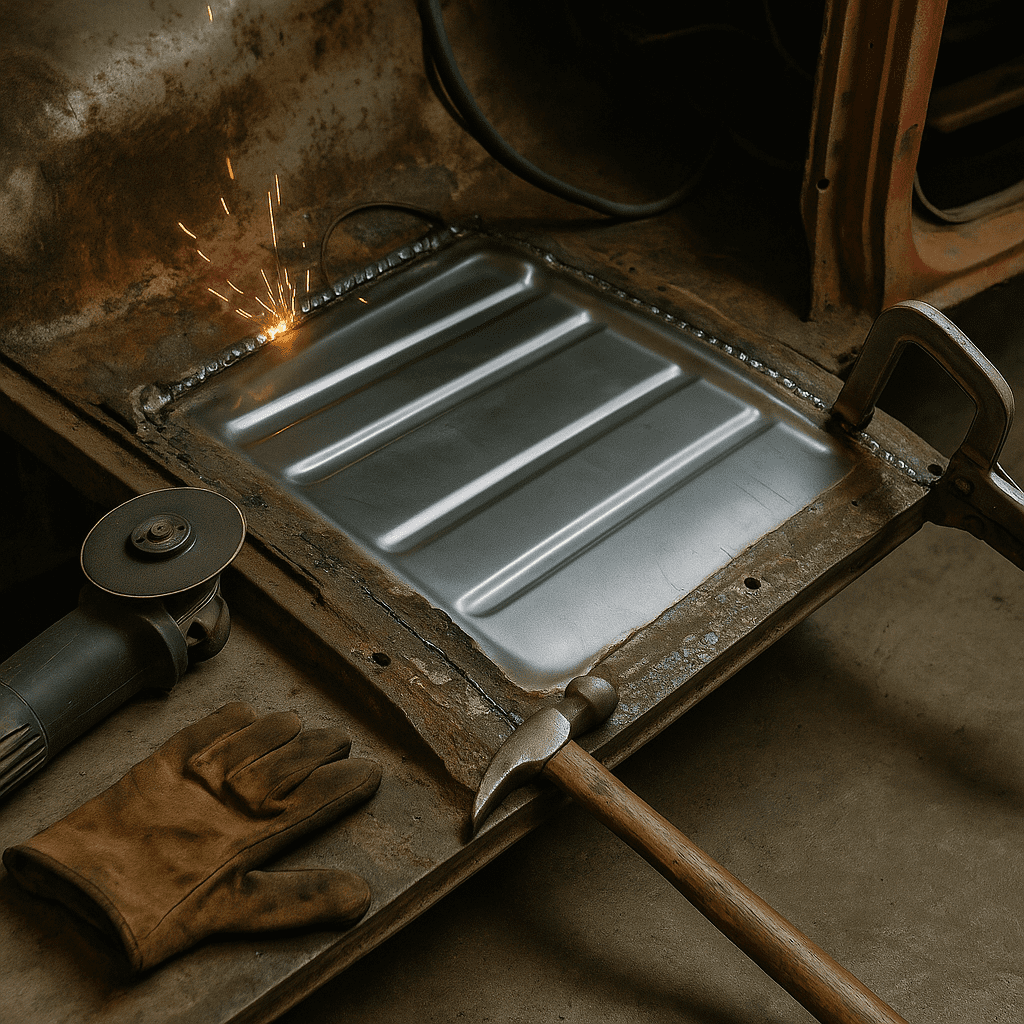
Common Rust Areas
- Floor pans
- Rocker panels
- Trunk pans
- Lower fenders
- Around the rear wheel arches
Parts Availability
Good news: Tri-Fives are so popular that virtually every part is reproduced. From OEM-style upholstery kits to chrome trim sets, you can restore one using catalogs alone.
👉 Related post: Classic Chevy Accessories Guide.
Trim & Authenticity
- Bel Airs require correct gold trim for true value.
- Nomads have unique tailgate and roofline parts.
- Collectors value correct carb setups, tag codes, and factory paint.
Tri-Five Chevy Models Explained
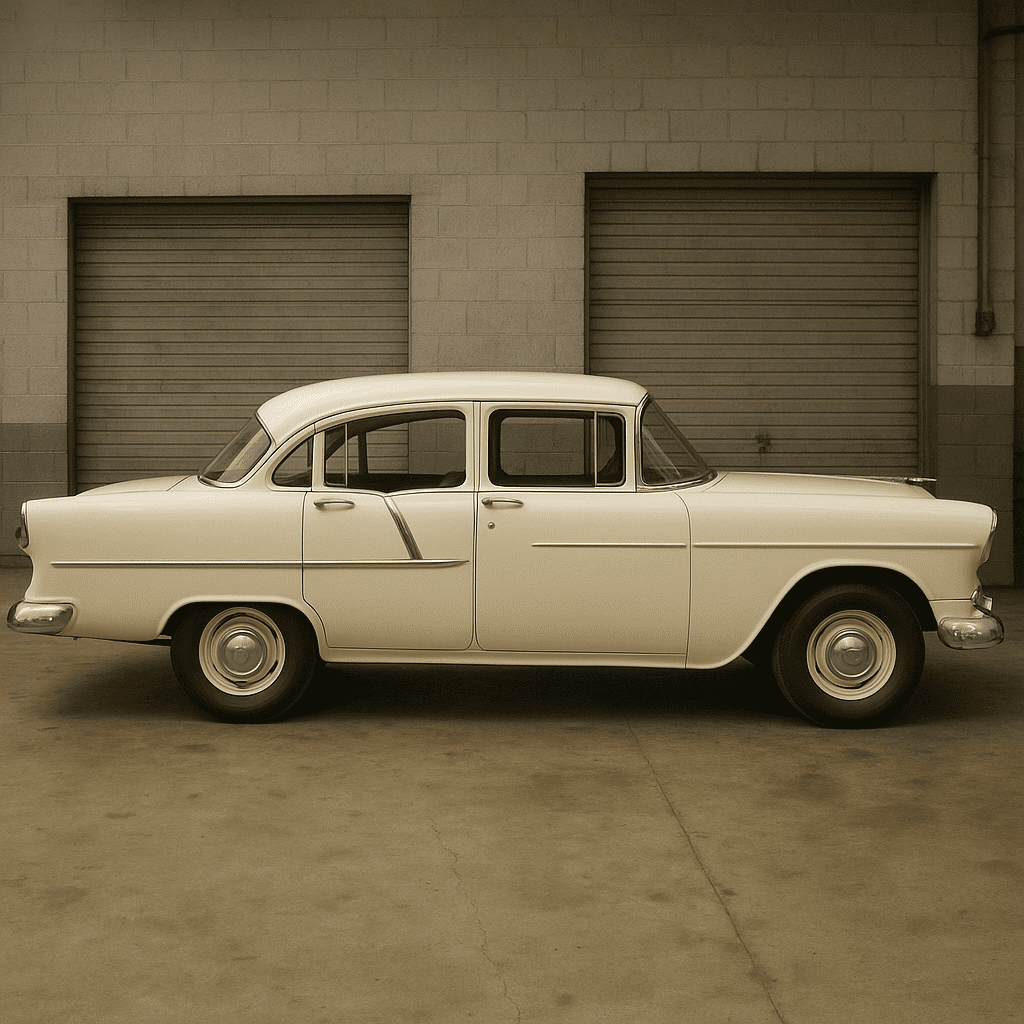
Chevrolet 150
- Budget-friendly, no-frills
- Minimal trim, basic upholstery
- Rare today, since fewer were saved
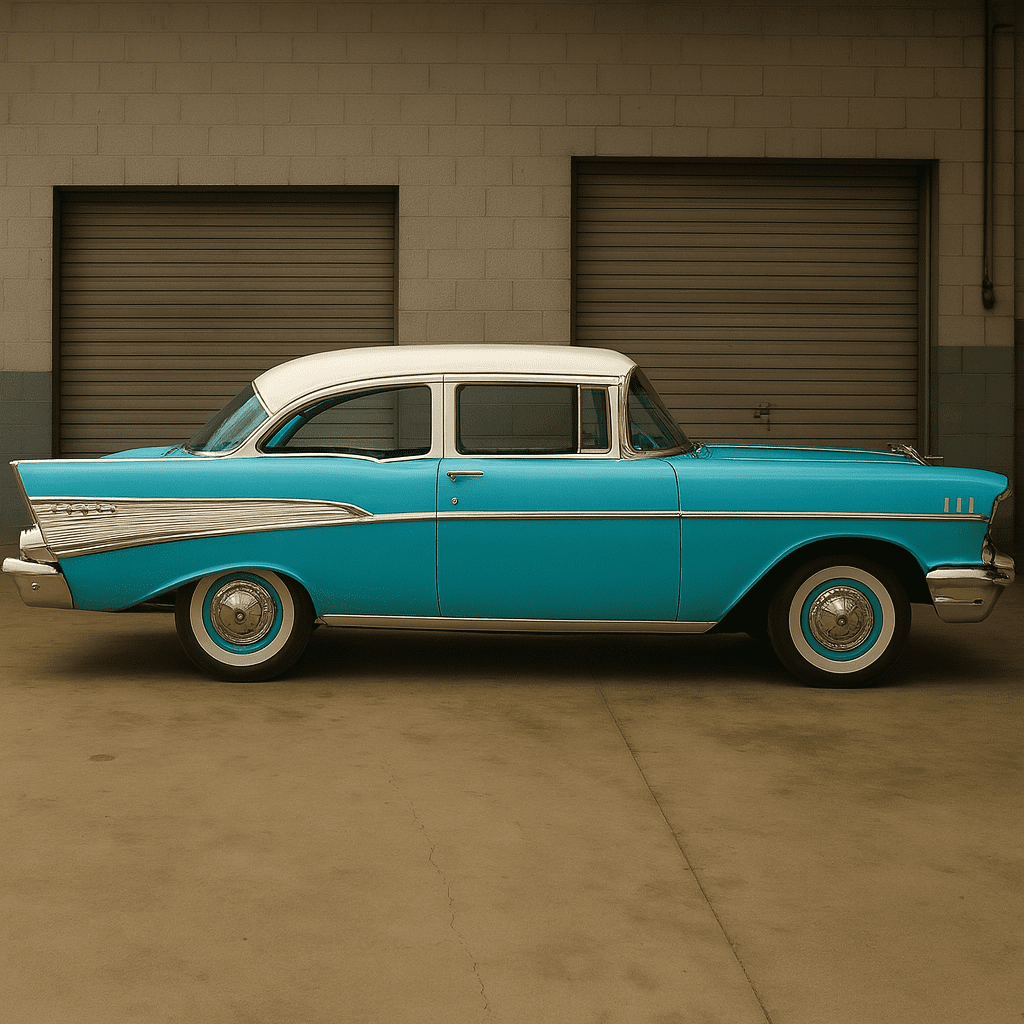
Chevrolet 210
- Middle trim level, most common
- Two-tone paint popular
- Often upgraded during restorations
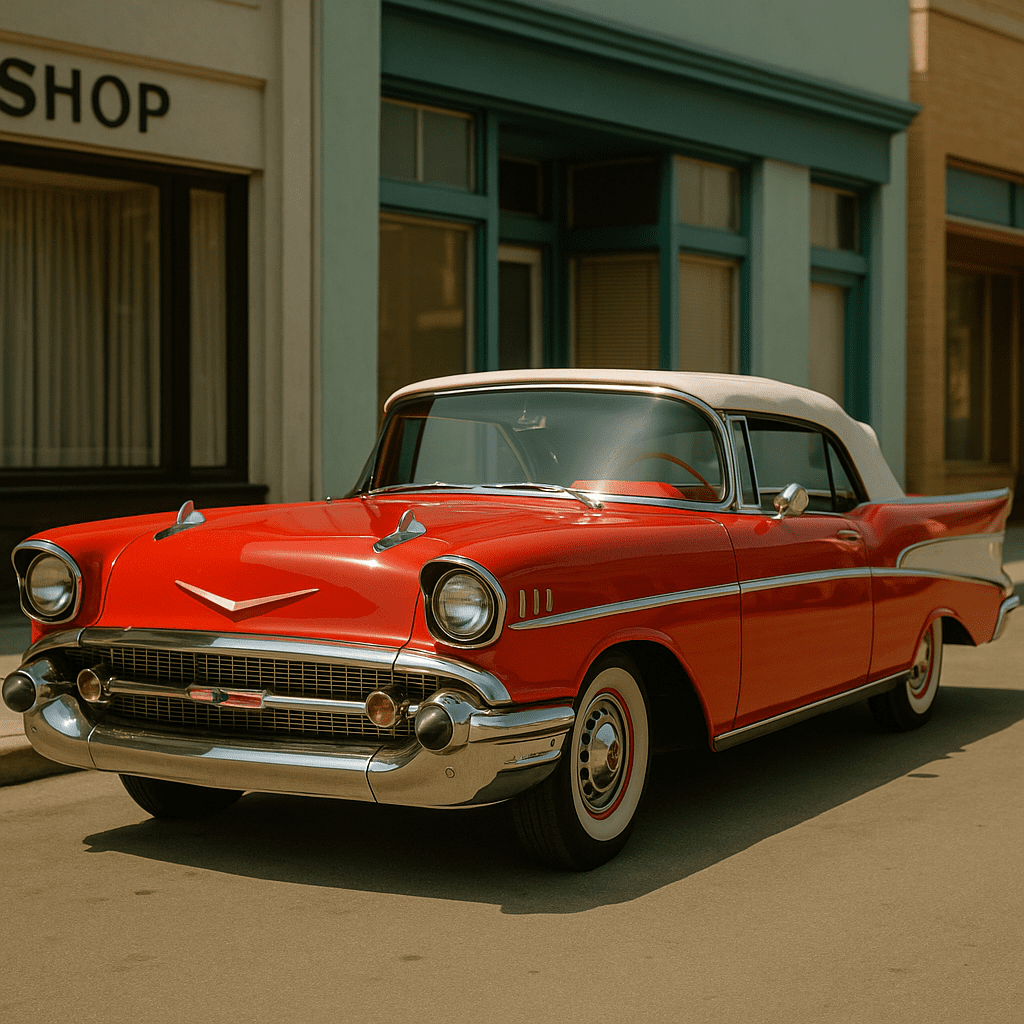
Chevrolet Bel Air
- Flagship luxury model
- Distinctive chrome trim and scripts
- Gold-anodized grille in ’57 Bel Airs
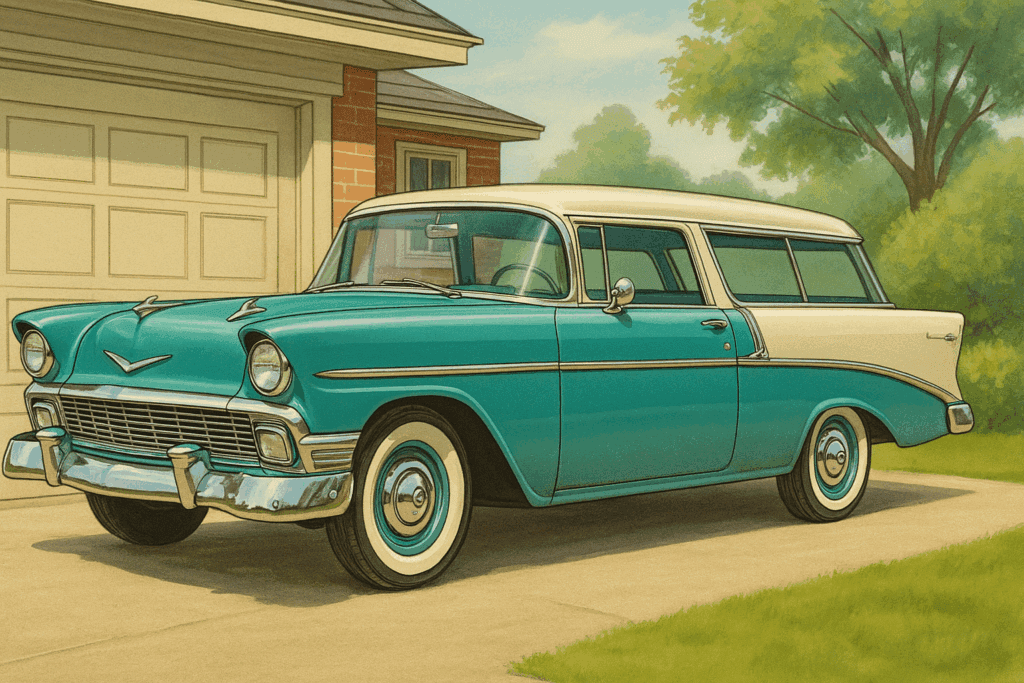
Chevrolet Nomad
- Two-door sport wagon, rarest and most collectible
- Sloping roofline and ribbed tailgate trim
- High resale values in today’s market
👉 Related post: 1969 Chevelle SS Guide — compare to later muscle era.
Buying a Tri-Five Chevy
Where to Find Them
- Classic car auctions
- Swap meets and collector groups
- Online marketplaces (Hemmings, Bring a Trailer)
What to Watch For
- Rust in structural areas
- Missing trim (hard to replace)
- Authenticity of SS/Bel Air badges
- Documentation and build sheets
👉 Use our Buyer’s Checklist PDF before making a purchase.
Rust, trim authenticity, and proper documentation are the biggest concerns. For insurance and collector valuation standards, consult the Hagerty Valuation Tool.
Buyers today search beyond local car shows. Online platforms like Hemmings Classic Car Marketplace regularly list Tri-Fives ranging from project cars to concours-ready examples.
Valuing a Tri-Five Chevy
Prices vary widely:
- Project cars: $5,000–$15,000
- Drivers: $25,000–$45,000
- Show-quality restorations: $60,000–$100,000+
- Rare Nomads and Fuel-Injected Bel Airs: $125,000–$200,000+
👉 Run your car through our Classic Chevy Value Estimator to get real-time comps.
Prices vary widely depending on originality, trim, and market demand. Hagerty maintains updated market reports, and you can cross-check current comps through their classic car valuation database.
Restoration Tips
- Start with Structure: Fix floors and rockers before cosmetics.
- Chrome Carefully: Re-chroming is expensive; polish stainless where possible.
- Mix OEM & Reproduction: Use OEM for visible trim, repro for hidden sheet metal.
- Upgrade Safely: Disc brakes and dual-master cylinders are smart for road use.
- Document Everything: Keep casting numbers, trim tag info, and receipts organized.
Thanks to their popularity, parts are widely reproduced. Reputable suppliers like Classic Industries and Eckler’s Classic Chevy carry nearly everything you need for a Tri-Five restoration.
For detailed steps on reading VIN numbers, see our Chevy VIN Decoder
Tools & Resources
- 1950-80 Chevy VIN Decoder — confirm year, plant, trim codes.
- Classic Chevy Value Estimator — find your car’s worth.
- Buyer’s Checklist PDF — covers rust hotspots and paperwork.
- Newsletter Signup — monthly guides and restoration tips.
- Best Places to Buy a Classic Chevy – Classic Chevy buying tips.
- Must-check items before buying any Tri-Five
Frequently Asked Questions
Why are Tri-Five Chevys so popular?
They combined V8 performance, stylish design, and affordability — and they remain highly collectible.
Which Tri-Five Chevy is the rarest?
The 1957 Nomad wagon, especially with fuel injection.
Are reproduction parts good enough?
Yes, licensed reproductions fit well, but OEM trim pieces still hold the most value.
What’s the best first upgrade for drivability?
A front disc brake conversion and dual-master cylinder.
Do Tri-Fives hold value?
Yes — in fact, well-restored Bel Airs and Nomads often appreciate over time.
The Timeless Appeal of the Tri-Five Chevy
From their debut in 1955 to the finned glory of 1957, Tri-Five Chevys remain the cornerstone of classic Chevy culture. They’re affordable to enter, rewarding to restore, and admired worldwide. Whether you’re buying, restoring, or just appreciating, these cars deliver nostalgia and performance in equal measure.