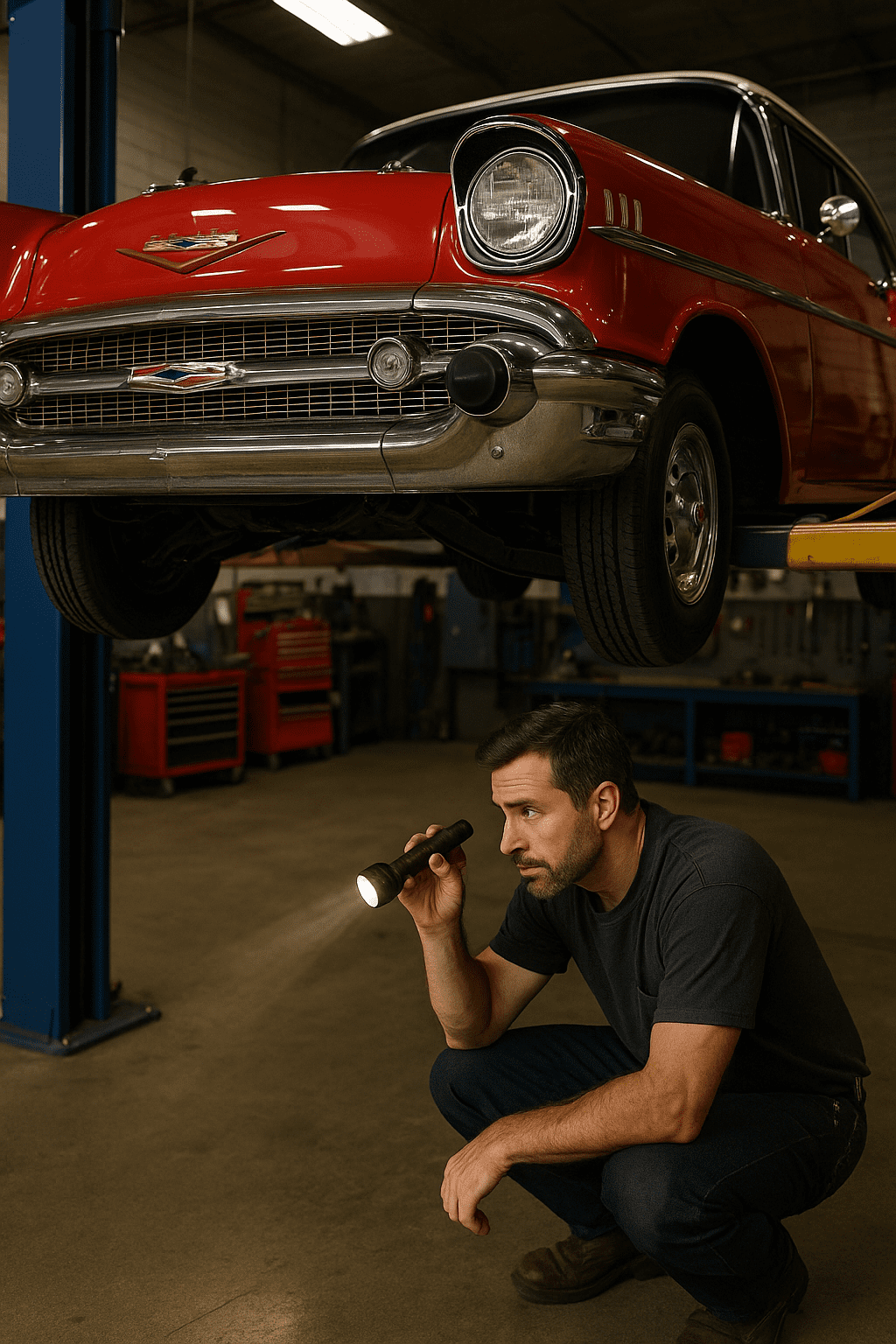
Everything you must check before you buy a Tri-Five Chevy — from rust to VIN tags to real-market pricing.
If you’re getting ready to buy a Tri-Five Chevy, the excitement is real: the 1955, 1956 and 1957 Chevrolets remain some of the most iconic American classics ever built. Their parts availability, timeless styling, and strong resale market make them highly desirable for restorers, collectors, and restomod builders alike.
But that same popularity means one thing: overpriced cars, hidden rust, and questionable “restorations” are everywhere.
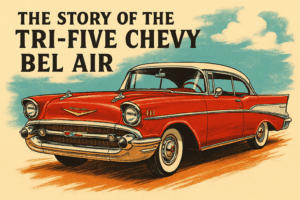
This guide gives you a complete Tri-Five Chevy inspection checklist, optimized for buyers who want to buy a tri-five Chevy and avoid costly mistakes and confidently choose the right 1955–1957 Chevy.
What to Look for Before You Buy a Tri-Five Chevy
(1955, 1956 & 1957 models: 150, 210, Bel Air & Nomad)
Buying a Tri-Five isn’t just about paint and chrome. It’s about structure, authenticity, mechanical quality, and how well the car matches your goals — whether that’s a numbers-matching 1957 Bel Air, a budget 1955 project, or a 1956 restomod ready for modern driving.
➡️ Resource: Read our Tri-Five Chevy Guide: 1955–1957 Models Explained.
1. Decide Which Tri-Five Chevy You Want to Buy
Before inspecting cars, get clear on your target:
Which year fits your style?
- 1955 Chevy – clean lines, “shoebox” look, first-year small-block V8.
- 1956 Chevy – updated grille, more refined trim, hidden fuel cap.
- 1957 Chevy – the icon: fins, gold trim (Bel Air), and available fuel injection.
Choose your body style (impacts value dramatically):
- 2-door sedan
- 2-door hardtop
- Convertible (highest premium)
- 4-door sedan
- Wagon
- Nomad (high demand, expensive to restore)
Pick your trim level:
- 150 – base
- 210 – mid-level
- Bel Air – premium trim, most chrome, highest prices
Your build goal:
- Stock / original
- Period-correct restoration
- Tri-Five restomod (LS swap, disc brakes, overdrive, etc.)
- Project car
- Show-quality build
Checklist:
- Year: ’55 / ’56 / ’57
- Body style: sedan / hardtop / convertible / wagon / Nomad
- Trim: 150 / 210 / Bel Air
- Stock or restomod
- Budget & restoration tolerance
2. Confirm the Car’s Identity — VIN, Trim Tags & Factory Configuration
(Critical when you buy a Tri-Five Chevy)
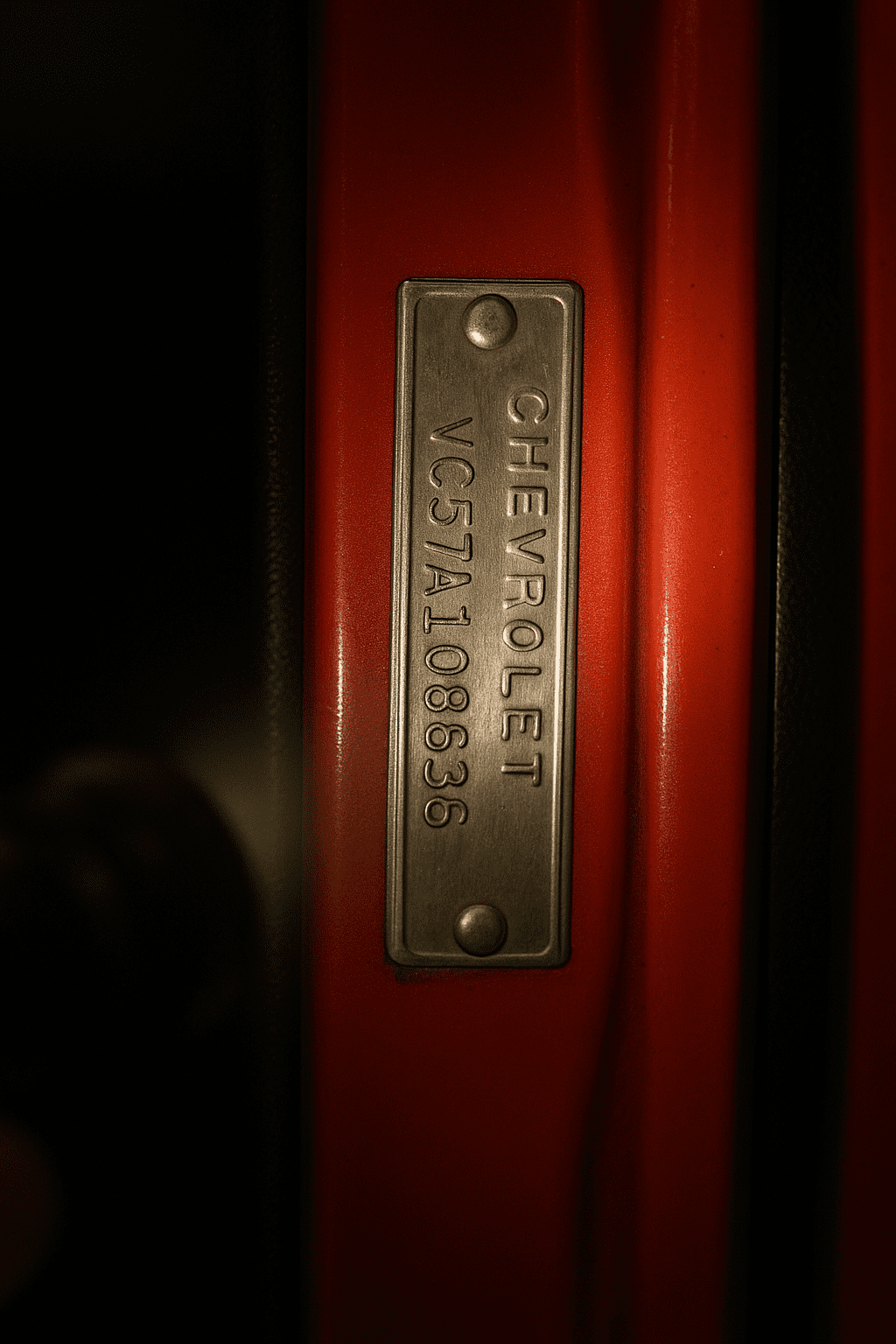
Tri-Fives are some of the most cloned and misrepresented classic cars on the market. Many 150s or 210s are dressed up as Bel Airs.
Inspect these first:
VIN tag
- Must match the title
- Should not show tampering, scratches, re-riveting, or replacement
Cowl/trim tag
- Confirms factory body style, paint, and trim
- Ensures the car is truly a Bel Air, 210, etc.
Badging and side trim
- 150, 210 and Bel Air trim patterns are distinct
- Mis-matched moldings often signal a clone
➡️ Match the numbers with our Classic Chevy VIN Decoder (a must)
Checklist:
- VIN matches title
- Cowl tag decodes correctly
- Trim and emblems match the advertised model
- Documentation available: receipts, photos, registration history
Actual Buyer Case: Misrepresented Tri-Five Trim Level
“A friend bought a Bel Air — except it wasn’t one.”
“A close friend bought what he thought was a ’57 Bel Air 2-door sedan. The trim was correct and the price seemed fair. After running the VIN and cowl tag, we discovered it started life as a 210. Someone added Bel Air side trim during an older restoration. He didn’t mind the clone, but it killed the resale value by almost 30% when he sold it two years later.”
3. Rust & Structural Inspection Checklist (Most Important Step)
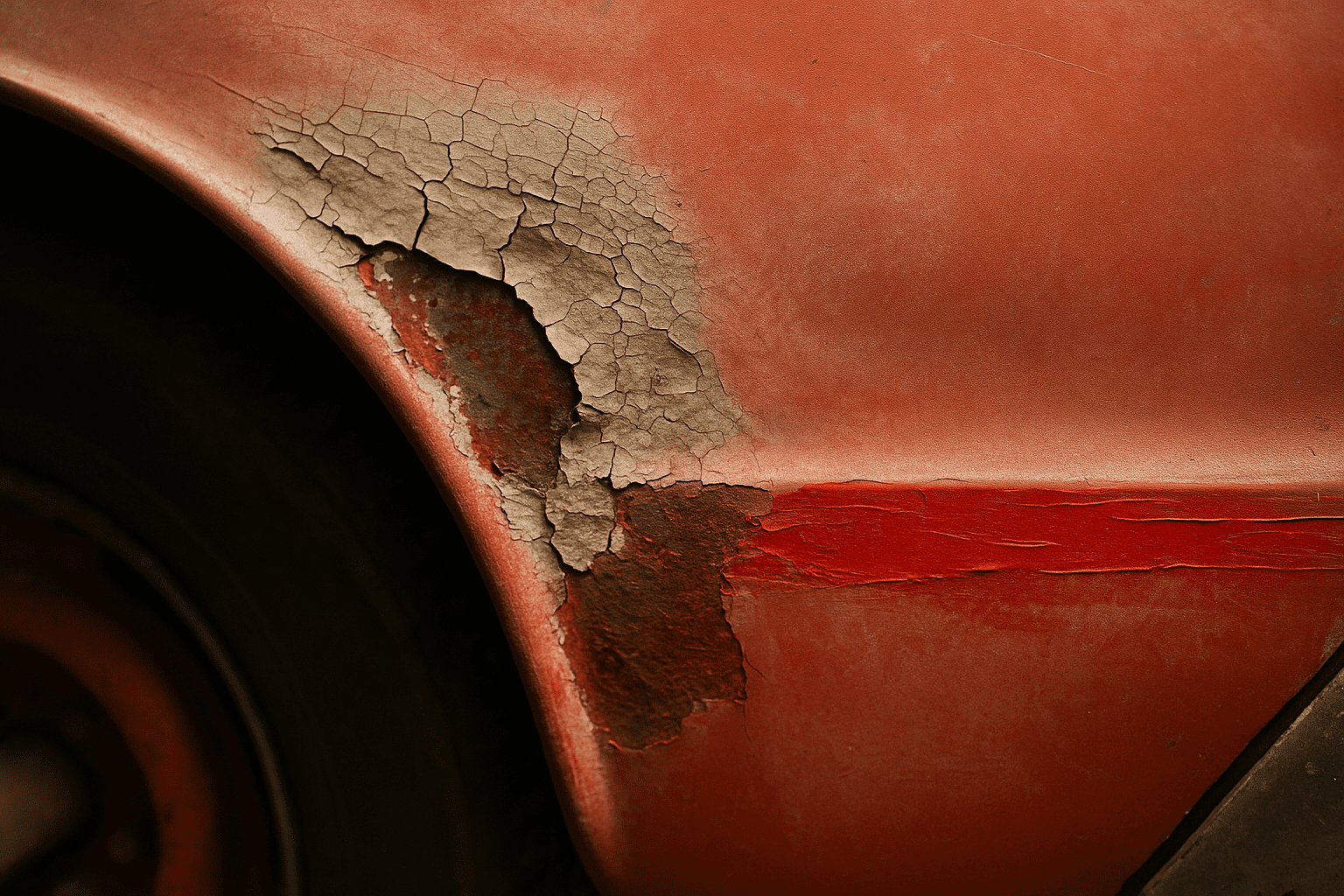
This is the #1 factor that determines whether a car is worth buying, tri-five chevy rust spots. Rust repair on Tri-Five Chevys is expensive, and body bracing issues can require body-off restoration.

Major Tri-Five Rust Areas
Inspect all of the following closely:
- Floor pans
- Rockers (inner & outer)
- Body braces under the floors
- Frame rails/firewall mounts
- Lower front fenders
- Rear quarter panels (ahead of rear wheels)
- Trunk floor & spare tire well
- Headlight buckets & front fender tops
- Nomad/wagon-specific rust: tailgate, drip rails, roof seams
➡️ For more detailed body panel and rust information read Tri-Five Chevy Body Panels (1955–1957) and Rust Repair for Classic Chevys: What You Need to Know.
Experience From the Field: What a Lift Inspection Revealed
“I found flawless paint… and a cracked frame.”
“In 2019, I inspected a ’56 210 hardtop that looked showroom fresh in photos. When I put it on a lift, I found a crack in the frame right behind the driver’s side front suspension mount. The seller had no idea. The repair would have required cutting the frame and boxing both sides. I walked immediately. If I hadn’t checked underneath, I would’ve bought a $35,000 car that needed a $6,000 structural repair before it was safe to drive.”
Pro tip:
If the body braces or frame are deeply rotted — walk away unless you are prepared for full frame-off restoration.
Checklist:
- Frame straight and solid
- Body braces not rotted through
- Floors intact
- Rockers rust-free or properly replaced
- No hidden rust under the fresh undercoat
4. Drivetrain Condition — Original vs Swapped Engines
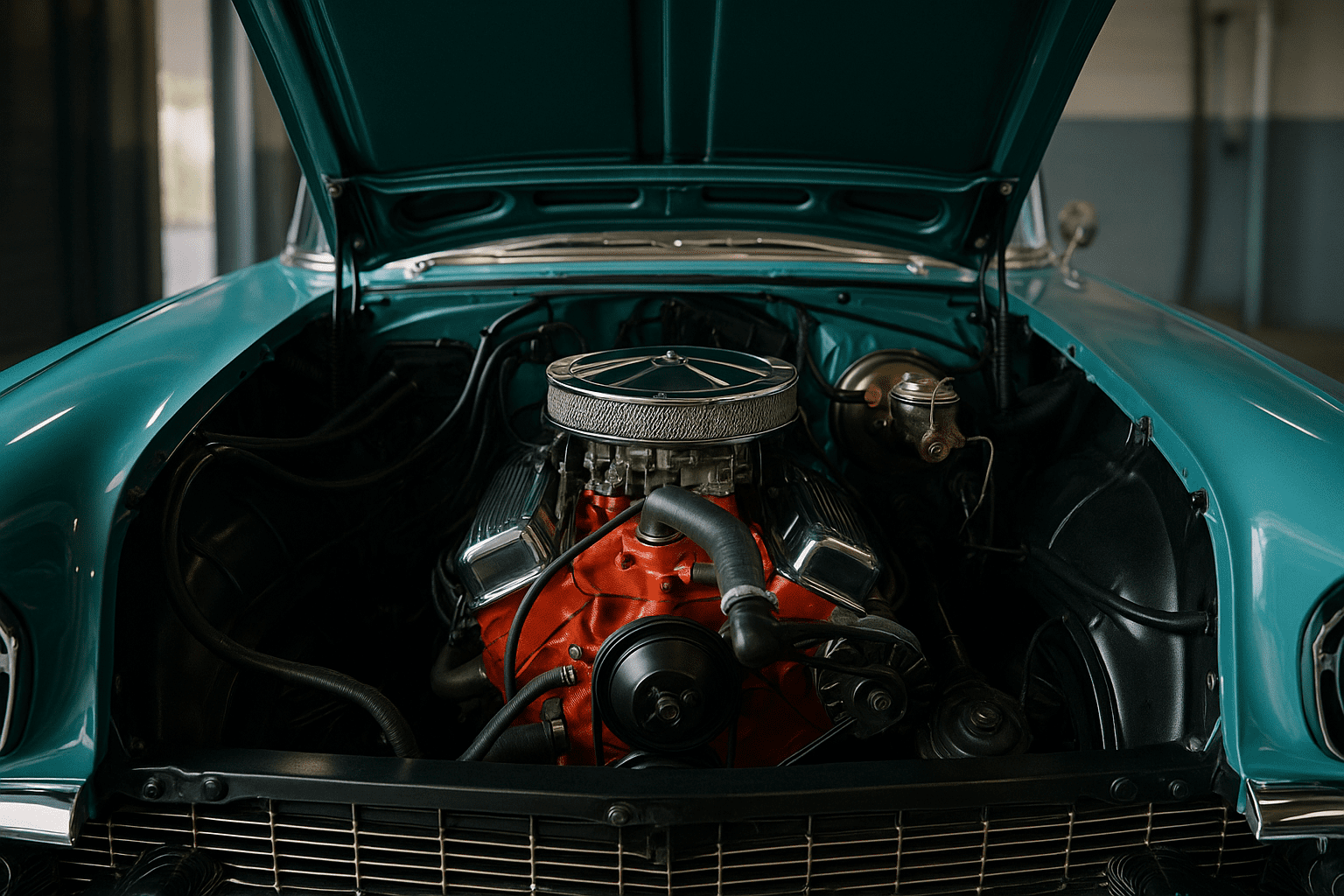
Most Tri-Fives have had engine and transmission swaps over the last 60+ years.
Original engines (desirable for collectors):
- 235 inline-six
- 265 V8
- 283 V8 (1957 fuel-injected option adds strong value)
Common modern upgrades:
- Small-block crate engines
- Big-blocks
- LS-swap Tri-Five Chevys (big buyer-interest term)
Engine inspection checklist:
- Cold start, clean with no smoke
- No knocks, ticks or oil-pressure issues
- Cooling system adequate for modern traffic
- No fuel leaks or overheating during test drive
If the seller claims the car “just needs a battery,” be cautious—long-term storage is a common reason a classic Chevy won’t start after sitting, and the fix isn’t always simple.
Transmission considerations:
- Original: 3-speed manual, OD manual, Powerglide
- Upgraded: TH350, TH400, 700R4, T56, modern automatics
Checklist:
- Shifts smoothly
- No clunks or vibration
- Highway RPM checked (important if no overdrive)
5. Suspension, Steering & Brakes — Safe Driving or Money Pit?
These systems define whether the car is safe for regular use.
Inspect for:
- Steering wheel play
- Worn tie rods/idler arm/steering box leaks
- Sagging leaf springs
- Cracked bushings
- Weak brakes or pulling under braking
- Old single-reservoir master cylinder (upgrade recommended)
Many buyers don’t realize how common classic Chevy brake issues are until they experience pulling or fading on the road.
Restomod buyers look for:
- Front disc brakes
- Dual master cylinder
- Sway bars
- Updated shocks and springs
- Rack-and-pinion conversions
6. Interior, Glass & Trim — Expensive to Replace, Easy to Overlook
Parts availability is excellent, but costs add up fast.
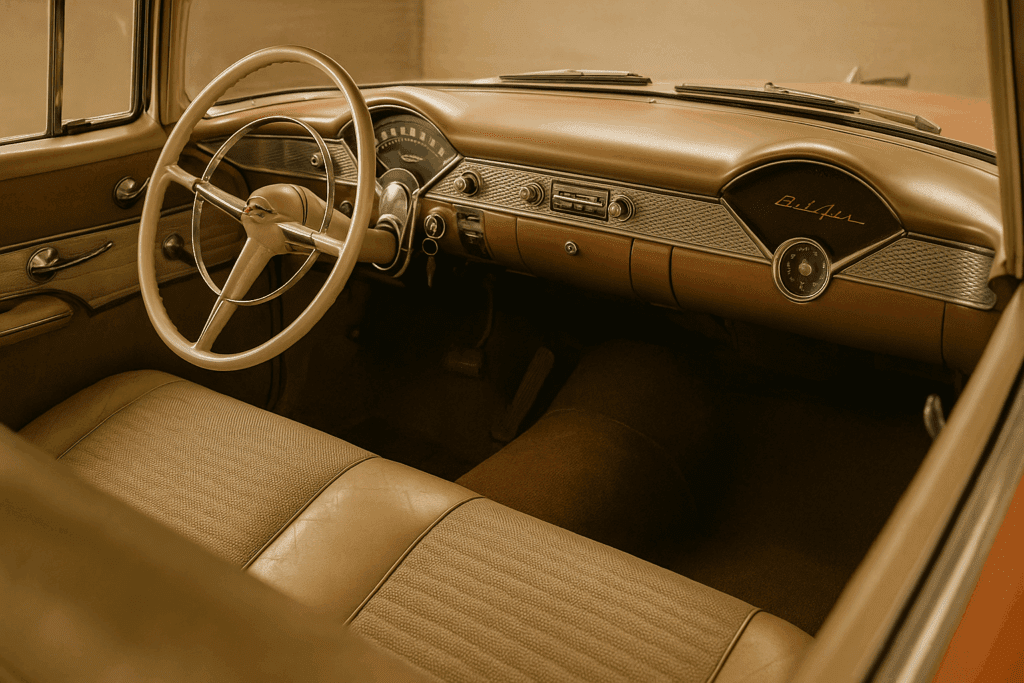
Interior inspection:
- Seat frames & sliders
- Carpet lifted to inspect floors
- Working gauges and electrics
- Heater & A/C (if retrofitted)
- Dash uncut (important for originality buyers)
Trim & brightwork:
- Straight stainless and chrome
- Glass free of cracks or clouding
- Bel Air-specific trim present (if claimed)
Many so-called “restorations” cut corners here — use that in your negotiation.
7. Stock vs Restomod — Know What You’re Paying For
This affects cost, resale value and buyer pool.
Stock/original Tri-Five
- Best for collectors
- Rarest and most stable in value
- Requires careful preservation
Restored (period correct)
- Looks original
- Minor upgrades for usability
Tri-Five Restomod
- LS engine swaps
- Overdrive transmissions
- Disc brakes
- Modern suspension
- A/C, power steering
Make sure the build quality matches the price.
8. Conduct a Real Test Drive (Non-Negotiable)
Evaluate:
- Cold start behavior
- Smooth acceleration
- Tracking straight at 40–60 mph
- No clunks from rear end or driveline
- No overheating in traffic
- Confident braking
- Vibration-free cruising
If the seller refuses a test drive, do not buy the car.
9. Market Value, Pricing & Restoration Costs
The Tri-Five market is diverse:
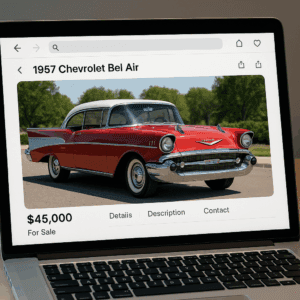
- Projects: $8k–$20k
- Drivers: $30k–$55k
- Restomods: $50k–$100k+
- Show-quality convertibles or Nomads: often over $100k
Where to study real prices:
- Auctions (BaT, Barrett-Jackson, Mecum)
- ClassicCars.com
- Hemmings
- Facebook Marketplace & Tri-Five groups
➡️ Use our Classic Chevy Value Estimator tool.
Checklist:
- Compared similar year/trim/body style comps
- Factored restoration, shipping, taxes, insurance
- Car fits long-term budget & resale expectations
What I Learned From My 1955 Project: Cheap Tri-Fives Aren’t Always Cheaper
“A $7,500 project turned into a $28,000 lesson.”
“Years ago I bought a ’55 project car for what I thought was a steal: $7,500. It ran, the body looked decent, and it was complete. Once I got it home and started disassembly, I discovered two layers of floor patches, full rocker replacement needed, and homemade body braces welded in crooked. By the time the metal work alone was finished, I had $20k invested — before paint or drivetrain. A cheap Tri-Five almost always becomes an expensive one.”
10. Red Flags — When to Walk Away From a Tri-Five Chevy
Walk away if:
- VIN doesn’t match title
- Structural rust in frame/body braces
- Seller refuses inspection or test drive
- Fresh paint hides questionable repairs
- Story changes or documentation missing
- Price is wildly above comparables
There will be another Tri-Five. They built millions of them, and the market remains extremely active.
Ready to Buy a Tri-Five Chevy the Smart Way?
If you’re serious about buying a Tri-Five Chevy, this checklist will help you separate great cars from future headaches. Whether you’re shopping for a 1955 cruiser, a 1956 daily-driver restomod, or a 1957 Bel Air collector piece, following these steps will protect your budget and increase your chances of finding the perfect car.
Frequently Asked Questions About Buying a Tri-Five Chevy
What is considered a Tri-Five Chevy?
A Tri-Five Chevy refers to the 1955, 1956, and 1957 Chevrolet passenger cars — including the 150, 210, Bel Air, and Nomad.
Which Tri-Five Chevy is most valuable?
Typically the 1957 Bel Air convertible, followed by Nomads and 2-door hardtops. Originality and documentation increase value significantly.
What are the worst rust spots on a Tri-Five?
Body braces, rockers, floor pans, lower fenders, headlight areas, and Nomad drip rails.
Is a restomod Tri-Five worth more than a stock one?
For everyday drivers: yes.
For collectors: often no.
It depends on build quality and market trends.
How much does it cost to buy a Tri-Five Chevy project?
Most projects fall between $8,000 and $20,000, depending on rust, completeness and body style.
About the Author
Gary Thompson – Classic Chevy Enthusiast & Founder of OldChevys.com
Gary has spent more than two decades researching, evaluating, and restoring classic Chevrolets, with a special focus on the 1955–1957 Tri-Five era. He’s inspected dozens of project cars, restomods, and survivor models and writes practical, experience-based guides to help buyers avoid costly mistakes.
Editorial Standards
OldChevys.com is committed to accuracy and clarity. All technical content is based on a combination of:
- First-hand inspection experience
- Factory reference material
- Established restoration knowledge
- Verified marketplace data
Articles are reviewed periodically to ensure they reflect current market conditions and restoration practices.
Disclaimer
This guide is intended for general educational use. Classic vehicles vary greatly in condition, originality, and value. Always perform your own due diligence — including a physical inspection or hiring a qualified inspector — before purchasing any Tri-Five Chevy. OldChevys.com does not guarantee the accuracy of seller claims or valuations.
Sources & References
- Chevrolet factory documentation & trim charts
- Hemmings and Hagerty buyer guides
- Bring a Trailer, Mecum & Barrett-Jackson auction results
- Classic Chevy restoration suppliers and community knowledge
- Personal inspection notes and owner experiences
Update Policy
This article is reviewed and updated regularly to reflect new pricing trends, rust repair insights, and restoration best practices.
Last Edited: 12/9/25