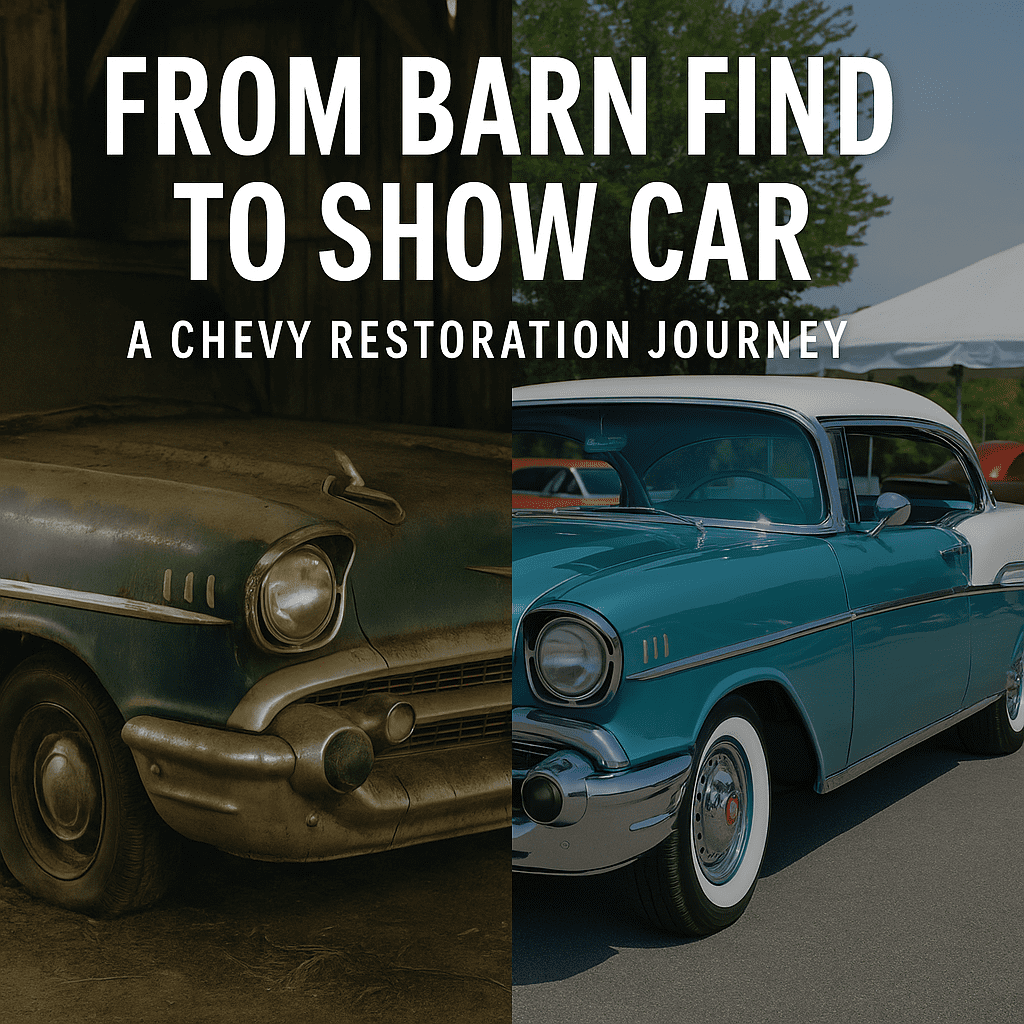
Take a behind-the-scenes look at a Chevy barn find restoration — from the moment it’s uncovered in dusty storage to its transformation into a polished show car. Along the way, you’ll pick up expert tips to guide your own classic Chevy project car.
From Barn Find to Show Car: A Chevy Restoration Journey
There’s nothing quite like the thrill of stumbling across a forgotten Chevy barn find restoration project. Dusty, neglected, and hidden away for decades, these cars often look like lost causes to the untrained eye. But for passionate enthusiasts, a barn find isn’t just an old car—it’s the start of an adventure. Turning a weathered relic into a gleaming show car requires patience, skill, and vision. If you’re considering your own classic Chevy project car, here’s a step-by-step look at how the journey unfolds.
The Excitement of the Discovery
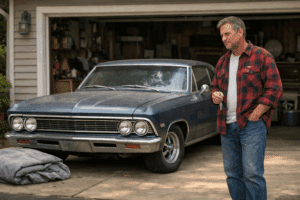
The story always begins with a find. Maybe it’s a ’57 Bel Air tucked in a farmer’s shed or a 1970 Chevelle SS forgotten in a dusty garage. Barn finds carry mystery—what history do they hold? How much of the original car remains? These discoveries often come through word-of-mouth, auctions, or online listings. The key is acting quickly and knowing how to evaluate whether the Chevy is a worthy candidate for restoration.
Tip: Bring a flashlight, a magnet, and a notepad when inspecting a barn find. Look for VIN plates, check for rust, and document parts condition. Our Complete Guide to Restoring a Classic Chevy can help you spot red flags before making an offer.
Evaluating the Project
Not every barn find should become a show car. Some are too far gone, while others may only need light restoration. The main considerations include:
- Frame and Body: Severe frame damage or extensive rust can sink your budget.
- Parts Availability: Popular Chevy models like the Tri-Five or Camaro have strong aftermarket support.
- Originality: Cars with matching numbers and original parts are more desirable for collectors.
If you’re unsure about value, our Classic Chevy Value Estimator can provide a ballpark figure to guide your decision.
The First Stage: Disassembly
Once purchased, the car needs to be stripped down. Every bolt, panel, and component is carefully removed and cataloged. Photos and labels are crucial to ensure parts find their way back in the right place. This stage often reveals surprises—hidden rust, missing pieces, or evidence of previous repairs.
Many restorers rely on restoration guides and communities such as Hagerty’s Barn Find articles for advice on how to approach tricky disassembly.
Bodywork and Rust Repair
Few barn finds escape the clutches of rust. Repairing it is often the most time-consuming and expensive part of the journey. This stage involves:
- Sandblasting or media blasting to strip old paint.
- Welding new panels where corrosion has eaten through.
- Straightening the frame and ensuring proper alignment.
A solid body foundation is essential before moving on to paint and polish.
Engine and Mechanical Restoration
Every classic Chevy project car deserves a reliable heart. Depending on the model, this could mean rebuilding a small-block V8 or replacing outdated systems with modern upgrades. Decisions here often split enthusiasts into two camps: those who want period-correct authenticity and those who prioritize performance.
Adding modern upgrades like disc brakes, electronic ignition, or an upgraded suspension can make the car safer and more enjoyable to drive. Resources like Summit Racing’s restoration catalog make sourcing these upgrades easier than ever.
Paint and Detailing
This is the stage where the transformation becomes visible. Choosing the right color scheme is both personal and strategic. Some opt for factory-original colors to boost collector value, while others choose bold custom hues to stand out at shows.
Polished chrome trim, carefully restored emblems, and period-correct interiors add the finishing touches. Don’t forget small details like badges, dash panels, and upholstery—they can make or break the final impression.
Reassembly: Bringing It Back Together
Reassembly is like solving a puzzle, only with shinier pieces. Each restored or replaced part goes back in its rightful place. Patience is key—rushing this stage can lead to costly mistakes. Owners often turn to manuals, clubs, and step-by-step tutorials for guidance. The ChevyTalk forum is an excellent space to troubleshoot issues with fellow Chevy enthusiasts.
The Big Reveal: From Barn Find to Show Car
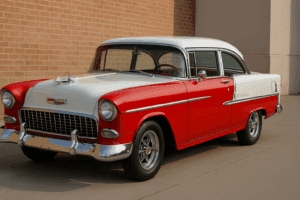
The first time a restored Chevy rolls out of the garage under its own power is a proud moment. Whether you take it to a local car show, a cruise night, or simply admire it in your driveway, the transformation is complete. What began as a dusty barn find has now become a gleaming symbol of passion and perseverance.
To keep the journey alive, many owners showcase their stories online or through newsletters. You can share your restoration journey with fellow enthusiasts by subscribing to our Classic Chevy Newsletter.
Chevy Barn Finds
A Chevy barn find restoration is more than just fixing up a car—it’s about reviving history. From discovery and disassembly to the triumphant reveal, each stage requires dedication and a love for classic Chevys. While not every project car will end up on the concours stage, every one of them tells a story worth celebrating.
If you’re ready to start your own restoration adventure, make sure to explore our Common Chevy Restoration Mistakes to avoid unwanted problems. With the right tools, guidance, and community, your barn find can truly become a showstopper.