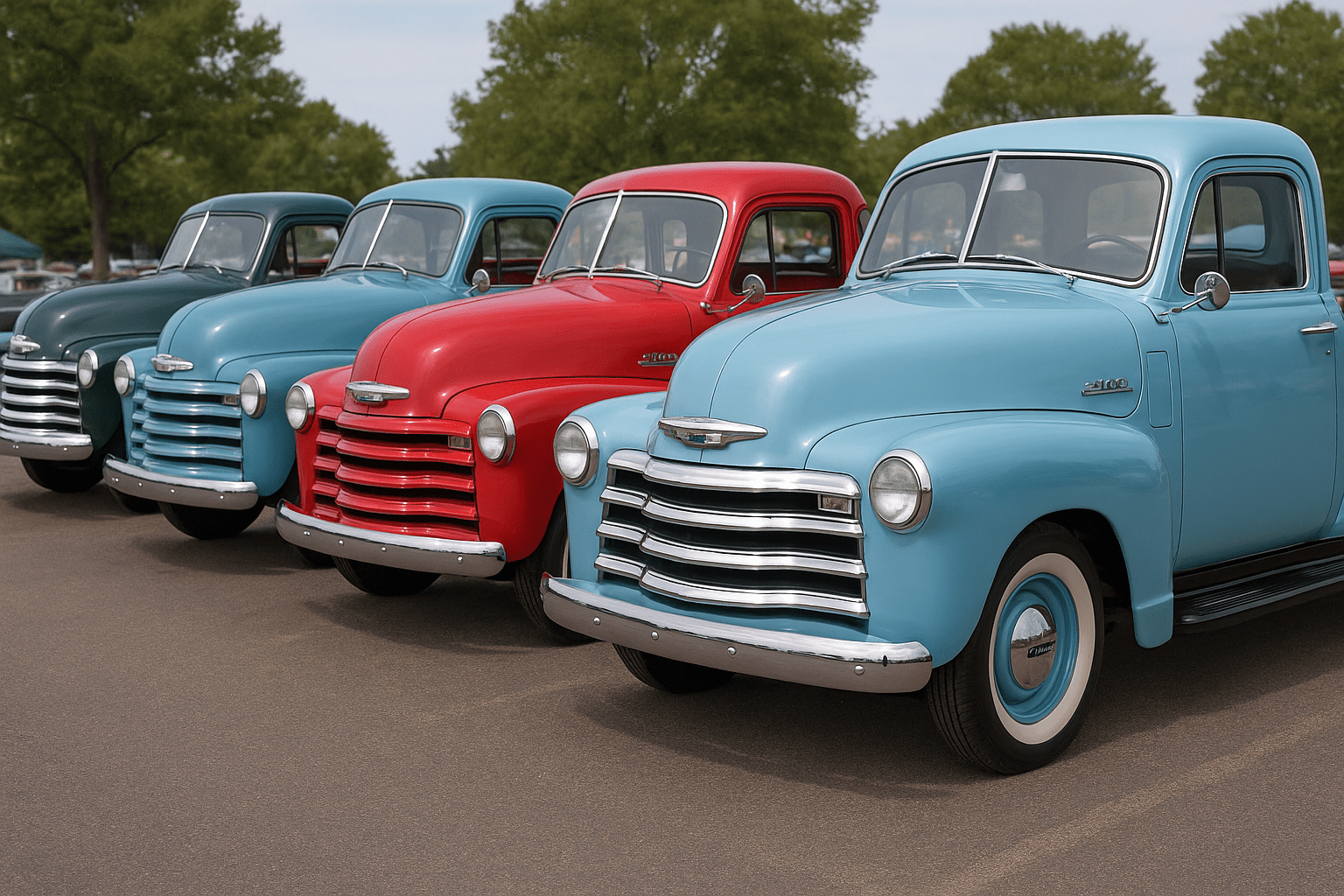
America’s Postwar Pickup Icon
When Chevrolet rolled out its new truck line in 1947, the world was ready for something fresh. The war was over, the economy was booming, and America needed practical, dependable vehicles. Enter the Advance Design series — Chevy’s first major redesign since the 1930s.
These trucks were bigger, more comfortable, and built to handle just about anything. They quickly became the best-selling pickups in the country, a title they held until 1955. Today, they’re among the most beloved classics in the Chevy lineup, celebrated for their timeless styling and restoration potential.
What Made the Advance Design Trucks Different?
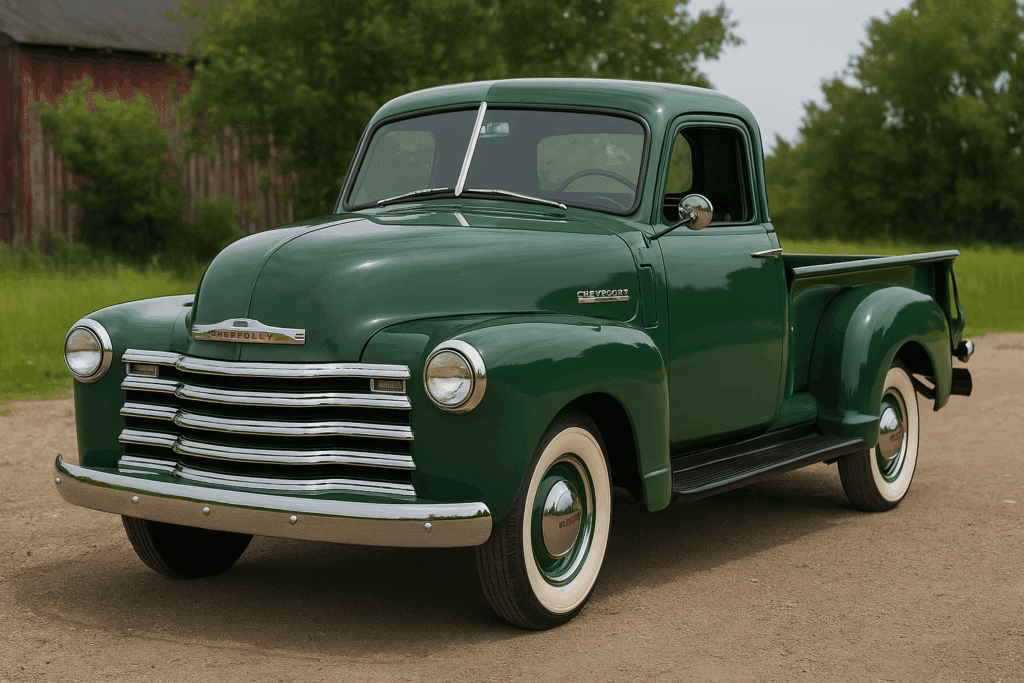
The Advance Design Chevy truck wasn’t just a facelift — it was a complete rethinking of what a pickup could be. The cabs were taller and wider, giving drivers more space. Visibility improved with a larger windshield and better seating position. Under the hood, inline-six engines like the 216 and 235 cubic inch made these trucks reliable workhorses.
Compared to the prewar AK Series, Advance Design trucks looked modern and felt more comfortable. They also set the stage for what came next — the Task Force trucks of the late 1950s.
Year-by-Year Highlights
Every year brought small but important changes. Knowing the differences can help collectors and restorers spot originality and value.
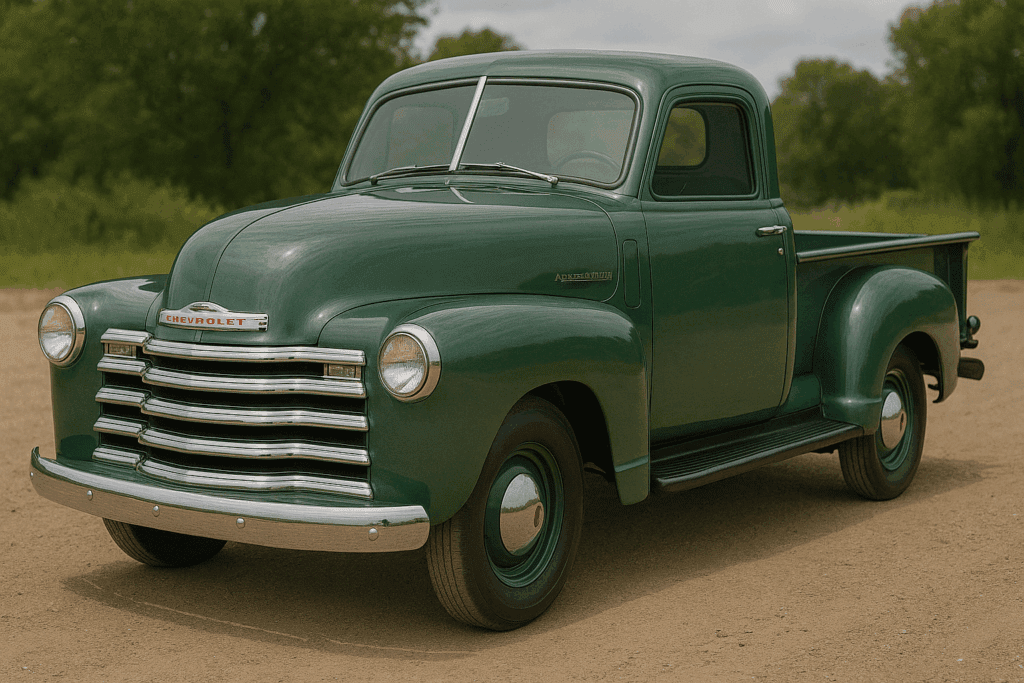
- 1947 – First release, with a five-bar horizontal grille and gas tank mounted under the bed. No vent windows yet.
- 1948–1950 – Vent windows added, gas tank moved behind the seat, and minor trim updates. The 1950 Chevrolet 3100 half-ton is especially popular with collectors today.
- 1951–1953 – Push-button door handles appeared, and the trusty 216 engine was phased out in favor of the more durable 235. These years balanced classic styling with mechanical improvements.
- 1954 – A big refresh: one-piece curved windshield, redesigned grille, and a stronger engine. The 1954 Chevy truck grille remains one of the most recognizable features of the entire series.
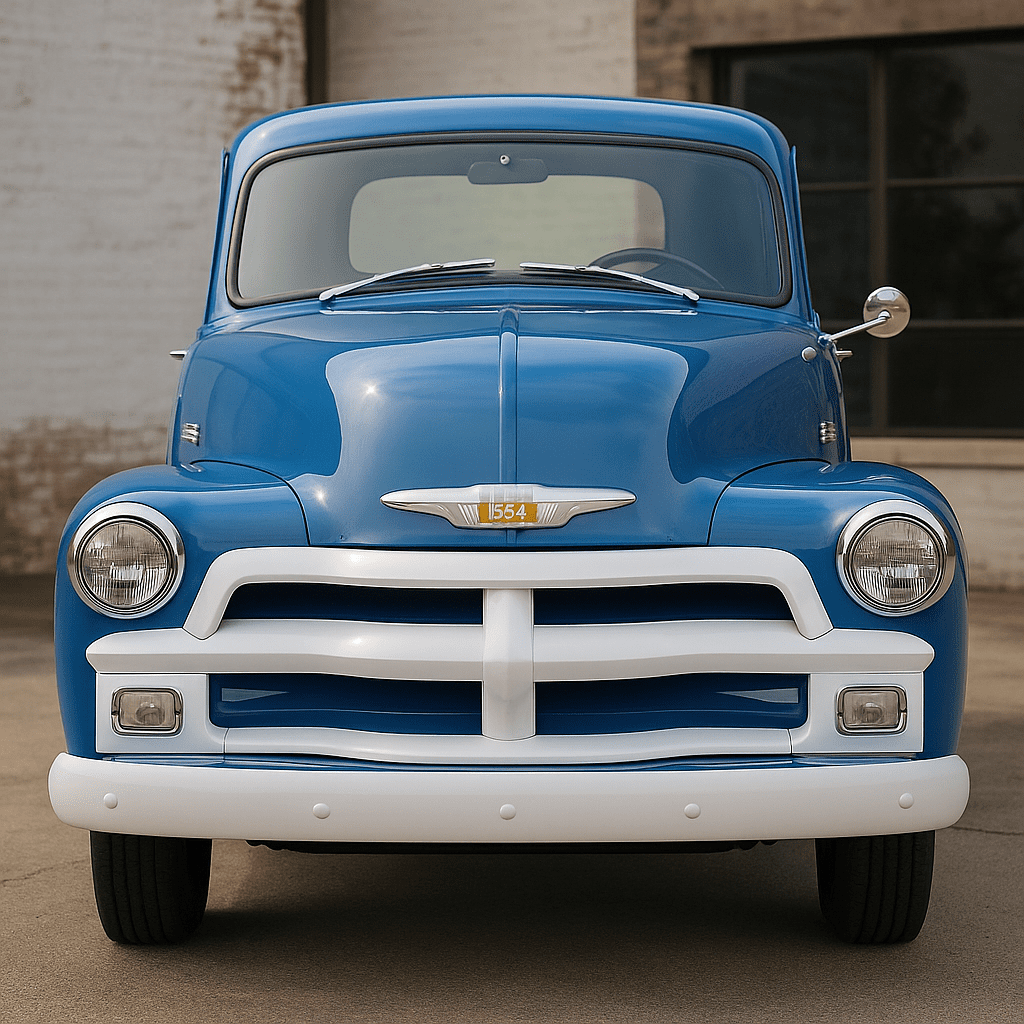
- Early 1955 – The final Advance Design models rolled off the line, bridging into the new Task Force trucks introduced later that year.
Models Beyond the Pickup
While the half-ton 3100 gets the most love, the Advance Design lineup had something for everyone:
- 3100 Half-Ton Pickup – the most collectible, perfect for everyday restoration projects.
- 3600 (¾-Ton) & 3800 (1-Ton) – tougher trucks built for heavier work.
- Panel Trucks – popular with delivery companies and tradesmen.
- Suburban Carryall – the ancestor of today’s SUV, a favorite for families and businesses.
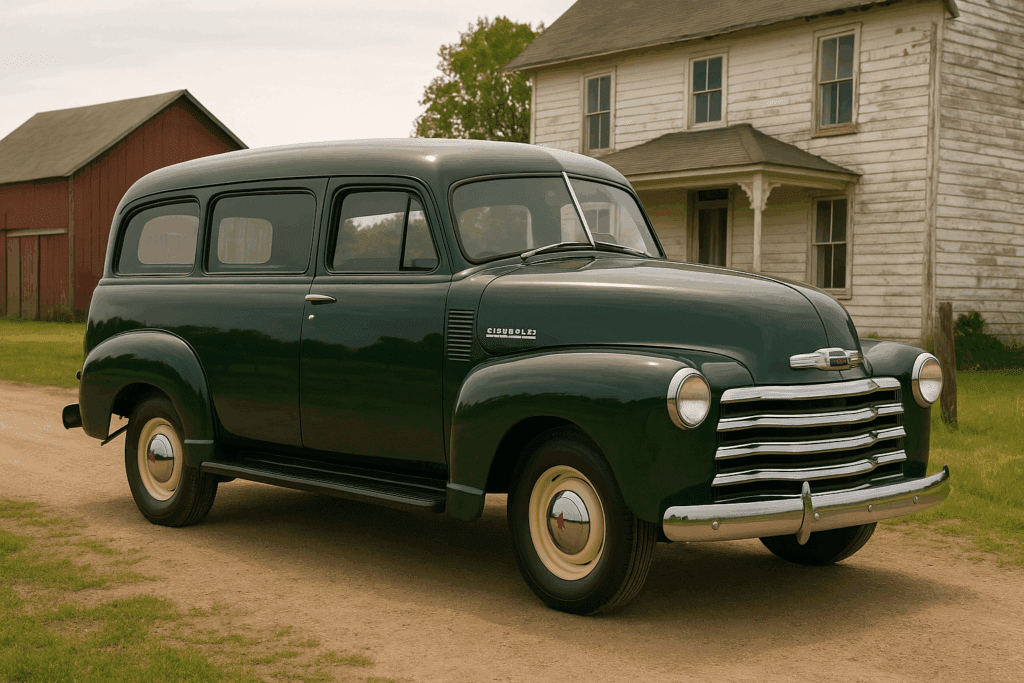
Each of these trucks carried the same distinctive styling and rugged dependability that made the series legendary.
Why Collectors Love the Advance Design Series
Ask any Chevy enthusiast, and you’ll hear the same reasons:
- Classic styling – Rounded fenders, bold grilles, and timeless curves.
- Restoration-friendly – A strong aftermarket makes it easy to source reproduction parts.
- Versatility – Equally at home as a stock restoration, rat rod, or custom build.
- History – These trucks represent postwar America’s spirit of growth and optimism.
For many collectors, the Advance Design Chevy truck isn’t just a vehicle — it’s a piece of cultural history.
Buying Tips
If you’re considering one of these trucks, here are a few things to keep in mind:
- Rust – Check cab corners, floor pans, and running boards.
- VIN – Verify the year and trim with a Chevy truck VIN decoder. You can also cross-check factory details with resources like the Hagerty Valuation Guide to better understand pricing trends.
- Parts – Make sure reproduction or salvage parts are available for your chosen model.
- Project vs. Restored – Decide early whether you want an untouched project or a finished showpiece.
Try our Classic Chevy Value Estimator.
Restoration & Parts Support
One of the best things about owning an Advance Design truck is how easy they are to bring back to life. The restoration community is huge, with suppliers offering everything from complete bed kits to modern suspension upgrades. Whether you’re rebuilding a 1947 Chevy truck from the ground up or refreshing the grille on a 1954 Chevrolet 3100, you’ll find plenty of support, parts, and knowledge from fellow enthusiasts. For technical manuals and community help, the ChevyTalk Advance Design Forum is an invaluable resource.
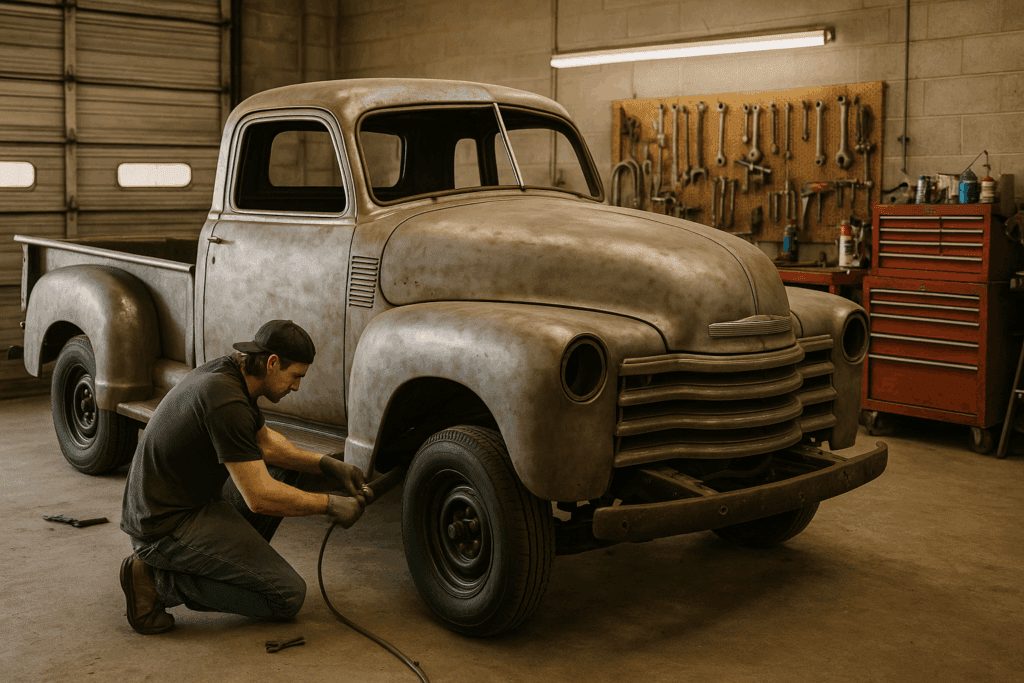
Whether you’re rebuilding a 1947 Chevy truck from the ground up or refreshing the grille on a 1954 Chevrolet 3100, you’ll find plenty of support, parts, and knowledge from fellow enthusiasts.
Fun Facts
- Chevrolet promoted the line with the slogan: “Bigger, Stronger, Sleeker.”
- The Suburban Carryall has the longest continuous nameplate in automotive history.
- The redesigned 1954 grille makes that year one of the most collectible in the series.
FAQ: Advance Design Chevy Trucks
What years were Advance Design trucks made?
rom mid-1947 through early 1955.
What’s the most popular model?
The 1950 Chevrolet 3100 is a favorite among collectors, but the 1954 model with its unique grille is also highly sought after.
How do I identify one?
Rounded fenders, horizontal bar grille, and the VIN on the driver-side door post. Use our VIN decoder for accuracy.
Are they hard to restore?
No — the restoration community is strong, and parts are widely available. See our restoration guide for tips.
What’s the difference from the Task Force series?
Advance Design trucks (’47–early ’55) are rounded and inline-six powered, while Task Force trucks (mid-’55–’59) introduced squared-off styling and optional V8s.
These Trucks are Living Legends
The Advance Design Chevy truck isn’t just another classic — it’s the truck that carried America through one of its most dynamic decades. With rugged reliability, timeless looks, and a massive community of enthusiasts, it remains one of the best entry points into classic Chevrolet collecting.
Whether you’re restoring a 1947 Chevy truck, showing off a 1954 3100, or simply admiring the curves and chrome, these trucks are living reminders of a golden age in American motoring.