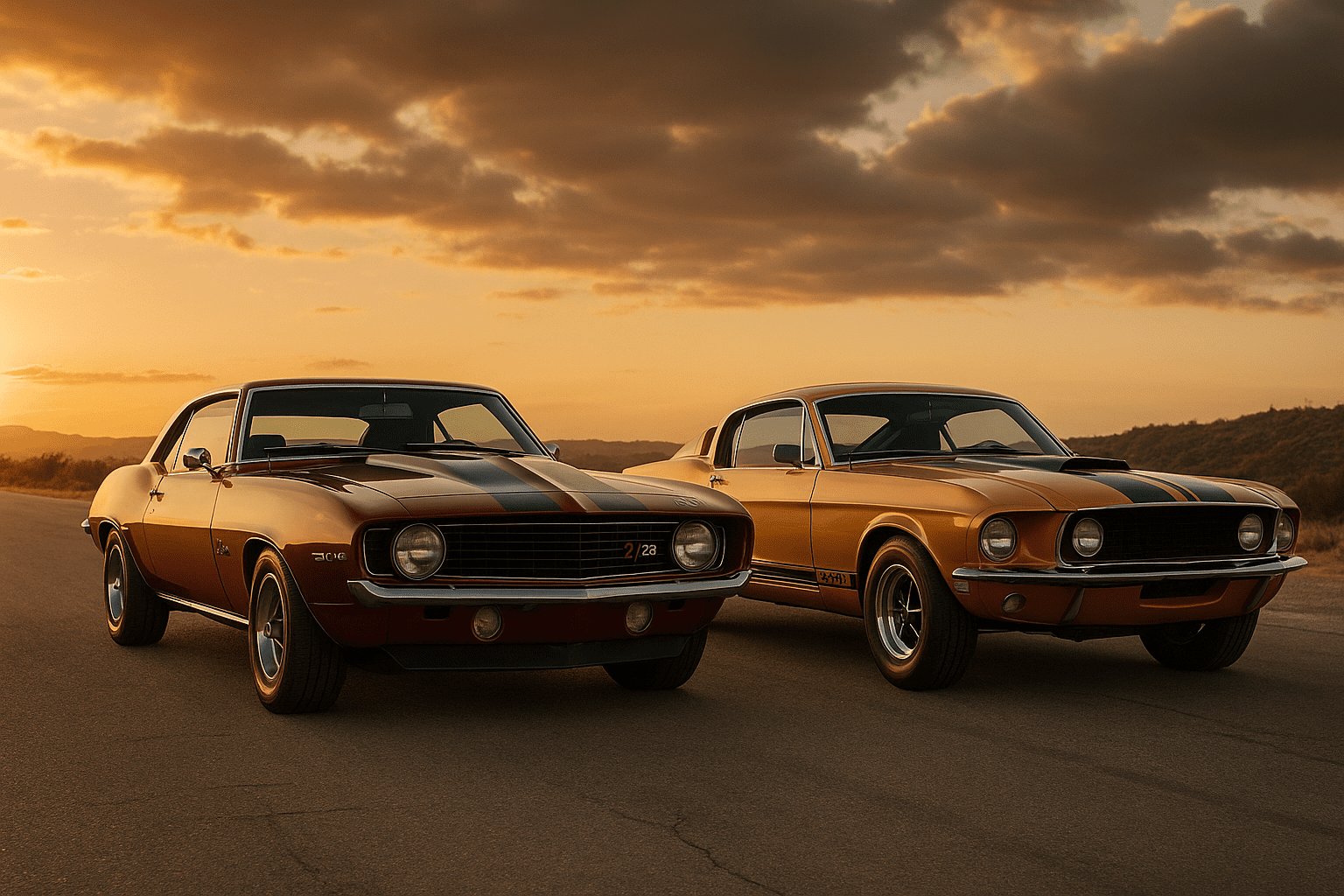
Few automotive battles have shaped American car culture like Camaro vs Mustang. From 1964 through 1973, Ford and Chevrolet fought a decade-long performance and marketing war that gave birth to legendary muscle cars, iconic racing victories, and an enthusiast rivalry that continues today.
This is the definitive Camaro vs Mustang history, covering how the pony car wars began, how they escalated, and why this rivalry still dominates classic car discussions.
How the Camaro vs Mustang Rivalry Began
The rivalry starts with a single car: the 1964½ Mustang. Ford didn’t just release a new model—they invented an entirely new segment: the pony car.
Why the Mustang exploded in popularity
- Youthful styling
- Affordable price
- Strong performance from the 289 V8
- Endless customization options
By creating a compact but sporty car, Ford owned the market—and Chevrolet had no answer. That changed in 1966 when Chevy revealed the car designed to end Mustang’s monopoly: the 1967 Chevrolet Camaro.
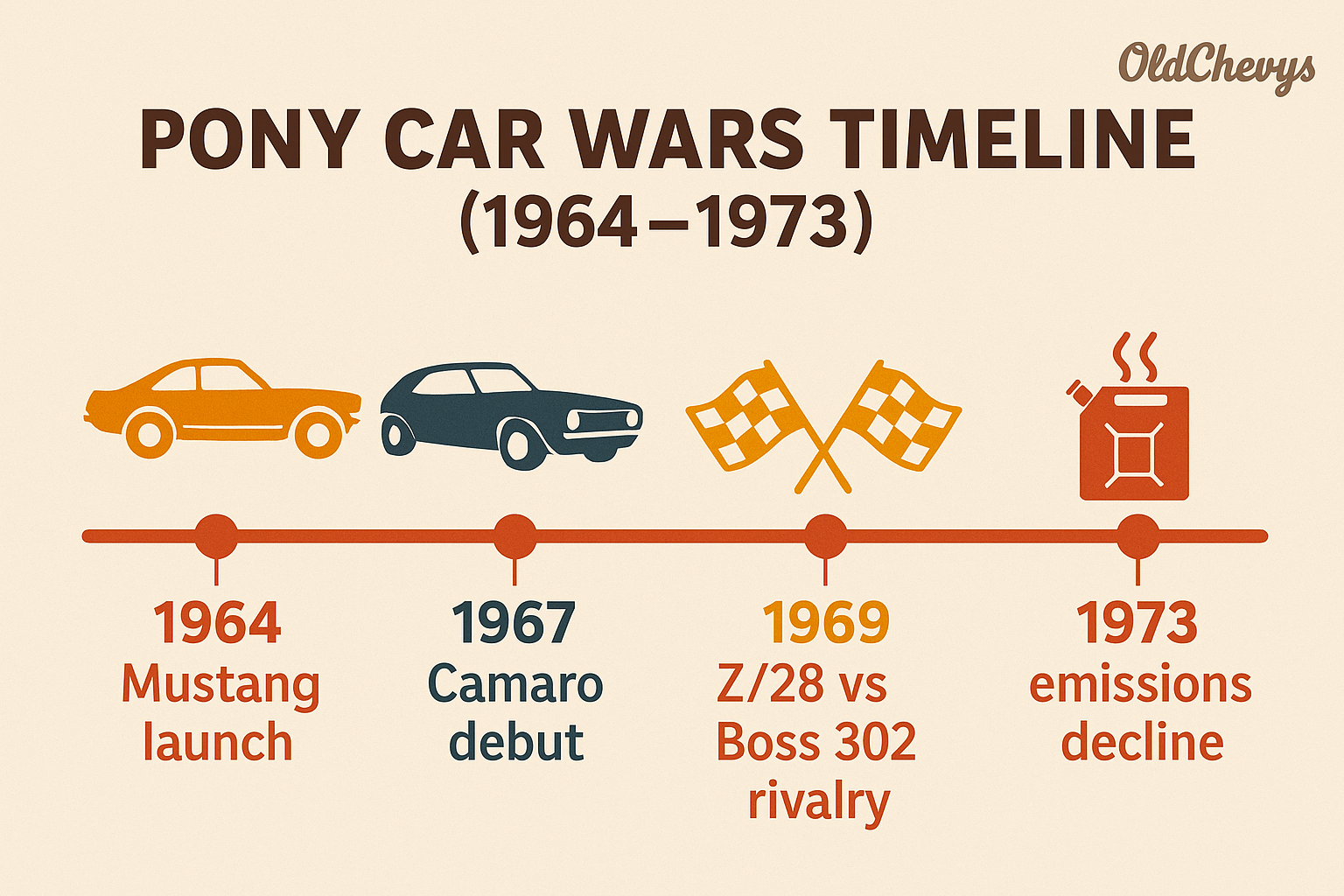
1964–1966: Mustang Owns the Pony Car Segment
Before the Camaro existed, the Mustang vs… everything else comparison didn’t matter—Ford simply dominated.
Key Mustang milestones that set up the rivalry
- 1965 K-Code Mustang: 271-hp Hi-Po V8 sets early performance standard.
- Shelby GT350: Track-focused Mustangs establish Ford’s performance credibility.
- Sales exceed 1 million units before Chevrolet launches its challenger.
These early years cement the Mustang as not just a sales success, but a cultural phenomenon.
1967: Camaro Enters the Fight
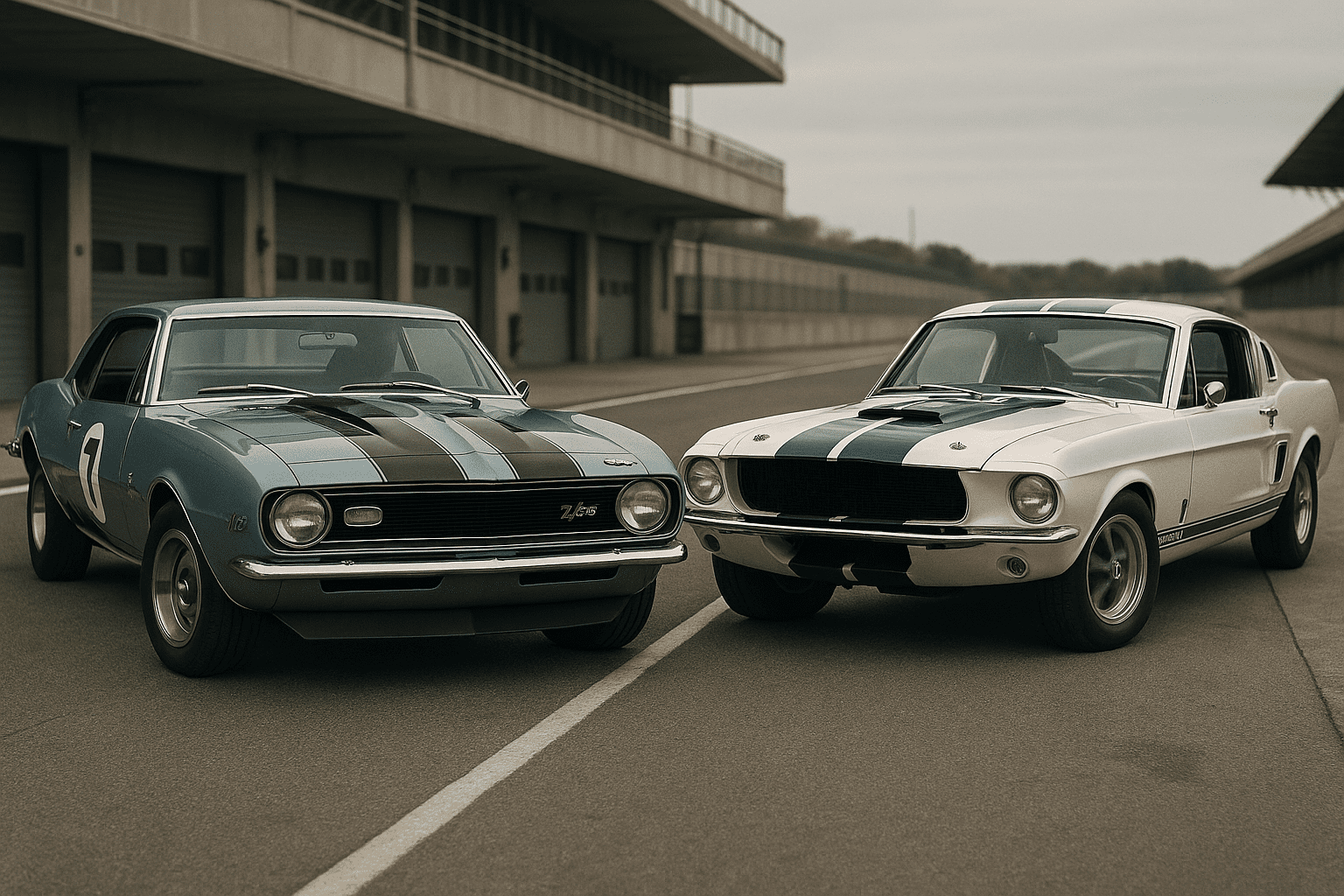
The 1967 Camaro launches with all the ingredients needed to take on the Mustang head-to-head:
- RS (Rally Sport) appearance package
- SS (Super Sport) performance package
- Z/28, built specifically for Trans-Am racing
- A wide range of V8 options
Why the Z/28 mattered
The Z/28 didn’t exist to beat the Mustang on the street—it existed to beat the Shelby GT350 and Ford’s factory-backed cars on the track. This begins the Z/28 vs Boss 302 chapter of the rivalry that enthusiasts still argue about today.
1968: Camaro vs Mustang Intensifies
By 1968, both brands sharpened their tools:
Mustang updates
- Improved suspension tuning
- More aggressive styling
- Strong GT and Shelby variants
Camaro updates
- More powerful SS options
- Rising popularity of the Z/28 in Trans-Am
- Chevy begins attracting hardcore performance buyers
The Camaro vs Mustang performance gap narrows, and the rivalry becomes a national obsession.
1969: The Most Explosive Year in the Pony Car Wars
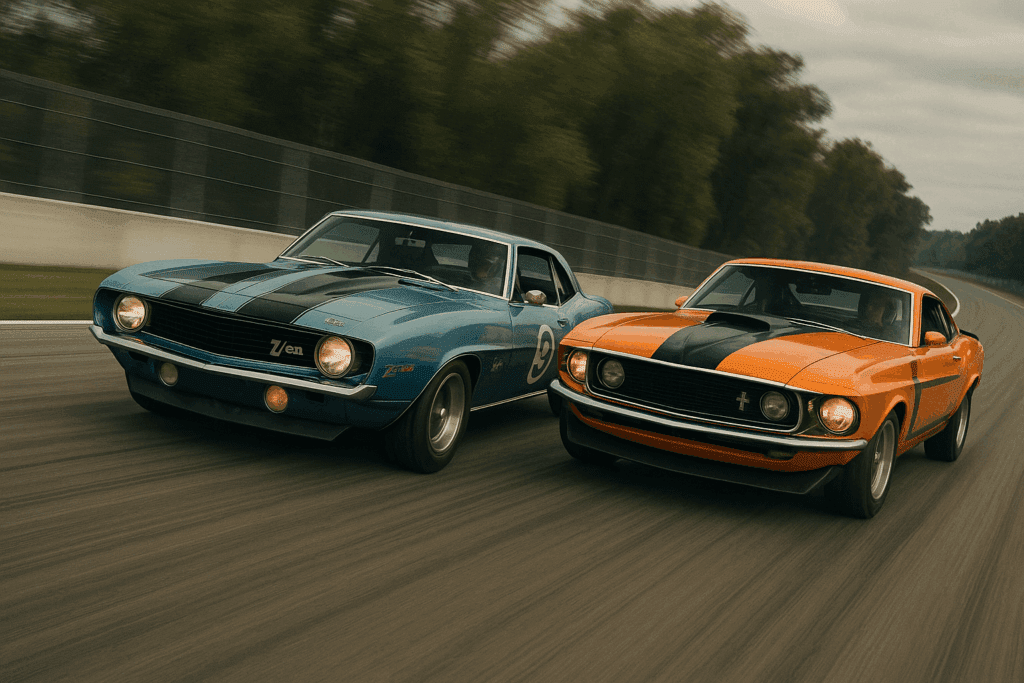
When enthusiasts search for “1960s Camaro vs Mustang”, they’re often thinking about 1969—a high-water mark for the entire muscle car era.
1969 Mustang Lineup
Ford unleashes its strongest roster ever:
- Boss 302 – Ford’s direct answer to the Z/28
- Boss 429 – Built for NASCAR homologation
- Mach 1 – A performance icon
- Shelby GT350 / GT500 – Ultimate Mustang halo cars
1969 Camaro Highlights
Chevy counters with legendary hardware:
- Z/28 continues dominating SCCA Trans-Am
- SS 396 brings big-block thunder
- COPO 9561 (427) and COPO 9560 ZL1 become holy-grail muscle cars
- Pace Car editions boost brand visibility
Z/28 vs Boss 302: The Heart of the Rivalry
These two cars embody “Camaro vs Mustang”:
| Model | Engine | Purpose |
|---|---|---|
| Camaro Z/28 | 302ci small-block (290 hp underrated) | Built to win Trans-Am |
| Mustang Boss 302 | High-revving 302 (290 hp) | Ford’s counterattack |
Track battles between Penske/Donohue Camaros and Bud Moore’s Boss 302 Mustangs remain some of the most legendary in American racing history.
1970: New Camaro Generation vs Updated Mustang
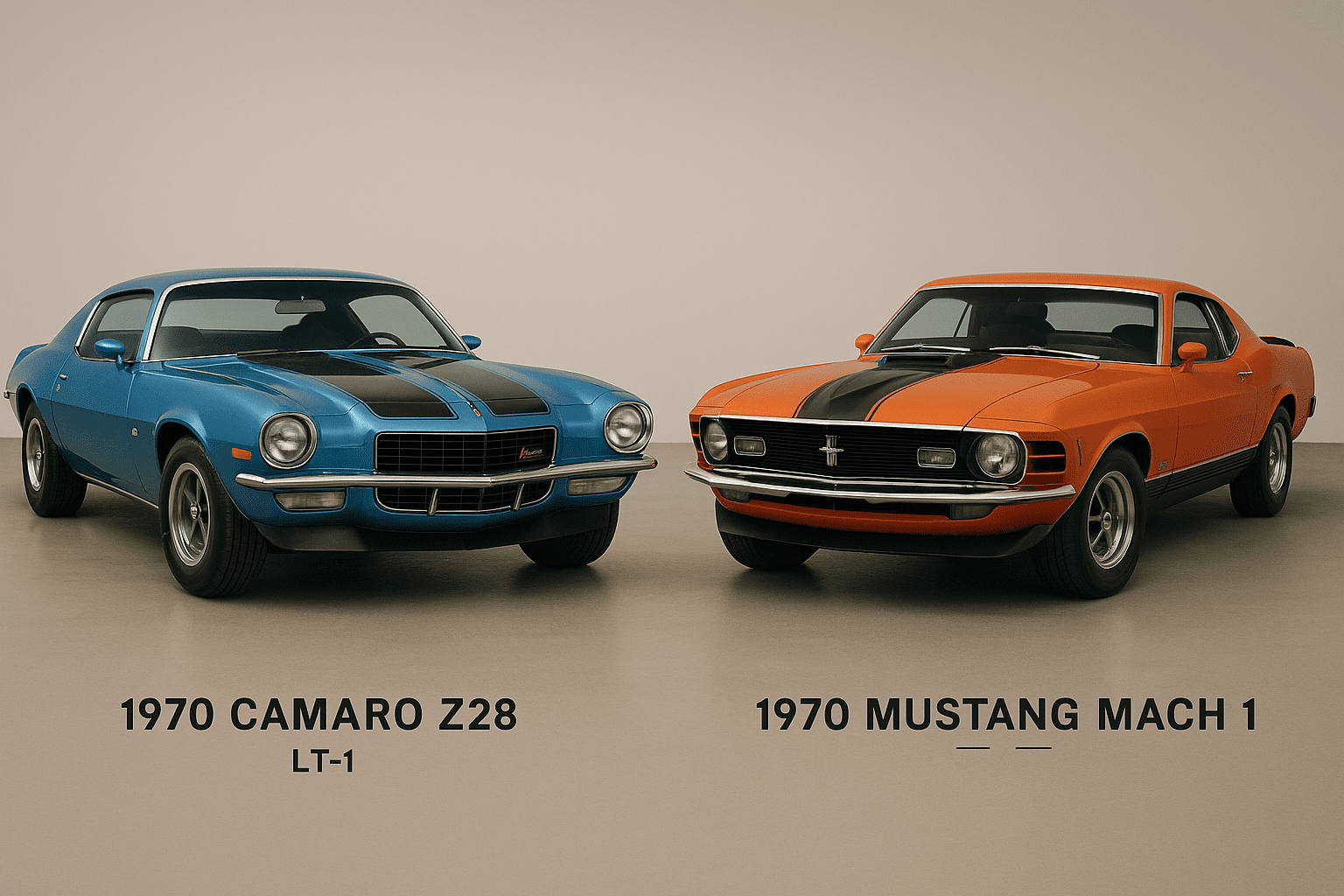
1970 Camaro (2nd Gen)
The Camaro gains:
- A longer, wider, more European-inspired shape
- Improved suspension geometry
- LT-1 350 Z/28 producing incredible high-rpm performance
1970 Mustang Refresh
Ford counters with:
- Sharper lines
- Strong Mach 1 and Boss 302 packages
- Continued Shelby presence
Many enthusiasts searching “Camaro vs Mustang handling” often conclude that the 1970 Camaro represented a major chassis improvement, giving Chevy the edge.
See our guide on Performance Upgrades for Classic Camaros.
1971–1972: Regulations Slow the Pony Car Wars
The muscle car market changes dramatically:
- Lower compression ratios
- Rising insurance premiums
- Emissions restrictions
- Unleaded fuel requirements
Ford Reaction
Mustang grows heavier and begins shifting toward “personal luxury.”
Chevy Reaction
Camaro maintains stronger performance options longer, but even the Z/28 sees declining horsepower.
Pony car performance is fading, and keyword trends show searches like:
- “why did muscle cars die in the 1970s”
- “mustang vs camaro horsepower drop”
This period answers those questions.
1973: The End of the First Pony Car War
By 1973:
- Big-block performance is essentially gone
- Safety bumpers alter styling
- Fuel economy becomes a priority
Ford prepares to launch the Mustang II, marking a dramatic shift away from performance.
Chevy continues the Camaro but with significantly reduced horsepower.
The Camaro vs Mustang rivalry survives, but the golden era ends.
Who Won the 1964–1973 Camaro vs Mustang War?
Ford Wins for Cultural Impact
- Mustang invented the pony-car class
- Outsold Camaro for most of the decade
- Created the Shelby legacy
Chevy Wins for Track Dominance
- Z/28 was the Trans-Am benchmark
- COPO and ZL1 cars hold legendary status
- 1970 Camaro chassis widely praised for handling
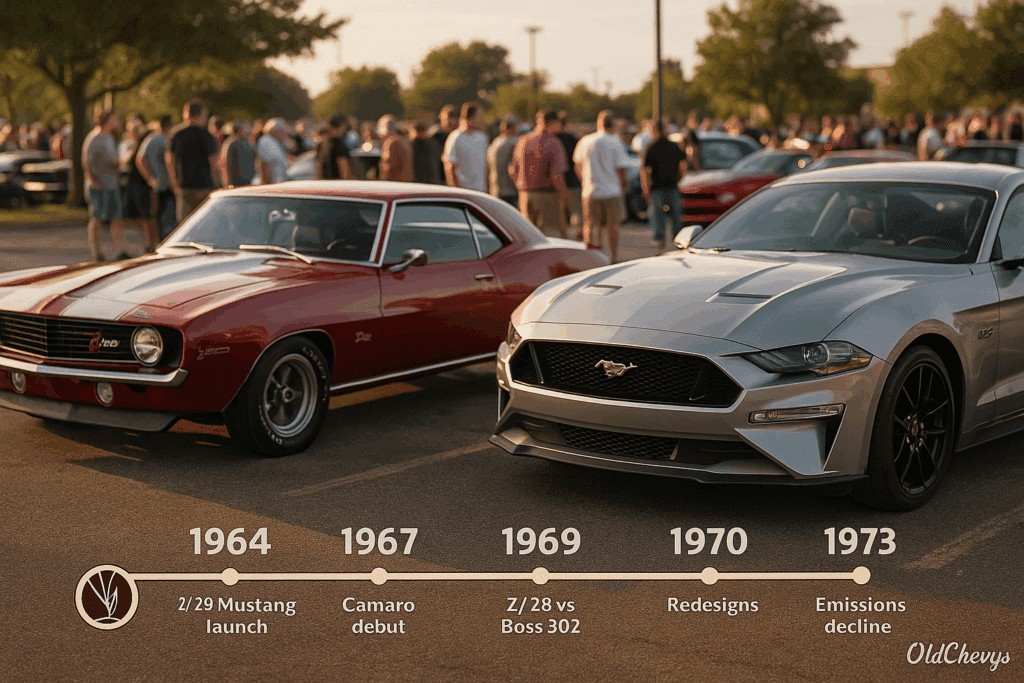
Enthusiasts Win Most of All
Without competition, neither brand would have produced such extraordinary cars. The Camaro vs Mustang rivalry pushed American performance to its creative and engineering peak.