Welcome back to the OldChevys Weekly Roundup, your go-to newsletter for restoration tips, parts picks, and market insights on classic Chevrolets from the 1950s through the 1980s.
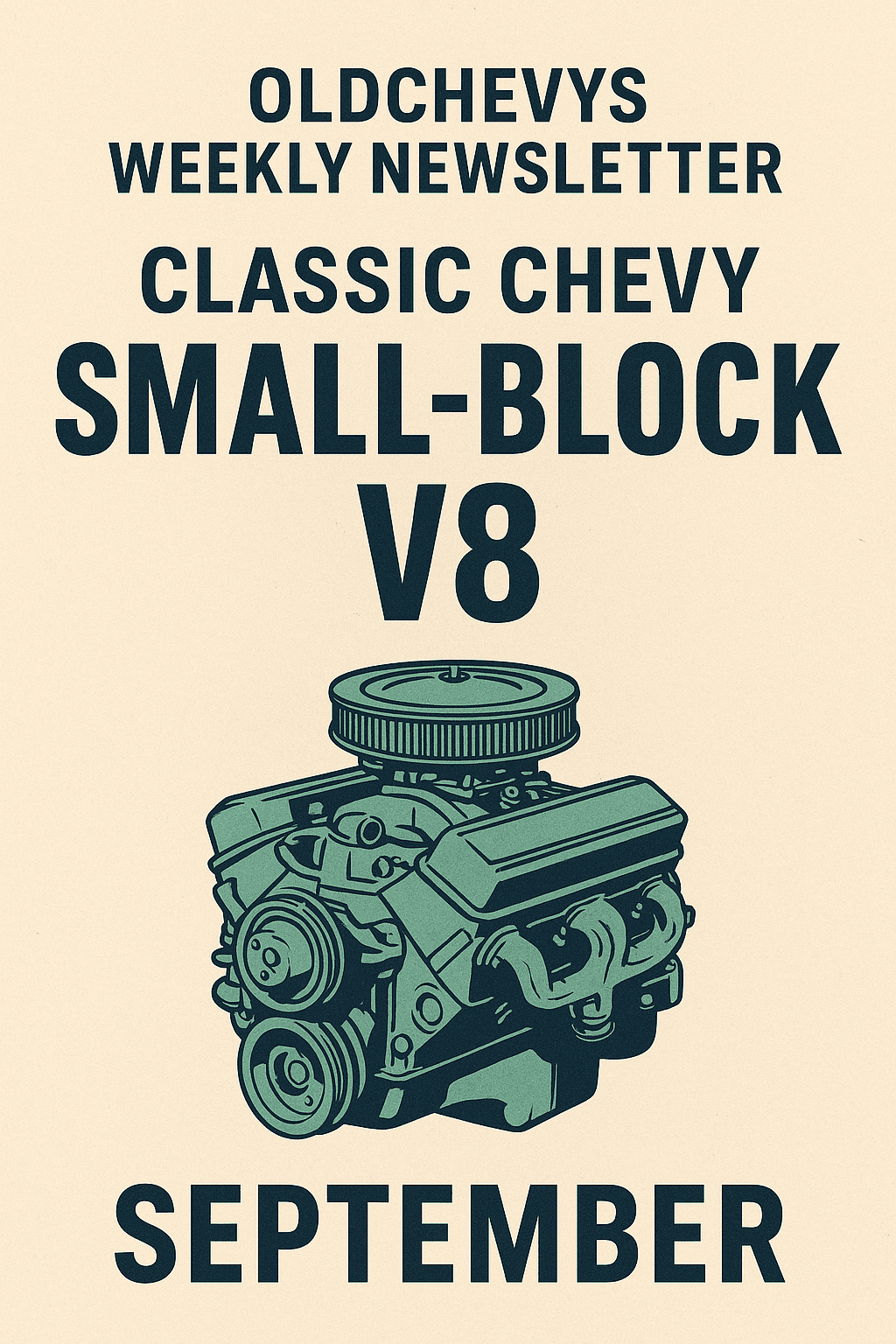
In this issue, we’re diving into the Chevy small-block V8 — the engine that powered generations of Bel Airs, Camaros, Novas, and C10 trucks. You’ll learn why this legendary motor remains the heart of so many classics, plus we’ll cover a quick valve lash adjustment tip, highlight some must-have performance parts, and look at how small-block cars are performing in today’s market.
Whether you’re rebuilding a 327, daily-driving a 350, or just love Chevy history, this week’s roundup is packed with value.
✨ Feature: The Chevy Small-Block V8 – Why It’s the Heart of a Classic
Few engines have shaped automotive history like the Chevy small-block V8. Introduced in 1955, it powered everything from the Tri-Five Bel Airs to first-gen Camaros and C10 trucks. Here’s why it remains the heart of classic Chevrolets:
- Versatility: The small-block V8 appeared in cars, trucks, and performance builds across decades.
- Aftermarket Support: From crate motors to performance cams, parts are easy to find — making it a favorite for restorers.
- Durability: Properly maintained, a small-block can last for hundreds of thousands of miles.
- Performance Legacy: Whether it’s a mild 265ci or a 350ci powerhouse, the small-block has been the backbone of Chevy performance for generations.
👉 Related OldChevys.com resources:
- Classic Chevy Value Estimator
- Free Classic Chevy VIN Decoder
- Classic Chevy Buyer’s Checklist
- Step-by-Step Classic Chevy Engine Rebuild Basics
🔧 Tech Tip: Checking Valve Lash Without Pulling the Heads
Keeping your small-block running smoothly depends on proper valve lash adjustment. Here’s a quick check you can do:
- Rotate the engine by hand until the intake valve closes on a cylinder.
- Place a feeler gauge between the rocker arm and valve tip.
- If the clearance is off, adjust using the rocker nut.
- Repeat for all cylinders.
👉 This simple tune-up improves performance and prevents premature valve wear.
🛒 Parts & Deals
- Edelbrock Performer Intake Manifold – Boosts horsepower while keeping a stock look. View part
- HEI Distributor Conversion Kit – Modern reliability for your classic ignition. View part
📈 Market Watch
- Trend: Big-block Chevys may grab headlines, but small-block cars are holding strong thanks to affordability and availability.
- Recent Sale: A 1969 Camaro with a 350 small-block sold for $42,000 on Bring a Trailer, showing steady demand for original, numbers-matching small-block cars.
👥 Community Spotlight
This week, we’re highlighting Mike in California, who rebuilt a 327ci small-block for his ’66 Nova SS. He shared his dyno results showing a reliable 310 horsepower build — a great example of why small-blocks remain popular.
📬 Get It Weekly
Enjoy this issue? Don’t miss the next one!
Sign up to get the Classic Chevy Roundup delivered straight to your inbox every Sunday: