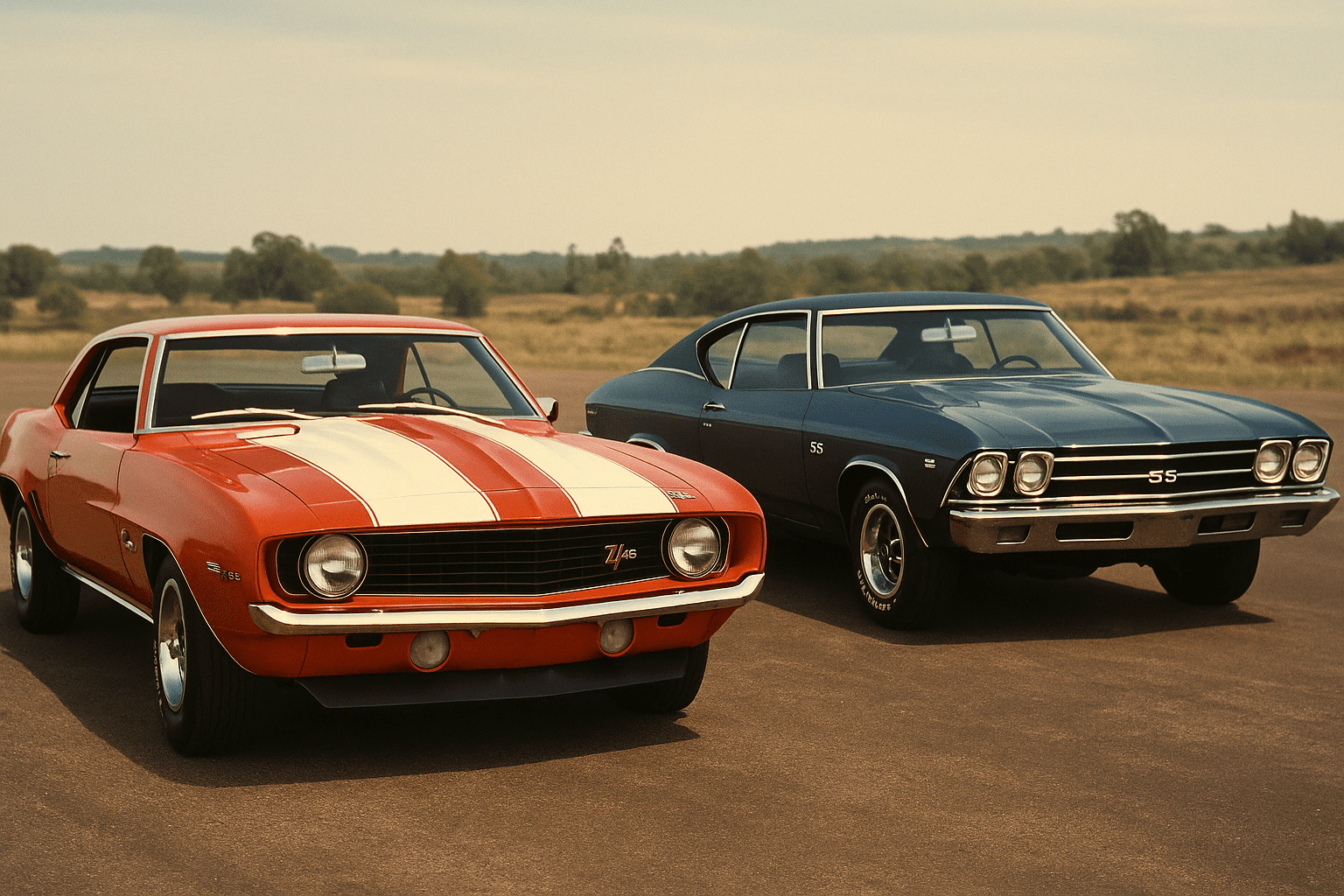
Explore the golden era of Chevy muscle cars in the 1960s. From the history of the Chevelle SS to the legendary Camaro Z/28, discover the complete timeline of Chevrolet’s most iconic performance cars.
Chevy Muscle Cars of the 1960s: A Complete Timeline
Few eras in automotive history capture the imagination like the 1960s. It was the decade when horsepower wars began in earnest, and Chevrolet was right at the center of the storm. From the birth of the Chevelle to the rise of the Camaro Z/28, Chevy muscle cars of the 1960s carved a lasting legacy. Let’s take a detailed look at this pivotal timeline.
Early 1960s: Setting the Stage
At the dawn of the decade, Chevrolet wasn’t yet a household name in the muscle car market. While the brand offered full-sized cars like the Impala SS, true performance seekers were still turning to Pontiac’s GTO or Ford’s Fairlane. The groundwork, however, was being laid. The concept of putting big-block V8 engines into mid-sized cars was catching on quickly, and Chevy’s engineers were eager to get in the game.
If you’re curious how these early cars compare in today’s market, our Classic Chevy value estimator tool shows how condition, mileage, and originality still drive pricing.
1964: The Chevelle SS Arrives
The first major milestone came in 1964 with the debut of the Chevrolet Chevelle Super Sport (SS). This marked the official start of the history of the Chevelle SS as a performance legend. Buyers could opt for small-block V8s, but the real excitement came when Chevrolet began offering 327-cubic-inch engines with impressive horsepower ratings. Suddenly, Chevy had a direct competitor to the Pontiac GTO, and the muscle car wars were underway.
For more historical depth, Hagerty’s history of muscle cars offers an excellent overview of how the movement began.
1965–1966: The Muscle Era Gains Steam
Chevrolet wasted no time in turning up the heat. By 1965, the Chevelle SS could be ordered with the potent 396 V8, pushing well over 350 horsepower. The 1966 model year saw styling refinements, bolder lines, and more aggressive performance options. The Chevelle SS396 became a symbol of raw power, giving enthusiasts a stylish yet street-dominating ride. These years cemented Chevrolet’s place as a serious contender in the muscle car market.
1967: Enter the Camaro
In 1967, Chevrolet made one of its most important moves of the decade: the introduction of the Chevrolet Camaro. Designed as a direct response to the wildly successful Ford Mustang, the Camaro was more than just a competitor—it was a statement. Buyers could choose from a wide range of trims and engines, from inline-sixes to thunderous big-block V8s.
Perhaps most importantly, 1967 also introduced the Camaro Z/28, a model that would become legendary in racing and performance circles. The Camaro Z/28 VIN decoder helps enthusiasts today verify authenticity and understand the specs of these iconic pony cars. The Z/28’s high-revving 302-cubic-inch V8, heavy-duty suspension, and Trans-Am racing pedigree gave it a reputation far beyond raw horsepower figures.
1968: Refinement and Rising Competition
By 1968, the muscle car craze was in full swing. Chevrolet refined its lineup, giving both the Chevelle and Camaro bolder styling and more engine choices. The Chevelle SS396 remained a fan favorite, while the Camaro lineup expanded to meet growing demand. Competitors like Dodge, Plymouth, and Ford were doubling down, pushing Chevy to innovate further.
This period also saw a rise in personalization, with buyers able to mix and match performance packages, styling cues, and options that turned each muscle car into a unique machine. For inspiration on authentic restorations, Hemmings Muscle Car Profiles highlights the most collectible examples from this golden era.
1969: The Peak of the Decade
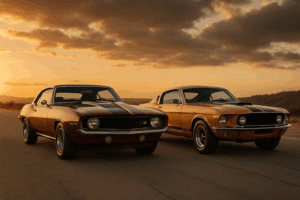
The year 1969 is often considered the peak of the golden era of muscle cars, and Chevrolet’s lineup made sure enthusiasts had plenty to cheer about. The 1969 Camaro Z/28 became one of the most celebrated models of all time, with distinctive stripes, cowl-induction hoods, and a reputation for dominating road courses. Meanwhile, the Chevelle SS offered brutal power with the legendary 396 and even the rare 427 engines.
For collectors today, knowing whether to choose OEM vs aftermarket Chevy parts can make or break an authentic restoration of these iconic rides.
The Legacy of 1960s Chevy Muscle Cars
By the end of the 1960s, Chevrolet had fully established itself as a leader in the muscle car movement. The history of the Chevelle SS gave rise to one of the most iconic street machines ever built, while the Camaro Z/28 history created a performance benchmark that still resonates in modern versions of the Camaro today. For more, see our Chevy History Guide and Chevy in Pop Culture: Movies & Music.
Although the 1970s would bring challenges with emissions standards, insurance rates, and changing consumer demands, the 1960s remain an unrivaled era for Chevy muscle cars. The designs, engines, and cultural impact of that decade continue to inspire restorations, car shows, and passionate enthusiasts across the world.
Chevy Muscle Cars of the 1960s
The story of Chevy muscle cars of the 1960s is more than just a list of models and horsepower figures—it’s a chronicle of innovation, competition, and American car culture at its peak. From the first Chevelle SS in 1964 to the iconic 1969 Camaro Z/28, Chevrolet proved it could not only compete but also dominate. For anyone who loves classic muscle, the 1960s timeline of Chevrolet’s performance cars remains a thrilling chapter in automotive history.